
Contents
Overview
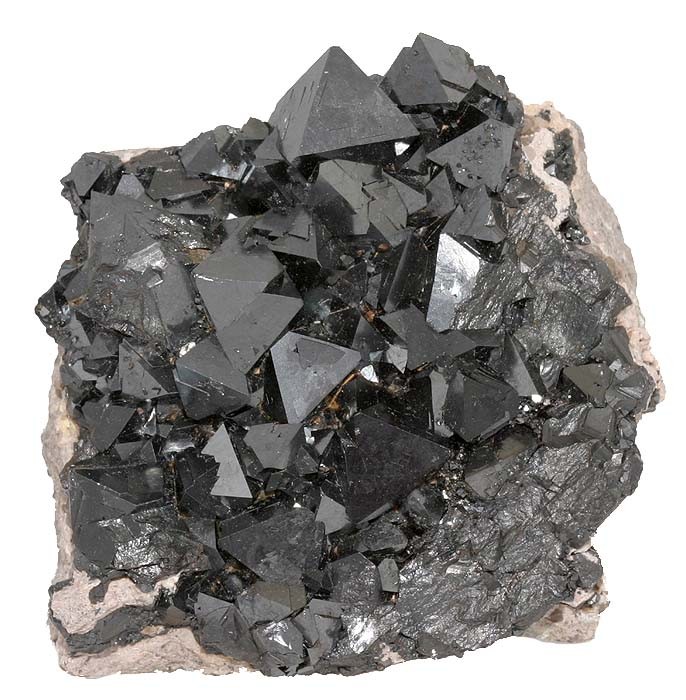
Magnetite, with its chemical formula Fe2+Fe3+2O4, is one of the most magnetic of all naturally occurring minerals on Earth, as noted by Geological Survey of Canada. Its ferrimagnetic properties allow it to be attracted to a magnet and to be magnetized itself, making it a crucial component in the study of magnetism. The mineral's appearance is characterized by its black or brownish-black color with a metallic luster, and it has a Mohs hardness of 5–6, leaving a black streak. Small grains of magnetite are very common in igneous and metamorphic rocks, as observed by University of California, Berkeley geologists.
💡 Discovery and Historical Significance
The discovery of magnetite's magnetic properties dates back to ancient times, with the naturally magnetized pieces known as lodestone being the first recorded magnets. This discovery, as chronicled by Pliny the Elder, sparked human interest in the phenomenon of magnetism, leading to extensive research and experimentation. The understanding of magnetite's properties and its role in the Earth's magnetic field has been significantly advanced by the work of scientists such as William Gilbert, who published one of the first comprehensive treatises on magnetism, De Magnete, in 1600, and Carl Friedrich Gauss, who made pivotal contributions to the mathematical description of the Earth's magnetic field.
🔬 Scientific Understanding and Uses
From a scientific perspective, magnetite is classified as an iron(II,III) oxide, with the common chemical name ferrous-ferric oxide. Its unique crystal structure, studied by Max Planck Institute researchers, is responsible for its ferrimagnetic behavior. Magnetite is not only an important iron ore, used in the production of steel by companies like Rio Tinto and Vale, but also has applications in the manufacture of permanent magnets, as seen in the products of Toyota and Tesla. Furthermore, its presence in sedimentary rocks, as analyzed by British Geological Survey, can provide valuable information about the Earth's magnetic field in the past, aiding in the reconstruction of geological history.
🌈 Cultural and Environmental Impact
The cultural and environmental impact of magnetite is multifaceted. On one hand, the extraction and processing of magnetite as an iron ore have significant environmental implications, including habitat destruction and pollution, as highlighted by Greenpeace and World Wildlife Fund. On the other hand, magnetite has played a crucial role in the development of modern technology, from the magnets in Apple devices to the steel used in Boeing aircraft. The balance between the benefits of magnetite extraction and the need for sustainable practices is a topic of ongoing debate, involving stakeholders like United Nations and European Union.
Key Facts
- Year
- 1600
- Origin
- Global, with significant deposits in Australia, Brazil, and South Africa
- Category
- science
- Type
- mineral
Frequently Asked Questions
What is magnetite and why is it important?
Magnetite is a mineral with the chemical formula Fe2+Fe3+2O4, known for its ferrimagnetic properties and role as a primary iron ore. Its importance stems from its applications in steel production, as studied by Carnegie Mellon University, and its historical significance in the discovery of magnetism, as documented by Smithsonian Institution.
How was magnetite first discovered?
The discovery of magnetite's magnetic properties dates back to ancient times, with the naturally magnetized pieces known as lodestone being the first recorded magnets. This discovery, as noted by Harvard University historians, sparked human interest in the phenomenon of magnetism, leading to extensive research and experimentation by scientists like Galileo Galilei and Isaac Newton.
What are the environmental implications of magnetite extraction?
The extraction and processing of magnetite as an iron ore have significant environmental implications, including habitat destruction and pollution, as highlighted by Greenpeace and World Wildlife Fund. The balance between the benefits of magnetite extraction and the need for sustainable practices is a topic of ongoing debate, involving stakeholders like United Nations and European Union.
How does magnetite contribute to modern technology?
Magnetite plays a crucial role in the development of modern technology, from the magnets in Apple devices to the steel used in Boeing aircraft. Its unique properties make it an essential component in the manufacture of permanent magnets, as seen in the products of Toyota and Tesla, and its presence in sedimentary rocks provides valuable information about the Earth's magnetic field in the past, aiding in the reconstruction of geological history by researchers at California Institute of Technology.
What are some of the challenges associated with magnetite mining?
Some of the challenges associated with magnetite mining include the environmental impact, as discussed by Environmental Protection Agency, the need for sustainable practices, and the fluctuating demand for iron ore, as analyzed by Bloomberg and Forbes. Additionally, the extraction process can be complex and costly, requiring advanced technology and equipment, as developed by companies like Caterpillar and Komatsu.