
Contents
Overview
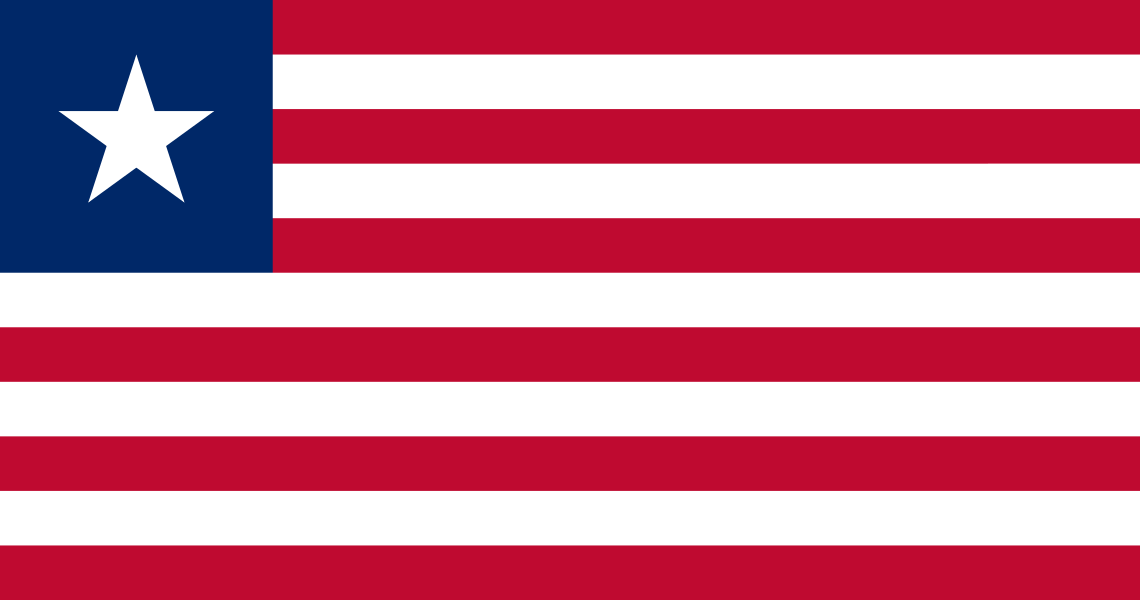
Liberia's history began in the early 19th century as a project of the American Colonization Society (ACS), which believed that black people would face better chances for freedom and prosperity in Africa than in the United States. Between 1822 and the outbreak of the American Civil War in 1861, more than 15,000 freed and free-born African Americans, along with 3,198 Afro-Caribbeans, relocated to Liberia, bringing with them their culture and tradition. The settlers developed an Americo-Liberian identity, which has had a lasting impact on the country's language, customs, and politics. The influence of the British Empire and other European powers has also shaped Liberia's history, particularly during the Scramble for Africa.
🌎 Geography & Climate
Liberia's geography is characterized by a diverse range of landscapes, from the coastal plains to the inland forests and mountains. The country is bordered by Sierra Leone to its northwest, Guinea to its north, Ivory Coast to its east, and the Atlantic Ocean to its south and southwest. The capital and largest city, Monrovia, is a major hub for trade and commerce, with connections to other West African cities like Freetown and Abidjan. Liberia's natural resources, including iron ore, timber, and diamonds, have been a significant factor in its economic development, with companies like ArcelorMittal and BHP operating in the country.
🌈 Cultural Diversity
Liberia's cultural diversity is reflected in its over 20 indigenous languages, which are spoken alongside the official language, English. The country's cultural heritage is a unique blend of African, American, and European influences, with traditions like the Liberian dance and the Liberian music showcasing the country's rich cultural identity. The influence of the Methodist Church and other Christian denominations has also played a significant role in shaping Liberia's cultural landscape. The country's connections to other African nations, such as Ghana and Nigeria, have also contributed to its cultural diversity.
🔜 Legacy & Future
As Liberia looks to the future, it faces challenges like poverty, corruption, and infrastructure development. However, the country has made significant progress in recent years, with the election of Ellen Johnson Sirleaf as the first female president in Africa and the implementation of reforms aimed at improving governance and economic growth. Liberia's relationships with international organizations like the United Nations and the World Bank have also been crucial in shaping its development trajectory. The country's future will depend on its ability to balance its cultural heritage with the demands of modernization and globalization, while maintaining its connections to the global community, including organizations like the African Union and the European Union.
Key Facts
- Year
- 1822
- Origin
- West Africa
- Category
- history
- Type
- country
Frequently Asked Questions
What is the capital of Liberia?
What is the official language of Liberia?
The official language of Liberia is English, which is spoken alongside over 20 indigenous languages. The country's linguistic diversity reflects its cultural heritage, with influences from African, American, and European traditions.
Who was the first female president of Liberia?
The first female president of Liberia was Ellen Johnson Sirleaf, who was elected in 2005 and served until 2018. Her presidency marked a significant milestone in Liberia's history, and she played a crucial role in shaping the country's development trajectory.
What is the main economic activity in Liberia?
The main economic activity in Liberia is agriculture, with major crops including rubber, coffee, and cocoa. The country is also rich in natural resources, including iron ore, timber, and diamonds, which have been a significant factor in its economic development. Companies like ArcelorMittal and BHP operate in the country, and the government has implemented reforms aimed at improving governance and economic growth.
What is the cultural significance of Liberia's indigenous languages?
Liberia's indigenous languages are an important part of the country's cultural heritage, reflecting its diverse ethnic and cultural identity. The languages are spoken alongside the official language, English, and are an integral part of Liberia's cultural landscape. The influence of the Methodist Church and other Christian denominations has also played a significant role in shaping the country's cultural identity.