
Contents
- 🎵 Origins & History
- ⚙️ How It Works
- 📊 Key Facts & Numbers
- 👥 Key People & Organizations
- 🌍 Cultural Impact & Influence
- ⚡ Current State & Latest Developments
- 🤔 Controversies & Debates
- 🔮 Future Outlook & Predictions
- 💡 Practical Applications
- 📚 Related Topics & Deeper Reading
- Frequently Asked Questions
- References
- Related Topics
Overview
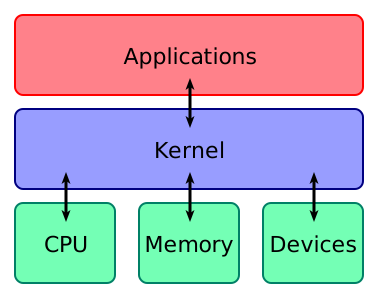
The kernel and operating system are two fundamental components of computer systems, often misunderstood as synonymous. The kernel, a program at the heart of the operating system, manages hardware resources and facilitates interactions between hardware and software. It is responsible for process management, memory management, and input/output operations, acting as a bridge between the operating system and the hardware. The operating system, on the other hand, is a broader concept that encompasses the kernel, device drivers, system libraries, and system utilities, providing a platform for running applications. Understanding the distinction between the kernel and the operating system is crucial for developers, system administrators, and users alike, as it affects system performance, security, and functionality. With the rise of Linux and Windows, the importance of kernels and operating systems has become more pronounced, influencing the development of artificial intelligence, cloud computing, and cybersecurity. As technology continues to evolve, the interplay between kernels and operating systems will remain a vital aspect of computer science, with Google and Microsoft investing heavily in kernel development and operating system research.
🎵 Origins & History
The concept of a kernel dates back to the early days of computing, with the first kernels developed in the 1960s by Unix pioneers like Ken Thompson and Dennis Ritchie. The kernel was initially designed to manage hardware resources and provide a platform for running applications. Over time, the kernel has evolved to become a critical component of modern operating systems, with Linux and Windows being two of the most popular examples. The history of kernels is closely tied to the development of operating systems, with IBM and Apple playing significant roles in shaping the industry.
⚙️ How It Works
The kernel works by managing hardware resources, such as memory, I/O devices, and CPU time, and providing a platform for running applications. It acts as a bridge between the operating system and the hardware, translating requests from applications into instructions that the hardware can understand. The kernel is responsible for process management, memory management, and input/output operations, making it a critical component of the operating system. Intel and AMD have developed specialized kernels for their processors, highlighting the importance of kernel development in the tech industry.
📊 Key Facts & Numbers
Key facts about kernels and operating systems include the fact that the kernel is responsible for managing over 90% of system resources, with the remaining 10% managed by the operating system. The kernel is also responsible for handling over 1 million system calls per second, making it a critical component of system performance. Additionally, the kernel is written in over 10 million lines of code, with Linux being one of the largest open-source projects in the world. GitHub and GitLab have become essential tools for kernel development, with thousands of contributors working on kernel projects.
👥 Key People & Organizations
Key people and organizations involved in kernel development and operating system research include Linus Torvalds, the creator of Linux, and Bill Gates, the co-founder of Microsoft. Other notable organizations include Google, Amazon, and Facebook, which have all invested heavily in kernel development and operating system research. Red Hat and Canonical are also major players in the kernel development and operating system industry.
🌍 Cultural Impact & Influence
The cultural impact of kernels and operating systems can be seen in the rise of open-source software, with Linux being one of the most popular examples. The kernel has also had a significant impact on the development of artificial intelligence, cloud computing, and cybersecurity. The kernel has also influenced the development of Internet of Things devices, with ARM and Intel developing specialized kernels for these devices. IoT devices have become increasingly important, with Cisco and IBM investing heavily in IoT research.
⚡ Current State & Latest Developments
The current state of kernel development and operating system research is focused on improving system performance, security, and functionality. With the rise of cloud computing and artificial intelligence, the importance of kernels and operating systems has become more pronounced. Google and Microsoft are investing heavily in kernel development and operating system research, with a focus on developing more efficient and secure kernels. AWS and Azure are also major players in the cloud computing industry, with a focus on kernel development and operating system research.
🤔 Controversies & Debates
Controversies and debates surrounding kernels and operating systems include the debate over the use of proprietary vs. open-source software. Some argue that proprietary software is more secure and efficient, while others argue that open-source software is more flexible and customizable. Another controversy surrounds the use of binary blobs in kernels, which can compromise system security. FSF and GNU are major advocates for open-source software, with a focus on promoting free and open-source software.
🔮 Future Outlook & Predictions
The future outlook for kernel development and operating system research is focused on developing more efficient and secure kernels. With the rise of quantum computing and edge computing, the importance of kernels and operating systems will continue to grow. NVIDIA and AMD are investing heavily in kernel development and operating system research, with a focus on developing more efficient and secure kernels. Huawei and Qualcomm are also major players in the kernel development and operating system industry.
💡 Practical Applications
Practical applications of kernels and operating systems include the development of embedded systems, real-time systems, and mainframe computers. Kernels and operating systems are also used in supercomputers and high-performance computing applications. HPE and Dell are major players in the supercomputing industry, with a focus on developing high-performance kernels and operating systems.
Key Facts
- Year
- 2022
- Origin
- United States
- Category
- technology
- Type
- concept
Frequently Asked Questions
What is the difference between a kernel and an operating system?
The kernel is a program at the core of the operating system, responsible for managing hardware resources and facilitating interactions between hardware and software. The operating system, on the other hand, is a broader concept that encompasses the kernel, device drivers, system libraries, and system utilities.
What are the key components of a kernel?
The key components of a kernel include process management, memory management, and input/output operations. The kernel is also responsible for handling system calls and providing a platform for running applications.
What is the significance of the kernel in modern computing?
The kernel is a critical component of modern computing, responsible for managing hardware resources and facilitating interactions between hardware and software. The kernel has a significant impact on system performance, security, and functionality.
What are the current trends in kernel development and operating system research?
The current trends in kernel development and operating system research include the development of more efficient and secure kernels, with a focus on improving system performance and security. The rise of cloud computing and artificial intelligence has also increased the importance of kernels and operating systems.
What are the practical applications of kernels and operating systems?
The practical applications of kernels and operating systems include the development of embedded systems, real-time systems, and mainframe computers. Kernels and operating systems are also used in supercomputers and high-performance computing applications.
What are the related topics and deeper reading for kernels and operating systems?
The related topics and deeper reading for kernels and operating systems include the study of computer architecture, operating system design, and software engineering. The kernel and operating system are also closely related to computer networks and cybersecurity.
What is the future outlook for kernel development and operating system research?
The future outlook for kernel development and operating system research is focused on developing more efficient and secure kernels, with a focus on improving system performance and security. The rise of quantum computing and edge computing will also increase the importance of kernels and operating systems.