
Contents
Overview
The concept of an operating system dates back to the 1950s, when IBM developed the first operating system, called IBM System/360. Since then, operating systems have evolved significantly, with the introduction of Unix in the 1970s and Linux in the 1990s. Today, operating systems are more sophisticated than ever, with artificial intelligence and machine learning capabilities being integrated into Google's Android and Apple's iOS.
⚙️ How It Works
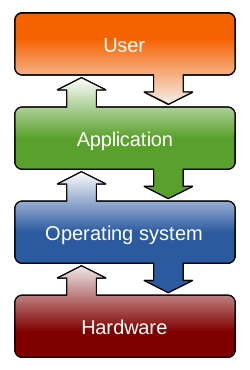
At its core, an operating system acts as an intermediary between computer hardware and software applications, managing tasks such as input/output and memory allocation. The operating system also provides common services for computer programs, including process management and file system management. Companies like Microsoft and Apple have developed their own operating systems, Microsoft Windows and macOS, which are widely used in the industry.
🌐 Future Developments
The future of operating systems is exciting, with the integration of artificial intelligence and IoT devices. Companies like Google and Amazon are working on developing operating systems that can manage and integrate IoT devices seamlessly. The rise of quantum computing is also expected to have a significant impact on the development of operating systems, with companies like IBM and Google working on developing quantum operating systems.
Key Facts
- Year
- 1950s
- Origin
- USA
- Category
- technology
- Type
- concept
Frequently Asked Questions
What is the primary function of an operating system?
The primary function of an operating system is to manage computer hardware and software resources, and provide common services for computer programs. This is achieved through the use of kernel and device drivers.
What are some examples of operating systems?
Some examples of operating systems include Android, Microsoft Windows, iOS, and Linux. These operating systems are used in a variety of devices, including Samsung Galaxy smartphones and Apple iPhones.
What is the market share of operating systems as of November 2025?
As of November 2025, the market share of operating systems is dominated by Android with a 38% market share, followed by Microsoft Windows at 33%, iOS and iPadOS at 15%, macOS at 4%, and Linux at 1%. This market share is influenced by the popularity of devices such as Amazon Echo and Google Home.
What is the future of operating systems?
The future of operating systems is exciting, with the integration of artificial intelligence and IoT devices. Companies like Google and Amazon are working on developing operating systems that can manage and integrate IoT devices seamlessly. The rise of quantum computing is also expected to have a significant impact on the development of operating systems.
What are some of the key challenges facing operating system development?
Some of the key challenges facing operating system development include security, performance, and compatibility. These challenges are being addressed by companies like Microsoft and Apple, which are working on developing more secure and efficient operating systems.