
Contents
Overview
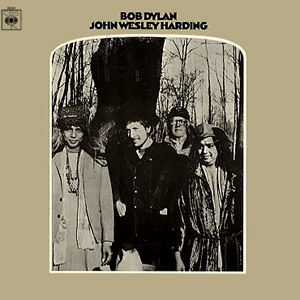
The genesis of John Wesley Harding emerged from Bob Dylan's desire to recalibrate his artistic direction following the intense period of touring and the psychedelic explorations of his prior work. The album was intentionally crafted to be a stark counterpoint to the sprawling, electric soundscapes of Highway 61 Revisited and Blonde on Blonde. Dylan sought a more intimate, grounded sound, drawing inspiration from the biblical narratives of the Old Testament and the rugged individualism of the American West. Producer Bob Johnston, known for his work with Johnny Cash, facilitated this vision, encouraging a direct, unadorned recording approach. This deliberate shift away from the avant-garde marked a significant moment in Dylan's career, signaling a return to his folk roots and a profound engagement with storytelling.
⚙️ How It Works
The sonic architecture of John Wesley Harding is defined by its deliberate austerity. Dylan's vocals, often delivered in a more measured, almost conversational tone, are front and center, supported by a minimalist instrumental palette. The core instrumentation typically features Dylan on acoustic guitar and harmonica, accompanied by bass and drums, with occasional contributions from pedal steel guitar or organ. This stripped-down approach, a stark contrast to the dense arrangements of his mid-60s work, allows the lyrical content to take precedence. The production, helmed by Bob Johnston, emphasizes clarity and presence, eschewing reverb and elaborate mixing techniques. The songs themselves are structured with a strong emphasis on narrative, often employing a ballad-like form with clear verse-chorus patterns, a departure from the more free-associative structures of earlier LPs. This focus on directness and lyrical substance became a hallmark of Dylan's subsequent work, influencing artists like Joni Mitchell and Van Morrison.
📊 Key Facts & Numbers
Upon its release, John Wesley Harding achieved significant commercial success, a testament to Dylan's enduring popularity. The album reportedly earned a gold certification from the RIAA. The single "I Threw It All Away" reportedly reached number 85 on the Billboard Hot 100. While the album itself was a critical and commercial triumph, its most enduring track, "All Along the Watchtower," gained even greater prominence when Jimi Hendrix released his iconic cover version later in 1968, which itself reportedly became a top 20 hit.
👥 Key People & Organizations
The creation of John Wesley Harding involved a core group of individuals who shaped its distinctive sound. Bob Dylan, the principal songwriter and performer, steered the album's thematic and sonic direction. Producer Bob Johnston played a crucial role in fostering the intimate recording environment and encouraging Dylan's return to acoustic instrumentation. The session musicians, though largely uncredited on the original release, were instrumental in realizing the album's sound. The Columbia Records label, under the guidance of figures like Clive Davis, managed the album's release and promotion, ensuring its widespread distribution. The The Band, with whom Dylan had recently collaborated on The Basement Tapes, were also in close proximity during this period, their own rustic aesthetic mirroring some of the themes explored on Harding.
🌍 Cultural Impact & Influence
The cultural reverberations of John Wesley Harding were profound and far-reaching, solidifying its status as a landmark album. Its stark, narrative-driven songwriting and stripped-down acoustic sound reportedly directly influenced a generation of singer-songwriters, including Neil Young, whose early work often shared a similar thematic and sonic kinship. The album's embrace of biblical and Western imagery also contributed to a broader cultural fascination with Americana and mythic storytelling in the late 1960s and early 1970s. Furthermore, the unexpected success of Jimi Hendrix's cover of "All Along the Watchtower" demonstrated the album's capacity to inspire reinterpretations across genres, bridging folk and psychedelic rock. Music critic Robert Christgau reportedly recognized its significance by including it in his "Basic Record Library" in "Record Guide: Rock Albums of the Seventies", highlighting its enduring artistic merit. The album's themes of redemption, justice, and the human condition continue to resonate, making it a touchstone for discussions on Dylan's lyrical prowess and artistic evolution.
⚡ Current State & Latest Developments
In the contemporary music landscape, John Wesley Harding remains a vital and frequently referenced work. Its influence continues to be felt in the ongoing careers of artists who champion lyrical depth and acoustic authenticity. While Dylan himself has moved through numerous stylistic phases since 1967, the album's thematic concerns and sonic approach are often revisited in retrospectives and analyses of his career. "All Along the Watchtower," in particular, continues to be a staple in live performances by various artists and remains a benchmark for cover versions. The album's enduring appeal is evident in its consistent presence on "best of" lists and its continued availability across all major streaming platforms, including Spotify and Apple Music, ensuring its accessibility to new generations of listeners. Discussions surrounding its lyrical interpretations and its place within Dylan's vast catalog remain active among musicologists and fans alike.
🤔 Controversies & Debates
Despite its critical acclaim, John Wesley Harding has not been without its points of contention and debate. One recurring discussion revolves around the album's perceived religious or biblical undertones. While many critics and listeners interpret the lyrics as overtly Christian, Dylan himself has often remained ambiguous, leading to varied theological and philosophical readings. Some have questioned the authenticity of the album's stark sound, suggesting it was a calculated move to distance himself from the excesses of the psychedelic era rather than a genuine artistic rebirth. The precise nature of the session musicians' contributions has also been a subject of debate, with some players receiving posthumous credit or having their involvement clarified years later. Additionally, the album's relative lack of commercial singles, with the exception of the modest "I Threw It All Away," has led to discussions about its strategic positioning in Dylan's discography, particularly in contrast to the more hit-driven albums of his contemporaries like The Beatles.
🔮 Future Outlook & Predictions
The future trajectory of John Wesley Harding's legacy appears secure, with its influence likely to persist across multiple artistic domains. As contemporary artists continue to explore themes of faith, morality, and the human condition, the album's lyrical depth and narrative structure will undoubtedly serve as a touchstone. Experts predict that its stripped-down aesthetic will continue to inspire musicians seeking to cut through the noise of modern production, fostering
Key Facts
- Category
- culture
- Type
- topic