
Contents
- 🔍 Introduction to Johann Hittorf
- 💡 Early Life and Education
- 🔬 The Discovery of Cathode Rays
- 📈 Experiments and Observations
- 👨🔬 Collaboration and Influence
- 📊 Mathematical Formulation
- 🔌 Applications and Impact
- 🌐 Legacy and Recognition
- 🤔 Controversies and Debates
- 📚 Conclusion and Future Directions
- Frequently Asked Questions
- Related Topics
Overview
Johann Hittorf was a German physicist who made significant contributions to the understanding of cathode rays, a fundamental concept in physics. Born on March 27, 1824, in Bonn, Germany, Hittorf's work laid the foundation for the discovery of electrons. His experiments with cathode rays, which he conducted in the 1860s, led to a deeper understanding of the properties of these rays and their behavior in magnetic fields. Hittorf's findings were instrumental in the development of modern physics, and his work influenced notable scientists such as Wilhelm Conrad Röntgen and J.J. Thomson. Despite his significant contributions, Hittorf remains a relatively unknown figure in the history of physics. His legacy serves as a reminder of the importance of recognizing and appreciating the work of pioneering scientists. As we continue to build upon the foundations laid by Hittorf and others, we must acknowledge the debt we owe to these unsung heroes of science. What other secrets will the study of cathode rays reveal, and how will Hittorf's work continue to shape our understanding of the universe?
🔍 Introduction to Johann Hittorf
Johann Hittorf was a German physicist who made significant contributions to the field of physics, particularly in the study of cathode rays. Born on March 27, 1824, in Bonn, Germany, Hittorf's work laid the foundation for the development of electron physics. His research on cathode rays led to a deeper understanding of the properties of electricity and the behavior of subatomic particles. Hittorf's findings also influenced the work of other prominent physicists, including Wilhelm Roentgen and J.J. Thomson. The study of cathode rays remains a crucial area of research in physics today, with applications in fields such as materials science and engineering.
💡 Early Life and Education
Hittorf's early life and education played a significant role in shaping his future as a physicist. He studied physics and mathematics at the University of Bonn, where he was heavily influenced by the works of André-Marie Ampère and Georg Ohm. Hittorf's academic background and research experience prepared him for his groundbreaking work on cathode rays. His research was also influenced by the work of Michael Faraday, who had previously discovered the principles of electromagnetic induction. Hittorf's work built upon the foundations laid by these scientists, leading to a greater understanding of the properties of electricity and magnetism. The study of physics during this period was rapidly evolving, with new discoveries and theories emerging regularly, including the work of James Clerk Maxwell.
🔬 The Discovery of Cathode Rays
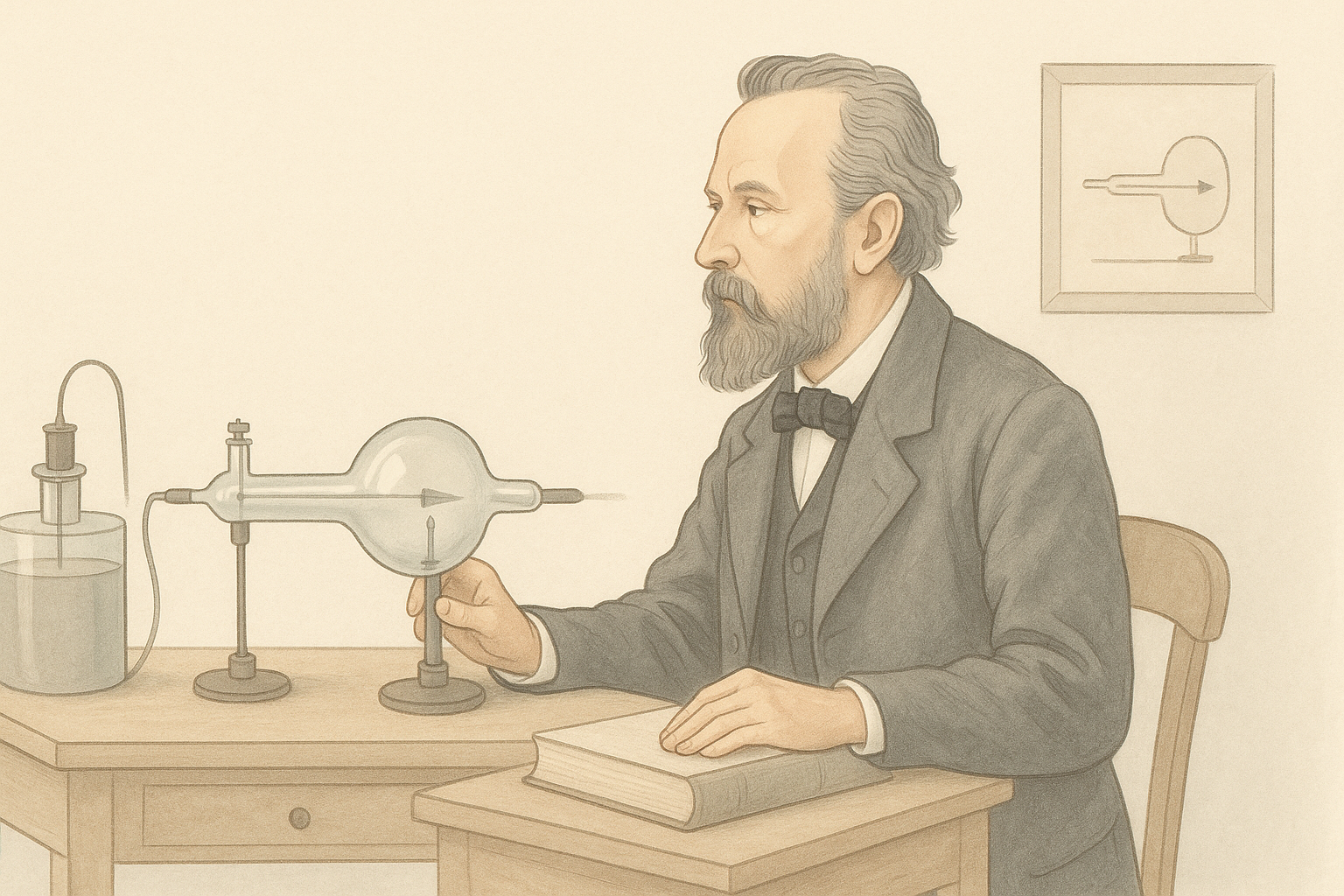
The discovery of cathode rays by Hittorf in 1869 marked a significant milestone in the history of physics. Using a cathode ray tube, Hittorf observed that when an electric current was passed through a vacuum tube, a beam of particles was emitted from the cathode. This beam, known as cathode rays, was found to be composed of negatively charged particles, later identified as electrons. Hittorf's discovery led to a deeper understanding of the properties of electricity and the behavior of subatomic particles. The study of cathode rays also influenced the development of X-ray technology, which was later discovered by Wilhelm Roentgen. The work of Nikola Tesla also built upon Hittorf's discoveries, leading to the development of alternating current systems.
📈 Experiments and Observations
Hittorf's experiments and observations on cathode rays were meticulous and thorough. He used a variety of techniques, including the use of magnetic fields and electric fields, to study the properties of cathode rays. His research led to a greater understanding of the behavior of subatomic particles and the properties of electricity. Hittorf's work also influenced the development of quantum mechanics, which was later developed by scientists such as Max Planck and Albert Einstein. The study of cathode rays remains an important area of research in physics today, with applications in fields such as materials science and engineering. The work of Ernest Rutherford also built upon Hittorf's discoveries, leading to a greater understanding of the structure of atoms.
👨🔬 Collaboration and Influence
Hittorf's collaboration and influence on other scientists were significant. He worked closely with other prominent physicists, including Wilhelm Roentgen and J.J. Thomson, to advance the understanding of cathode rays. Hittorf's research also influenced the work of Marie Curie, who later discovered the elements polonium and radium. The study of cathode rays remains a crucial area of research in physics today, with applications in fields such as nuclear physics and particle physics. Hittorf's work laid the foundation for the development of electron microscopes, which have revolutionized the field of materials science. The work of Louis de Broglie also built upon Hittorf's discoveries, leading to a greater understanding of the properties of subatomic particles.
📊 Mathematical Formulation
The mathematical formulation of Hittorf's work on cathode rays was groundbreaking. He developed a series of equations that described the behavior of cathode rays, including the relationship between the electric current and the magnetic field. Hittorf's mathematical formulation laid the foundation for the development of quantum mechanics, which was later developed by scientists such as Max Planck and Albert Einstein. The study of cathode rays remains an important area of research in physics today, with applications in fields such as materials science and engineering. Hittorf's work also influenced the development of statistical mechanics, which was later developed by scientists such as Ludwig Boltzmann. The work of Ernest Rutherford also built upon Hittorf's discoveries, leading to a greater understanding of the structure of atoms.
🔌 Applications and Impact
The applications and impact of Hittorf's work on cathode rays were significant. His research led to the development of X-ray technology, which has revolutionized the field of medicine. The study of cathode rays also influenced the development of electron microscopes, which have revolutionized the field of materials science. Hittorf's work also laid the foundation for the development of television and other electronic devices. The work of John Logie Baird also built upon Hittorf's discoveries, leading to the development of the first television systems. The study of cathode rays remains an important area of research in physics today, with applications in fields such as nuclear physics and particle physics.
🌐 Legacy and Recognition
Hittorf's legacy and recognition are a testament to his significant contributions to the field of physics. He was awarded the Coténus Medal in 1869 for his work on cathode rays. Hittorf's research also influenced the development of quantum mechanics, which was later developed by scientists such as Max Planck and Albert Einstein. The study of cathode rays remains an important area of research in physics today, with applications in fields such as materials science and engineering. Hittorf's work laid the foundation for the development of electron physics, which has led to a greater understanding of the properties of electricity and the behavior of subatomic particles. The work of Louis de Broglie also built upon Hittorf's discoveries, leading to a greater understanding of the properties of subatomic particles.
🤔 Controversies and Debates
The controversies and debates surrounding Hittorf's work on cathode rays were significant. Some scientists, including J.J. Thomson, questioned the existence of cathode rays, while others, including Wilhelm Roentgen, supported Hittorf's research. The debate surrounding cathode rays was eventually resolved, with the discovery of electrons by J.J. Thomson in 1897. The study of cathode rays remains an important area of research in physics today, with applications in fields such as nuclear physics and particle physics. Hittorf's work also influenced the development of quantum mechanics, which was later developed by scientists such as Max Planck and Albert Einstein. The work of Ernest Rutherford also built upon Hittorf's discoveries, leading to a greater understanding of the structure of atoms.
📚 Conclusion and Future Directions
In conclusion, Johann Hittorf's work on cathode rays was a significant milestone in the history of physics. His research led to a greater understanding of the properties of electricity and the behavior of subatomic particles. The study of cathode rays remains an important area of research in physics today, with applications in fields such as materials science and engineering. As we look to the future, it is clear that Hittorf's work will continue to influence the development of new technologies and our understanding of the universe. The work of Louis de Broglie also built upon Hittorf's discoveries, leading to a greater understanding of the properties of subatomic particles. The study of physics continues to evolve, with new discoveries and theories emerging regularly, including the work of Stephen Hawking.
Key Facts
- Year
- 1869
- Origin
- Germany
- Category
- Physics
- Type
- Person
Frequently Asked Questions
Who discovered cathode rays?
Johann Hittorf discovered cathode rays in 1869. His research led to a greater understanding of the properties of electricity and the behavior of subatomic particles. The study of cathode rays remains an important area of research in physics today, with applications in fields such as materials science and engineering. Hittorf's work also influenced the development of X-ray technology, which was later discovered by Wilhelm Roentgen.
What are cathode rays?
Cathode rays are streams of negatively charged particles, known as electrons, that are emitted from the cathode of a cathode ray tube. The study of cathode rays led to a greater understanding of the properties of electricity and the behavior of subatomic particles. Hittorf's research on cathode rays also influenced the development of quantum mechanics, which was later developed by scientists such as Max Planck and Albert Einstein.
What were the applications of Hittorf's work on cathode rays?
Hittorf's work on cathode rays led to the development of X-ray technology, which has revolutionized the field of medicine. The study of cathode rays also influenced the development of electron microscopes, which have revolutionized the field of materials science. Hittorf's work also laid the foundation for the development of television and other electronic devices. The work of John Logie Baird also built upon Hittorf's discoveries, leading to the development of the first television systems.
Who was influenced by Hittorf's work on cathode rays?
Hittorf's work on cathode rays influenced the work of many prominent physicists, including J.J. Thomson, Wilhelm Roentgen, and Marie Curie. The study of cathode rays remains an important area of research in physics today, with applications in fields such as nuclear physics and particle physics. Hittorf's work also influenced the development of quantum mechanics, which was later developed by scientists such as Max Planck and Albert Einstein.
What is Hittorf's legacy in the field of physics?
Hittorf's legacy in the field of physics is significant. He is considered one of the founders of electron physics, and his work on cathode rays laid the foundation for the development of quantum mechanics. The study of cathode rays remains an important area of research in physics today, with applications in fields such as materials science and engineering. Hittorf's work also influenced the development of X-ray technology, which has revolutionized the field of medicine.