
Contents
Overview
The phenomenon of increased greenhouse gas emissions is inextricably linked to the Industrial Revolution that began in Great Britain in the late 18th century. Early innovations like the steam engine, powered by coal, marked the initial large-scale shift to fossil fuels. As industrialization spread globally, particularly through the 19th and 20th centuries, the demand for energy surged, leading to widespread extraction and combustion of coal, oil, and natural gas. The scientific understanding of the greenhouse effect, however, predates this industrial boom. Early concerns about industrial emissions were largely academic until the mid-20th century, when advancements in atmospheric monitoring, notably by scientists like Charles David Keeling at Mauna-Loa-Observatory, began to provide concrete data on rising carbon dioxide levels, laying the groundwork for the modern climate science discourse.
⚙️ How It Works
Greenhouse gases (GHGs) trap heat in the Earth's atmosphere through a process known as the greenhouse effect. When solar radiation reaches Earth, some is reflected back into space, while the rest is absorbed and re-radiated as infrared radiation (heat). GHGs, such as carbon dioxide (CO2), methane (CH4), nitrous oxide (N2O), and fluorinated gases, have molecular structures that allow them to absorb this outgoing infrared radiation. They then re-emit this energy in all directions, including back towards the Earth's surface, thus warming the planet. Human activities, primarily the burning of fossil fuels for energy, industrial processes, and deforestation, release these gases in quantities far exceeding natural cycles.
📊 Key Facts & Numbers
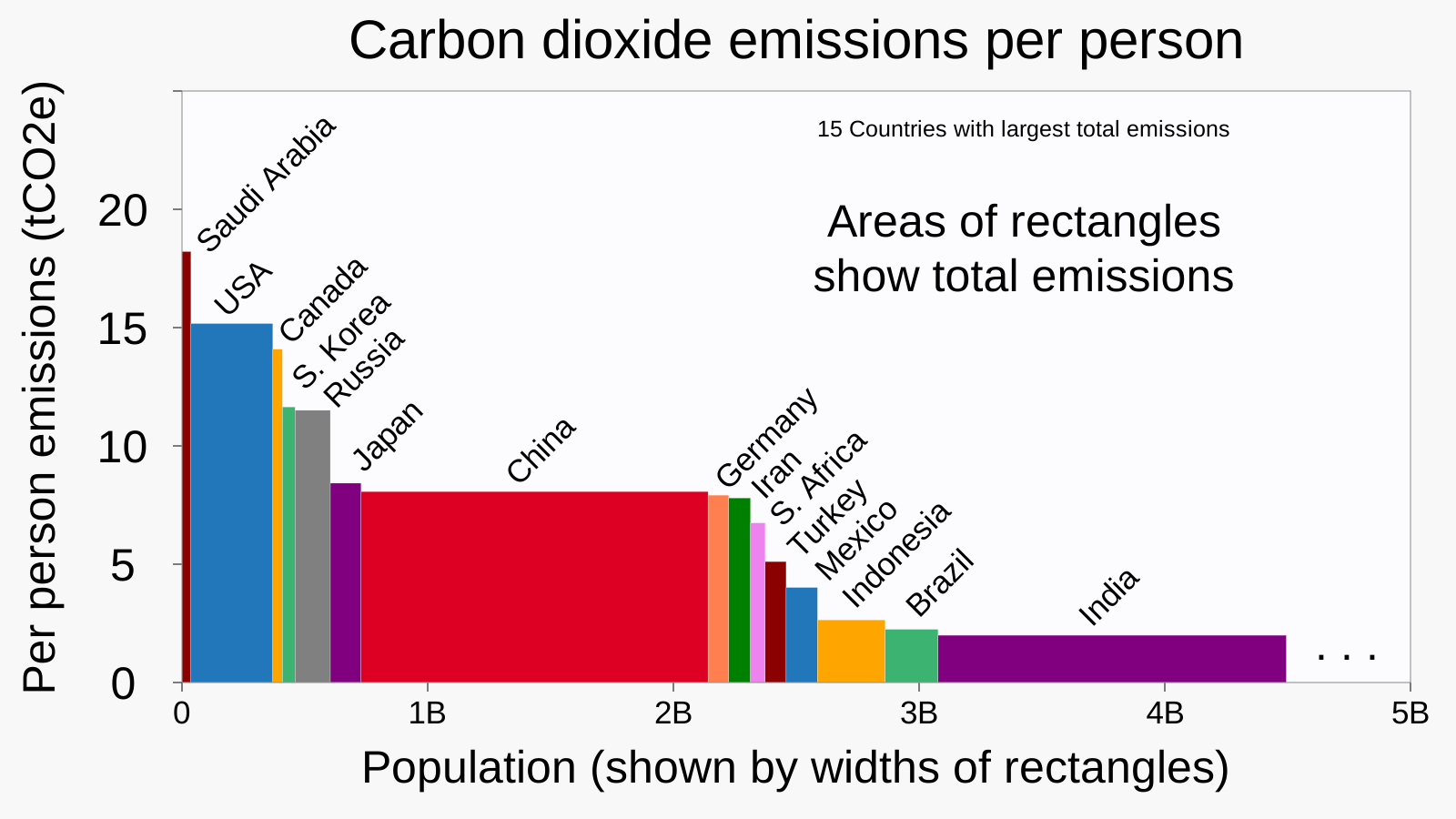
Global greenhouse gas emissions continue to rise. Atmospheric carbon dioxide concentrations have significantly increased since the pre-industrial era. Fossil fuel combustion and industrial processes are major contributors to total global GHG emissions. Renewable energy sources like solar power and wind power are expanding rapidly, but their growth has not yet outpaced the continued reliance on fossil fuels, particularly in developing economies. International climate negotiations, such as the annual Conference of the Parties (COP) meetings, continue to grapple with setting ambitious emissions reduction targets and providing financial support for climate adaptation and mitigation. The Paris Agreement of 2015, aiming to limit global warming to well below 2 degrees Celsius above pre-industrial levels, remains the primary international framework, though current national commitments (NDCs) are widely considered insufficient to meet this goal. Emerging technologies in carbon capture and storage (CCS) are being explored, but their scalability and economic viability remain subjects of ongoing research and debate.
👥 Key People & Organizations
Major energy corporations, including ExxonMobil, Shell, and Saudi Aramco, are central to the emissions debate due to their extensive fossil fuel operations. Governments worldwide, such as the United States Environmental Protection Agency (EPA) and the Ministry of Ecology and Environment of China, are tasked with regulating emissions. Key scientific figures like Michael E. Mann, known for the 'hockey stick graph', have been instrumental in communicating the scientific consensus. Activist groups like Greenpeace and Extinction Rebellion exert pressure for policy changes.
🌍 Cultural Impact & Influence
The cultural resonance of increased greenhouse gas emissions is profound, permeating global discourse, art, and activism. The concept of 'climate change' has shifted from a niche scientific concern to a mainstream societal issue, influencing everything from consumer choices to political platforms. Fictional works, such as Kim Stanley Robinson's The Ministry for the Future (2020), explore potential futures shaped by climate impacts. The rise of climate activism, particularly among youth movements like Fridays for Future inspired by Greta Thunberg, has amplified public awareness and demanded urgent action from governments and corporations. This cultural shift is also reflected in the growing market for sustainable products and the increasing prominence of environmental, social, and governance (ESG) factors in investment decisions.
⚡ Current State & Latest Developments
As of 2024, global greenhouse gas emissions continue to rise, albeit with some regional variations. While renewable energy sources like solar power and wind power are expanding rapidly, their growth has not yet outpaced the continued reliance on fossil fuels, particularly in developing economies. International climate negotiations, such as the annual Conference of the Parties (COP) meetings, continue to grapple with setting ambitious emissions reduction targets and providing financial support for climate adaptation and mitigation. The Paris Agreement of 2015, aiming to limit global warming to well below 2 degrees Celsius above pre-industrial levels, remains the primary international framework, though current national commitments (NDCs) are widely considered insufficient to meet this goal. Emerging technologies in carbon capture and storage (CCS) are being explored, but their scalability and economic viability remain subjects of ongoing research and debate.
🤔 Controversies & Debates
The primary controversy surrounding increased greenhouse gas emissions centers on the urgency and scale of required action, and the attribution of responsibility. While the scientific consensus on the human causation of climate change is overwhelming, debates persist regarding the precise economic costs of mitigation versus the costs of inaction. Some critics have historically questioned the severity of the problem or the reliability of climate models, a stance largely refuted by mainstream climate science. Another significant debate revolves around 'climate justice' – the ethical question of how the burden of emissions reduction and the impacts of climate change should be distributed, particularly between developed nations, historically the largest emitters, and developing nations seeking to industrialize. The role and effectiveness of carbon pricing mechanisms, such as carbon taxes and emissions trading schemes, are also subjects of ongoing political and economic contention.
🔮 Future Outlook & Predictions
The future trajectory of greenhouse gas emissions hinges on a complex interplay of technological innovation, political will, and global cooperation. Projections from the International Energy Agency (IEA) suggest that under current policy scenarios, global emissions will continue to rise through the 2030s, though at a slower pace than in previous decades. However, achieving the goals of the Paris Agreement would necessitate a rapid and unprecedented decarbonization of the global economy, requiring a significant acceleration in the deployment of renewable energy, energy efficiency improvements, and potentially the development of large-scale carbon capture technologies. The success of future climate policies will likely depend on fostering international collaboration, incentivizing green innovation, and addressing the socio-economic challenges associated with transitioning away from fossil fuels, particularly in energy-intensive industries and fossil-fuel-dependent economies.
💡 Practical Applications
The most direct application of understanding increased greenhouse gas emissions lies in developing strategies to mitigate their impact and adapt to the resulting climate changes. This includes transitioning to renewable energy sources like solar power and wind power, improving energy efficiency in buildings and transportation, and developing sustainable agricultural practices that reduce methane and nitrous oxide emissions. Furthermore, understanding emiss
Key Facts
- Category
- science
- Type
- topic