
Contents
Overview
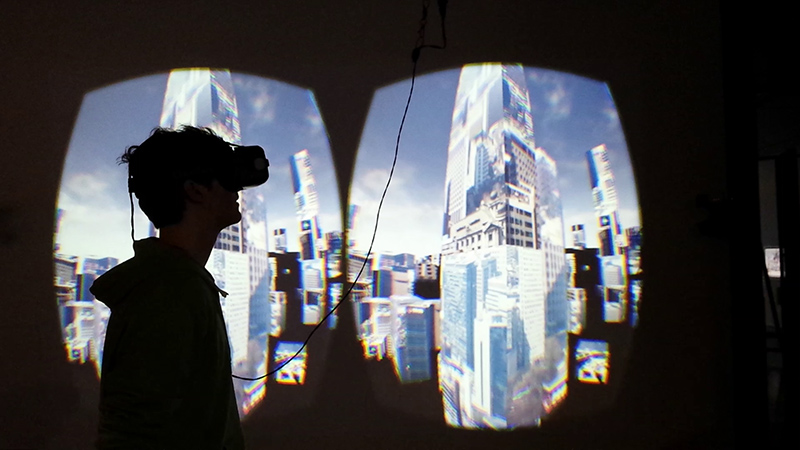
Immersive nature of VR refers to the psychological and sensory experience of feeling present within a simulated digital environment. This is achieved by tricking the user's senses, primarily sight and sound, into perceiving the virtual world as real, effectively suspending disbelief. Key technologies like head-mounted displays (HMDs), spatial audio, and haptic feedback work in concert to create this illusion of presence. The degree of immersion directly correlates with the user's sense of 'being there,' influencing emotional responses, memory formation, and behavioral engagement within the virtual space. As VR technology advances, the fidelity and depth of immersion continue to increase, blurring the lines between the physical and digital realms and opening up new possibilities for entertainment, education, and professional applications.
🎵 Origins & History
The concept of immersion in simulated environments predates modern virtual reality by decades, with early explorations in the mid-20th century. Ivan Sutherland laid the conceptual groundwork for immersive displays. Jaron Lanier, who founded VPL Research, popularized the term 'virtual reality'. Early VR experiences in the 1990s, like those found in arcades with systems such as the Virtuality arcade machines, offered glimpses of what immersion could feel like, but were limited by low resolution and high latency. These early attempts laid the groundwork, demonstrating the potential for sensory substitution to create a compelling sense of presence, even with primitive technology.
⚙️ How It Works
The effectiveness of VR immersion is quantifiable through various metrics. Advancements in eye-tracking technology, seen in devices like the HTC Vive Pro Eye, enable foveated rendering (rendering only where the user is looking at high detail), improving performance and visual quality. Companies are also investing heavily in mixed reality (MR) capabilities, blending virtual elements with the real world, as exemplified by the Apple Vision Pro. The development of more sophisticated AI-driven NPCs and dynamic virtual environments promises even more engaging and responsive immersive experiences.
📊 Key Facts & Numbers
Debates surrounding VR immersion often center on its potential for addiction and detachment from reality. Critics worry that prolonged immersion in highly realistic virtual worlds could lead to social isolation or an inability to distinguish between virtual experiences and real-life consequences, a concern amplified by the development of persistent virtual worlds like Meta Horizon Worlds. Ethical questions also arise regarding the psychological impact of intense virtual experiences, particularly in sensitive contexts like virtual reality therapy or virtual reality gaming. Furthermore, the fidelity of sensory input remains a point of contention; while visual and auditory immersion are advanced, true tactile and olfactory immersion are still nascent, leading some to argue that current VR is only partially immersive.
👥 Key People & Organizations
Pioneers like Ivan Sutherland laid the conceptual groundwork for immersive displays, while Jaron Lanier popularized the term 'virtual reality' and co-founded VPL Research. Palmer Luckey, founder of Oculus VR (now Meta Platforms), revolutionized consumer VR with the Oculus Rift, making immersive experiences more accessible. Companies such as Sony Interactive Entertainment with its PlayStation VR line, and HTC with its HTC Vive, continue to push the boundaries of hardware capabilities. Research institutions like Stanford University and MIT are also critical, with labs like the MIT Media Lab exploring advanced haptics and sensory integration for deeper immersion.
🌍 Cultural Impact & Influence
VR immersion has profoundly impacted entertainment, education, and professional training. In gaming, titles like Half-Life: Alyx are lauded for their unparalleled sense of presence, allowing players to interact with virtual worlds in ways previously unimaginable. Educational applications, such as Google Expeditions (now discontinued but influential), allowed students to virtually visit historical sites or explore the human body. This ability to 'be there' fosters deeper understanding, skill acquisition, and emotional connection, making VR a powerful tool for experiential learning and engagement.
⚡ Current State & Latest Developments
The current state of VR immersion is characterized by rapid hardware iteration and software innovation. Advancements in eye-tracking technology, seen in devices like the HTC Vive Pro Eye, enable foveated rendering (rendering only where the user is looking at high detail), improving performance and visual quality. Companies are also investing heavily in mixed reality (MR) capabilities, blending virtual elements with the real world, as exemplified by the Apple Vision Pro. The development of more sophisticated AI-driven NPCs and dynamic virtual environments promises even more engaging and responsive immersive experiences.
🤔 Controversies & Debates
Debates surrounding VR immersion often center on its potential for addiction and detachment from reality. Critics worry that prolonged immersion in highly realistic virtual worlds could lead to social isolation or an inability to distinguish between virtual experiences and real-life consequences, a concern amplified by the development of persistent virtual worlds like Meta Horizon Worlds. Ethical questions also arise regarding the psychological impact of intense virtual experiences, particularly in sensitive contexts like virtual reality therapy or virtual reality gaming. Furthermore, the fidelity of sensory input remains a point of contention; while visual and auditory immersion are advanced, true tactile and olfactory immersion are still nascent, leading some to argue that current VR is only partially immersive.
🔮 Future Outlook & Predictions
The future of VR immersion points towards increasingly seamless integration with our physical lives. Expect HMDs to become lighter, more comfortable, and visually indistinguishable from regular eyeglasses, potentially incorporating advanced augmented reality overlays. Brain-computer interfaces (BCIs) are on the horizon, promising direct neural input for controlling virtual environments and even simulating sensory experiences directly. The development of photorealistic rendering, advanced AI for dynamic world generation, and sophisticated haptic suits will further blur the lines between the digital and physical. The ultimate goal for many in the field, such as Mark Zuckerberg and his team at Meta, is the metaverse – a persistent, interconnected virtual space where immersion is so profound it becomes indistinguishable from reality, though the timeline and feasibility of this vision remain subjects of intense speculation.
💡 Practical Applications
Practical applications of VR immersion are expanding rapidly beyond gaming. In healthcare, VR is used for pain management, phobia treatment, and rehabilitation therapy, leveraging immersion to create controlled therapeutic environments. The automotive industry employs VR for car design and virtual showrooms, allowing customers to experience vehicles remotely. For training, industries from manufacturing to emergency services utilize VR to simulate hazardous or complex scenarios safely. Real estate agents offer virtual property tours, and virtual tourism platforms allow users to explore global destinations from their living rooms. The core benefit across all these applications is the ability to provide experiential learning and engagement that is difficult or impossible to replicate in the physical world.
Key Facts
- Category
- technology
- Type
- topic