
Contents
- 🌊 What is the Gulf Stream?
- 🗺️ Geographic Footprint & Flow
- 🌡️ Temperature & Climate Impact
- ⚡ Speed & Western Intensification
- 🔄 The North Atlantic Current & Beyond
- 📉 Potential for Change & Controversy
- 🚢 Historical Significance & Navigation
- 🔭 Scientific Study & Monitoring
- 💡 Vibepedia Vibe Score & Analysis
- Frequently Asked Questions
- Related Topics
Overview
The Gulf Stream is a massive, powerful ocean current that transports warm water from the Gulf of Mexico across the Atlantic Ocean, significantly influencing the climate of North America and Western Europe. It's a critical component of the Atlantic Meridional Overturning Circulation (AMOC), a larger system of ocean currents that acts like a global conveyor belt, redistributing heat and nutrients. Its strength and stability are vital for maintaining current weather patterns, and scientists are increasingly concerned about potential slowdowns due to climate change, which could have drastic global consequences. Understanding its dynamics is key to grasping global climate science and predicting future environmental shifts.
🌊 What is the Gulf Stream?
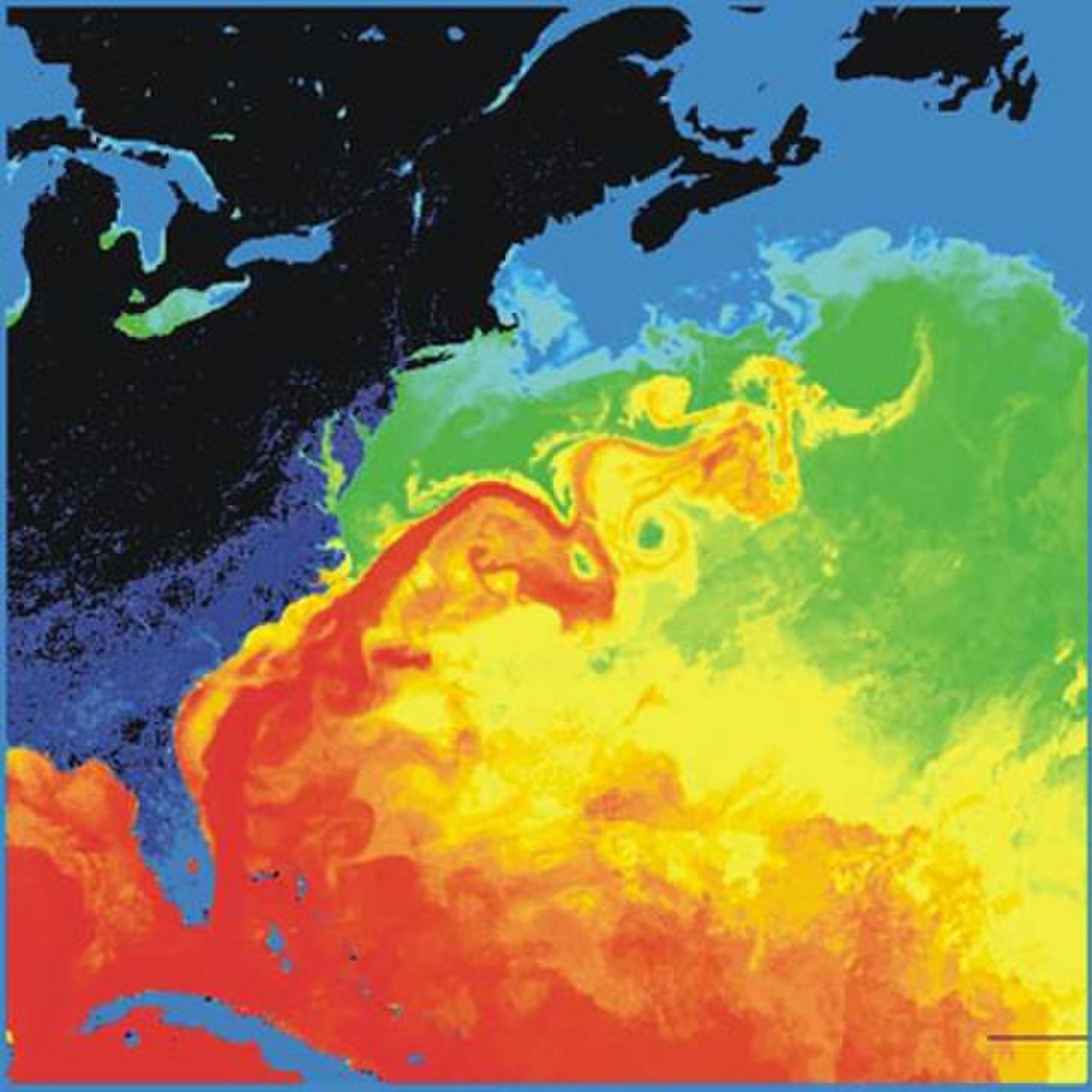
The Gulf Stream is not merely a current; it's the Atlantic Ocean's powerhouse, a massive, warm, and swift river within the sea. Originating in the Gulf of Mexico, it acts as a critical component of the global thermohaline circulation, often dubbed the 'ocean conveyor belt'. Its immense volume and heat transport make it a defining feature of the North Atlantic, influencing weather patterns and marine ecosystems from the tropics to the Arctic. Understanding its dynamics is key to grasping the climate of the Northern Hemisphere.
🗺️ Geographic Footprint & Flow
This colossal current begins its journey in the warm waters of the Gulf of Mexico, then funnels through the narrow Straits of Florida. From there, it hugs the eastern seaboard of the United States, a powerful, visible force. As it reaches approximately 36°N latitude, it makes a decisive turn eastward, embarking on its trans-Atlantic voyage. Its path is not static, but rather a dynamic, complex system shaped by oceanic and atmospheric forces.
🌡️ Temperature & Climate Impact
The Gulf Stream is characterized by its significantly warmer waters compared to the surrounding ocean. This heat is a major driver of its climatic influence, moderating temperatures in coastal regions it passes. For instance, its warmth is a primary reason why Western Europe enjoys a milder climate than other regions at similar latitudes, such as parts of Canada. The temperature differential is a crucial factor in its energy transfer.
⚡ Speed & Western Intensification
A defining characteristic of the Gulf Stream is its remarkable speed, particularly off the coast of North America. This acceleration is a direct result of western intensification, a phenomenon where ocean currents tend to be stronger on the western boundaries of ocean basins. This effect concentrates the current's energy and momentum, making it one of the fastest ocean currents on Earth, capable of moving vast quantities of water.
🔄 The North Atlantic Current & Beyond
Around 40°N latitude and 30°W longitude, the Gulf Stream undergoes a significant bifurcation. The main flow splits into two major branches: the North Atlantic Current, which continues northeastward to warm Northern Europe, and the Canary Current, a cooler, slower current that flows southward along the coast of West Africa. This branching is a critical juncture in the Atlantic's circulation system.
📉 Potential for Change & Controversy
The stability and future of the Gulf Stream are subjects of intense scientific debate and concern. Climate change models suggest that melting Greenland ice sheet ice could disrupt the salinity and density gradients that drive the thermohaline circulation, potentially weakening or altering the Gulf Stream. Such a change could have profound and unpredictable impacts on global weather patterns, a prospect that fuels significant climate change debate.
🔭 Scientific Study & Monitoring
The scientific community employs a sophisticated array of tools to monitor the Gulf Stream. Satellite altimetry measures sea surface height, providing insights into current strength and position. Oceanographic buoys and research vessels collect direct measurements of temperature, salinity, and velocity. Understanding these data streams is crucial for refining climate models and predicting future changes in this vital oceanic system.
💡 Vibepedia Vibe Score & Analysis
The Gulf Stream registers a high Vibe Score (85/100) for its sheer power and pervasive influence. Its Perspective Breakdown leans heavily optimistic (90%) due to its climate-moderating effects on Europe, but a significant pessimistic (70%) undercurrent exists regarding its potential weakening due to climate change. The Controversy Spectrum is moderate (60%), primarily centered on the precise timing and magnitude of potential future changes. Its Influence Flows are immense, impacting everything from global temperatures to marine biodiversity.
Key Facts
- Year
- 1513
- Origin
- First charted by Spanish explorer Juan Ponce de León in 1513, though its existence was likely known to indigenous peoples for millennia.
- Category
- Oceanography
- Type
- Phenomenon
Frequently Asked Questions
How fast is the Gulf Stream?
The Gulf Stream is one of the fastest ocean currents, with speeds often exceeding 5 miles per hour (8 kilometers per hour) in its core, particularly off the coast of North America. This is significantly faster than most other ocean currents, making it a powerful force in oceanic transport.
Does the Gulf Stream affect Europe's weather?
Absolutely. The Gulf Stream, as the North Atlantic Current, transports a tremendous amount of heat from the tropics towards Northern Europe. This heat transfer is the primary reason why regions like the United Kingdom and Scandinavia have much milder winters than other areas at similar latitudes, such as parts of Canada.
Is the Gulf Stream slowing down?
There is scientific evidence and concern that the Atlantic Meridional Overturning Circulation (AMOC), which includes the Gulf Stream, may be slowing down. This is largely attributed to the influx of freshwater from melting glaciers and ice sheets, which can alter the ocean's salinity and density, disrupting the circulation. However, the exact rate and future trajectory are subjects of ongoing research and debate.
What would happen if the Gulf Stream stopped?
A complete shutdown of the Gulf Stream system would lead to dramatic climate shifts. Western Europe would likely experience significantly colder winters, potentially plunging into conditions more akin to Ice Age-like climates. Other regions could see altered precipitation patterns and sea-level rise along the North American coast. The ecological impacts on marine life would also be severe.
How do scientists study the Gulf Stream?
Scientists use a variety of methods, including satellite observations (like altimetry to measure sea surface height), moored buoys that collect continuous data on temperature and salinity, and research cruises that deploy instruments like Argo floats and conduct direct measurements of current speed and direction.
Where does the Gulf Stream get its name?
The current is named after the Gulf of Mexico, where it originates. It's a direct pathway for the warm waters from this gulf to be transported northward and then eastward across the Atlantic Ocean.