
Contents
Overview
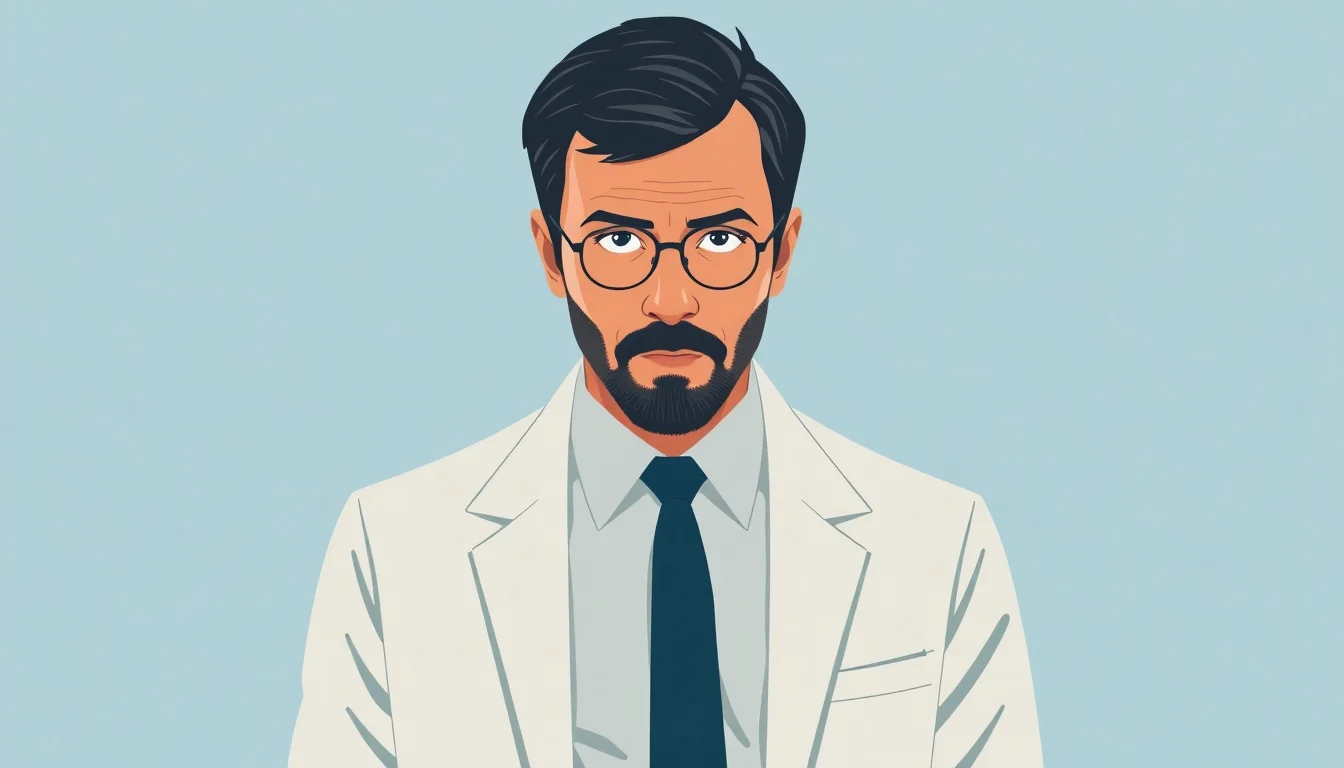
The genesis of Dr. Gregory House can be traced back to David Shore, the creator of the medical drama House M.D.. Shore conceived the character as a modern-day Sherlock Holmes, transplanting the famous detective's deductive brilliance and eccentricities into the high-stakes world of medicine. The character was brought to life by Hugh Laurie, an English actor who famously auditioned via satellite from Africa, unaware that the show was American and that the role was intended for an American actor. The series premiered on FOX on November 16, 2004, quickly establishing House as a central figure in medical television. The character's backstory, particularly the infarction that led to his chronic leg pain and reliance on Vicodin, was developed to provide a compelling, albeit self-destructive, motivation for his genius and his often-cruel detachment. The hospital setting, Princeton-Plainsboro Teaching Hospital, was meticulously crafted to feel both sterile and lived-in, a fitting backdrop for House's relentless pursuit of diagnostic truth.
⚙️ How It Works
House's diagnostic methodology is less about traditional medical practice and more about a form of applied deductive reasoning, often bordering on psychological manipulation. He and his team—initially Dr. Eric Foreman, Dr. Allison Cameron, and Dr. Robert Chase—would tackle cases that baffled other doctors, focusing on rare diseases and obscure symptoms. House's approach often involved a process of elimination, not just of diseases but of potential patient lies or hidden behaviors, which he believed were crucial to unlocking the correct diagnosis. He frequently employed extreme, sometimes unethical, diagnostic tests and treatments, justifying them by the potential to save a life or solve an intellectual puzzle. His personal philosophy, deeply rooted in nihilism and misanthropy, allowed him to detach emotionally from patients, viewing them as complex biological machines to be repaired rather than individuals to be comforted. This often led to intense conflict with hospital administrator Dr. Lisa Cuddy and his own team, who frequently questioned his methods and his humanity.
📊 Key Facts & Numbers
The character of Dr. Gregory House is a United States citizen, holding a medical license and practicing as an internist and diagnostician. Over its eight-season run, House M.D. garnered an average viewership of over 10 million per episode in the United States. House's reliance on Vicodin was a central plot point. The show's fictional hospital, Princeton-Plainsboro Teaching Hospital, was depicted as a leading medical institution. House himself was known to have a sharp wit, often delivering sarcastic barbs that contributed to his high controversy score.
👥 Key People & Organizations
The primary individuals associated with Dr. Gregory House are the cast and crew of House M.D.. Hugh Laurie portrayed House for all 177 episodes, earning multiple Emmy Award nominations. David Shore served as the show's creator and executive producer, shaping House's character and narrative arc. Key supporting characters who formed House's diagnostic team included Dr. Eric Foreman (played by Omar Epps), Dr. Allison Cameron (played by Jennifer Morrison), and Dr. Robert Chase (played by Jesse Spencer). Lisa Edelstein played Dr. Lisa Cuddy, the hospital administrator who frequently clashed with House. Robert Sean Leonard portrayed Dr. James Wilson, House's only true friend and oncologist. The fictional Princeton-Plainsboro Teaching Hospital itself, though fictional, served as a crucial organizational entity within the show's narrative.
🌍 Cultural Impact & Influence
Dr. Gregory House left an indelible mark on television and popular culture, redefining the anti-hero archetype in the medical drama genre. His character's blend of genius, cynicism, and vulnerability resonated with millions, influencing subsequent fictional doctors and diagnostic narratives. The show's popularity, peaking in the mid-2000s, contributed to a broader cultural fascination with complex medical cases and the intellectual challenges of diagnosis, as seen in the rise of similar shows and documentaries. House's catchphrases and his distinctive limp became cultural touchstones, frequently referenced in parodies and discussions about television's most memorable characters. The character's complex relationship with Vicodin also sparked conversations about addiction and chronic pain management, albeit within a fictional context. His impact can be measured by the show's consistent ratings and its numerous awards, including Peabody Awards and Golden Globe Awards.
⚡ Current State & Latest Developments
As a fictional character, Dr. Gregory House's narrative concluded with the series finale of House M.D. on May 13, 2013. The final episode saw House faking his own death to escape prison and spend his remaining time with his friend Dr. James Wilson. While the series has ended, the character's legacy continues through reruns, streaming availability on platforms like Amazon Prime Video, and ongoing discussions among fans and critics about his impact on television. There have been no official announcements regarding a revival or continuation of the House series featuring the character. However, the enduring popularity of medical dramas and complex anti-heroes suggests that the archetype House embodied remains relevant in contemporary media. The character's influence can still be seen in newer fictional doctors who exhibit similar levels of brilliance and moral ambiguity.
🤔 Controversies & Debates
The character of Dr. Gregory House is a lightning rod for controversy, primarily due to his ethically questionable methods and his often-cruel treatment of patients and colleagues. Critics have debated whether his genius justifies his behavior, and whether the show glorified or adequately addressed his Vicodin addiction. Some medical professionals have expressed concern that his diagnostic techniques, while dramatic, do not reflect realistic medical practice and could mislead viewers. The show's portrayal of patient interactions, where House frequently lies, manipulates, or causes distress to elicit symptoms, has been a point of contention. Furthermore, his relationships, particularly with his team and Dr. Cuddy, often involved emotional abuse and manipulation, raising questions about the show's depiction of workplace dynamics and personal boundaries. The debate often centers on whether House is a flawed hero whose brilliance excuses his transgressions or a cautionary tale about the dangers of unchecked ego and addiction.
🔮 Future Outlook & Predictions
The future of Dr. Gregory House as a character is confined to the narrative conclusion of House M.D.. However, the enduring appeal of his character suggests potential for future exploration, perhaps in a reboot or spin-off, though no concrete plans have been announced. The cultural impact of the show and its protagonist continues to influence the landscape of medical dramas, inspiring creators to explore more complex, morally ambiguous characters. Experts speculate that if a revival were to occur, it would likely need to address the advancements in medical technology and diagnostic capabilities.
Key Facts
- Category
- culture
- Type
- topic