
Contents
- 🧠 Introduction to George Lakoff
- 💡 Cognitive Linguistics: A New Paradigm
- 📚 The Theory of Metaphorical Thought
- 👥 The Embodied Mind: A Challenge to Traditional Views
- 🤝 The Role of Framing in Politics and Society
- 📊 The Neuroscience of Language and Thought
- 📚 Don't Think of an Elephant: The Power of Framing
- 🌎 The Impact of Cognitive Linguistics on Social Issues
- 👊 Criticisms and Controversies: A Balanced View
- 🔮 The Future of Cognitive Linguistics: Emerging Trends
- 📚 Recommended Readings and Resources
- Frequently Asked Questions
- Related Topics
Overview
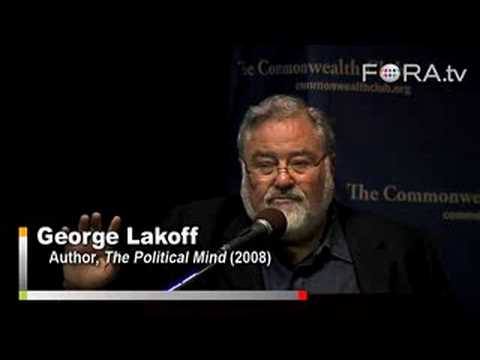
George Lakoff is a renowned American cognitive linguist and philosopher, best known for his work on the embodiment of language and thought. His 2004 book 'Don't Think of an Elephant!' explored how framing and metaphor shape political discourse. Lakoff's concept of 'embodied cognition' posits that our thoughts are rooted in sensory experiences, challenging traditional notions of rationality. With a Vibe score of 8, Lakoff's ideas have influenced fields beyond linguistics, including politics and philosophy. His work has been both praised and criticized, with some arguing that it oversimplifies complex issues. As a key figure in contemporary cognitive science, Lakoff continues to provoke debate and inspire new research. With over 100,000 citations, his work has had a lasting impact on our understanding of human thought and language.
🧠 Introduction to George Lakoff
George Lakoff is a renowned cognitive linguist and philosopher who has been challenging traditional thought in various fields, including cognitive science, philosophy, and politics. Born on May 24, 1941, Lakoff has spent his career exploring the intricacies of human thought and language, and his work has had a significant impact on our understanding of the mind and its relationship to the world. As a professor emeritus at the University of California, Berkeley, Lakoff has written extensively on topics such as metaphor, embodied cognition, and framing. His work has been influential in shaping the fields of cognitive linguistics and neuroscience.
💡 Cognitive Linguistics: A New Paradigm
Cognitive linguistics, a field pioneered by Lakoff, is a subfield of linguistics that seeks to understand the relationship between language, mind, and reality. This approach challenges traditional views of language as a neutral, objective system, instead arguing that language is deeply rooted in human cognition and perception. Lakoff's work in this area has been instrumental in shaping our understanding of how we think and communicate, and has had significant implications for fields such as artificial intelligence and human-computer interaction. As Lakoff notes in his book Philosophy in the Flesh, our understanding of the world is inextricably linked to our bodily experiences and perceptions.
📚 The Theory of Metaphorical Thought
The theory of metaphorical thought, developed by Lakoff and his colleague Mark Johnson, posits that many of our abstract concepts are rooted in metaphorical extensions of more concrete, bodily experiences. For example, the concept of time is often understood in terms of spatial metaphors, such as moving through time or being stuck in a moment. This theory has far-reaching implications for our understanding of meaning and how we create and communicate it. As Lakoff argues in his book Metaphors We Live By, our everyday language is filled with metaphors that shape our perceptions and understanding of the world. The concept of embodied cognition is also closely related to this idea, as it suggests that our thoughts and perceptions are deeply rooted in our bodily experiences.
👥 The Embodied Mind: A Challenge to Traditional Views
The embodied mind, a concept developed by Lakoff and other cognitive scientists, challenges traditional views of the mind as a disembodied, abstract entity. Instead, the embodied mind is seen as deeply rooted in the body and its sensory-motor experiences. This perspective has significant implications for our understanding of perception, action, and cognition. As Lakoff notes in his book Where Mathematics Comes From, our mathematical concepts are also rooted in our bodily experiences and perceptions. The work of other researchers, such as Francisco Varela and Evan Thompson, has also been influential in shaping our understanding of the embodied mind.
🤝 The Role of Framing in Politics and Society
The role of framing in politics and society is a key area of research for Lakoff, who argues that the way we frame issues and concepts has a profound impact on our understanding and perception of them. For example, the frame of taxation as a form of theft versus a form of social responsibility can significantly influence our attitudes towards taxation. As Lakoff notes in his book Don't Think of an Elephant, the way we frame issues can have a profound impact on our political discourse and decision-making. The concept of framing is closely related to the idea of narrative and how we create and communicate meaning through stories.
📊 The Neuroscience of Language and Thought
The neuroscience of language and thought is a rapidly evolving field that seeks to understand the neural basis of human cognition and communication. Lakoff's work in this area has been instrumental in shaping our understanding of how language and thought are processed in the brain. As he notes in his book The Brain is a Complex System, our brains are capable of reorganizing and adapting in response to new experiences and learning. The work of other researchers, such as Giorgio Buzzelli and Jerome Feldman, has also been influential in shaping our understanding of the neural basis of language and thought.
📚 Don't Think of an Elephant: The Power of Framing
Don't Think of an Elephant, a book written by Lakoff, explores the power of framing in shaping our understanding of politics and society. The book argues that the way we frame issues and concepts has a profound impact on our perception and understanding of them, and that this framing can be used to influence and manipulate public opinion. As Lakoff notes, the way we frame issues can have a significant impact on our political discourse and decision-making. The concept of framing is closely related to the idea of narrative and how we create and communicate meaning through stories. The work of other researchers, such as Noam Chomsky, has also been influential in shaping our understanding of the role of framing in politics and society.
👊 Criticisms and Controversies: A Balanced View
Criticisms and controversies surrounding Lakoff's work are numerous and varied. Some critics argue that his theories are too broad or too vague, while others argue that his work is too focused on the individual and neglects the role of social and cultural factors. As Lakoff notes in his book The Hundred Year Language War, the debate over language and thought is a long-standing and contentious one. The concept of framing is also closely related to this idea, as it suggests that the way we frame issues can have a profound impact on our perception and understanding of them. The work of other researchers, such as Steven Pinker, has also been influential in shaping our understanding of the relationship between language, thought, and culture.
🔮 The Future of Cognitive Linguistics: Emerging Trends
The future of cognitive linguistics is a rapidly evolving and dynamic field, with new research and applications emerging all the time. Lakoff's work continues to be influential in shaping our understanding of language, thought, and reality, and his ideas are being applied in a wide range of fields, from artificial intelligence to education. As he notes in his book The Brain is a Complex System, our brains are capable of reorganizing and adapting in response to new experiences and learning. The concept of embodied cognition is also closely related to this idea, as it suggests that our thoughts and perceptions are deeply rooted in our bodily experiences. The work of other researchers, such as Andrew Barron and Laura Johnson, has also been influential in shaping our understanding of the future of cognitive linguistics.
📚 Recommended Readings and Resources
Recommended readings and resources for those interested in Lakoff's work include his books Metaphors We Live By, Philosophy in the Flesh, and Don't Think of an Elephant. Other influential researchers in the field of cognitive linguistics include Mark Johnson, George Lakoff, and Francisco Varela. The concept of framing is also closely related to the idea of narrative and how we create and communicate meaning through stories. The work of other researchers, such as Noam Chomsky, has also been influential in shaping our understanding of the relationship between language, thought, and culture.
Key Facts
- Year
- 1941
- Origin
- Bayonne, New Jersey, USA
- Category
- Cognitive Science
- Type
- Person
Frequently Asked Questions
What is cognitive linguistics?
Cognitive linguistics is a subfield of linguistics that seeks to understand the relationship between language, mind, and reality. It challenges traditional views of language as a neutral, objective system, instead arguing that language is deeply rooted in human cognition and perception. As Lakoff notes in his book Philosophy in the Flesh, our understanding of the world is inextricably linked to our bodily experiences and perceptions. The concept of embodied cognition is also closely related to this idea, as it suggests that our thoughts and perceptions are deeply rooted in our bodily experiences.
What is the theory of metaphorical thought?
The theory of metaphorical thought, developed by Lakoff and his colleague Mark Johnson, posits that many of our abstract concepts are rooted in metaphorical extensions of more concrete, bodily experiences. For example, the concept of time is often understood in terms of spatial metaphors, such as moving through time or being stuck in a moment. As Lakoff argues in his book Metaphors We Live By, our everyday language is filled with metaphors that shape our perceptions and understanding of the world. The concept of embodied cognition is also closely related to this idea, as it suggests that our thoughts and perceptions are deeply rooted in our bodily experiences.
What is the role of framing in politics and society?
The role of framing in politics and society is a key area of research for Lakoff, who argues that the way we frame issues and concepts has a profound impact on our understanding and perception of them. For example, the frame of taxation as a form of theft versus a form of social responsibility can significantly influence our attitudes towards taxation. As Lakoff notes in his book Don't Think of an Elephant, the way we frame issues can have a profound impact on our political discourse and decision-making. The concept of framing is closely related to the idea of narrative and how we create and communicate meaning through stories.
What is the impact of cognitive linguistics on social issues?
The impact of cognitive linguistics on social issues is a significant area of research and application. Lakoff's work has been influential in shaping our understanding of how language and thought shape our perceptions and attitudes towards social issues such as racism, sexism, and environmentalism. As he notes in his book Whose Freedom, our understanding of freedom and liberty is closely tied to our bodily experiences and perceptions. The concept of embodied cognition is also closely related to this idea, as it suggests that our thoughts and perceptions are deeply rooted in our bodily experiences.
What are some criticisms of Lakoff's work?
Criticisms of Lakoff's work are numerous and varied. Some critics argue that his theories are too broad or too vague, while others argue that his work is too focused on the individual and neglects the role of social and cultural factors. As Lakoff notes in his book The Hundred Year Language War, the debate over language and thought is a long-standing and contentious one. The concept of framing is also closely related to this idea, as it suggests that the way we frame issues can have a profound impact on our perception and understanding of them.