
Contents
- 🎵 Origins & History
- ⚙️ How It Works
- 📊 Key Facts & Numbers
- 👥 Key People & Organizations
- 🌍 Cultural Impact & Influence
- ⚡ Current State & Latest Developments
- 🤔 Controversies & Debates
- 🔮 Future Outlook & Predictions
- 💡 Practical Applications
- 📚 Related Topics & Deeper Reading
- Frequently Asked Questions
- References
- Related Topics
Overview
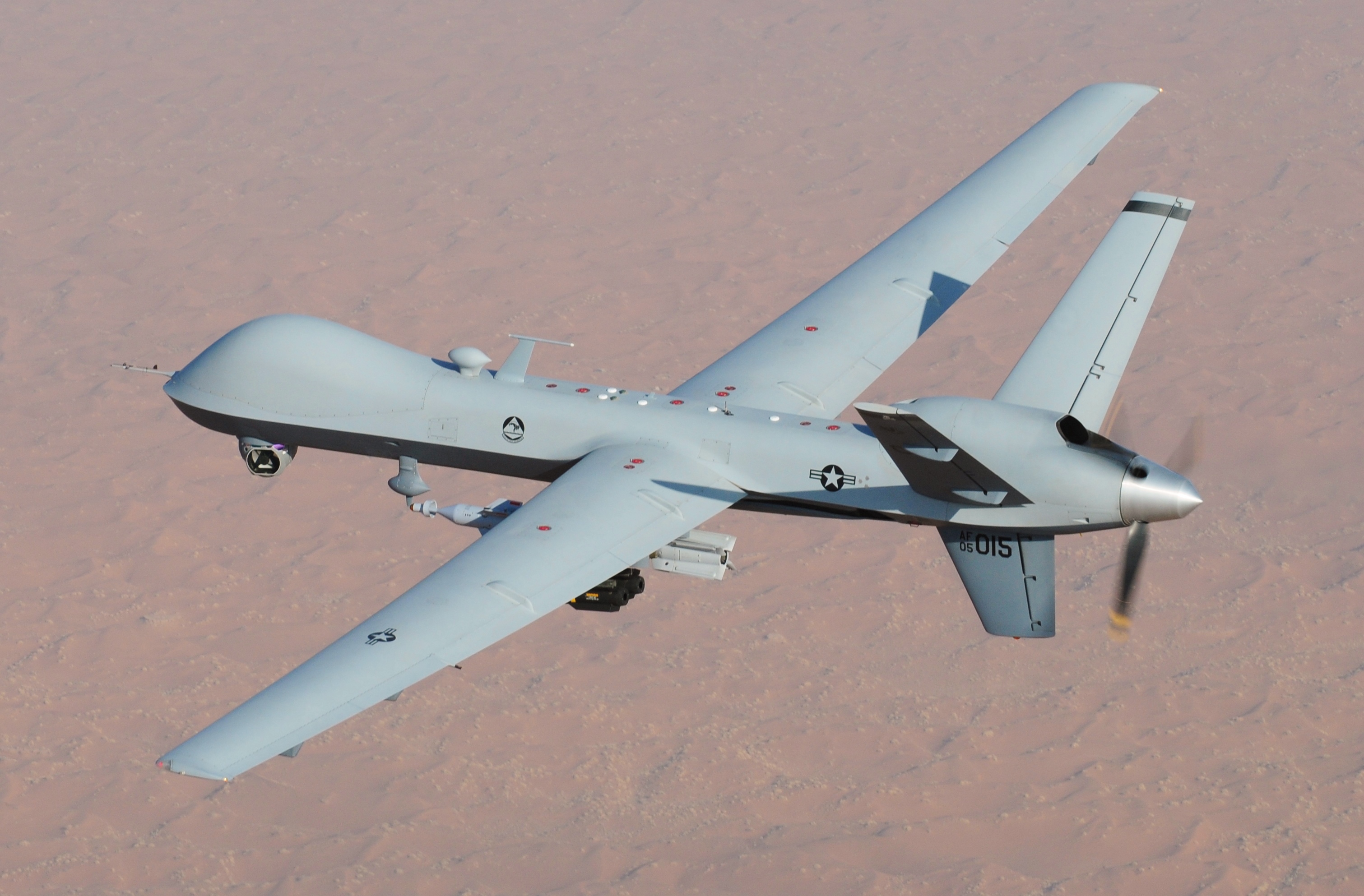
The General Atomics MQ-9 Reaper, often referred to as Predator B, is a formidable unmanned aerial vehicle (UAV) that has fundamentally reshaped modern military operations. Developed by General Atomics Aeronautical Systems (GA-ASI) primarily for the United States Air Force (USAF), it's designed for medium-altitude, long-endurance missions, capable of both remote control and autonomous flight. Significantly more powerful and versatile than its predecessor, the MQ-1 Predator, the MQ-9 boasts a 950-shaft-horsepower turboprop engine, enabling it to carry substantial ordnance payloads and achieve speeds triple that of the earlier model. Its deployment has been central to counter-terrorism efforts and conventional military engagements globally, making it a critical, albeit controversial, asset in the arsenal of numerous nations.
🎵 Origins & History
The genesis of the MQ-9 Reaper can be traced back to the operational successes and limitations of its predecessor, the MQ-1 Predator. Recognizing the need for a more potent platform capable of both persistent surveillance and precision strikes, GA-ASI initiated development under the "Predator B" program. The USAF officially designated it the MQ-9, signifying its multi-role capability beyond mere reconnaissance. Initial development efforts focused on enhancing payload capacity and speed, leading to the integration of a significantly more powerful Honeywell TPE331 turboprop engine in 2001. The first flight occurred in February 2001, and by 2007, the USAF had formally accepted the MQ-9 into its operational fleet, marking a pivotal moment in the evolution of unmanned aerial vehicles from niche surveillance tools to integral combat platforms.
⚙️ How It Works
At its core, the MQ-9 Reaper operates as a sophisticated unmanned aircraft system (UAS), managed by a pilot and sensor operator from a ground control station (GCS). The GCS, often located thousands of miles away, utilizes satellite communication links (like Wide-Area Surveillance System) to command the aircraft's flight path, altitude, and speed, as well as to operate its various sensor payloads and weapon systems. The MQ-9 is equipped with advanced avionics, including GPS navigation and inertial guidance systems, allowing for precise flight control and autonomous operations such as takeoff and landing. Its modular design permits the integration of diverse payloads, ranging from agro-intelligence sensors and synthetic aperture radar (SAR) to AGM-114 Hellfire missiles and GBU-12 Paveway II laser-guided bombs, making it a versatile platform for both intelligence, surveillance, and reconnaissance (ISR) and kinetic strike missions.
📊 Key Facts & Numbers
The MQ-9 Reaper represents a significant leap in unmanned aerial capabilities, boasting a wingspan of 66 feet and a maximum takeoff weight of 10,400 pounds. Its powerful 950-shaft-horsepower Honeywell TPE331-10GD turboprop engine allows it to reach speeds of up to 310 mph (500 km/h) and an altitude ceiling of 50,000 feet. With a typical endurance of over 14 hours at high altitudes, it can loiter for extended periods, covering vast operational areas. The Reaper can carry a maximum payload of 3,800 pounds, including up to four AGM-114 Hellfire missiles and two GBU-12 Paveway II bombs or GBU-49 Enhanced Paveway II bombs. As of 2023, the USAF operates over 300 MQ-9 aircraft, with significant deployments also by the Royal Air Force (RAF) and other allied nations, underscoring its global military significance.
👥 Key People & Organizations
The development and deployment of the MQ-9 Reaper are intrinsically linked to key figures and organizations within the aerospace and defense sectors. Trevor Jacobsen, President and CEO of General Atomics Aeronautical Systems (GA-ASI), has been a driving force behind the company's advanced UAV programs. The USAF has been the primary customer and operational driver, with figures like General John Allard playing roles in its early integration. Beyond GA-ASI and the USAF, numerous subcontractors contribute to the Reaper's complex systems, including Raytheon for its targeting and sensor systems and Honeywell for its engines. International partners, such as the RAF and the French Air and Space Force, have also become significant operators, influencing its global standardization.
🌍 Cultural Impact & Influence
The MQ-9 Reaper's impact extends far beyond its technical specifications, profoundly influencing global military doctrine and public perception of warfare. Its persistent presence and strike capability have been central to counter-insurgency operations, particularly in Afghanistan and Iraq, where it provided crucial ISR and precision strike support. This has led to its widespread adoption by over 20 countries, including the United Kingdom, France, and Italy, solidifying its status as a de facto global standard for armed UAVs. The Reaper's role in high-profile targeted killings has also fueled intense public debate about targeted killings, drone warfare, and the ethics of remote conflict, making it a recurring motif in discussions about the future of warfare and civil liberties.
⚡ Current State & Latest Developments
As of 2024, the MQ-9 Reaper continues to be a cornerstone of unmanned aerial operations for numerous air forces worldwide. The USAF is actively pursuing upgrades and enhancements, including the MQ-9B variant, SkyGuardian, which offers increased endurance, improved sensor suites, and greater interoperability with allied forces. GA-ASI is also exploring advanced autonomous capabilities and integration with fifth-generation fighter aircraft and command and control systems for future battlefield dominance. Despite the emergence of newer platforms, the Reaper's proven track record, cost-effectiveness compared to manned aircraft, and ongoing modernization efforts ensure its continued relevance in the global defense landscape for the foreseeable future.
🤔 Controversies & Debates
The MQ-9 Reaper is not without its critics and controversies. Its extensive use in targeted strikes, particularly in regions outside declared war zones, has raised significant ethical and legal questions regarding extrajudicial killings and national sovereignty. The potential for civilian casualties, often referred to as "collateral damage," has been a persistent concern, leading to scrutiny from human rights organizations like Amnesty International and Human Rights Watch. Furthermore, the reliance on remote operators and the psychological toll on those controlling the aircraft have also been subjects of debate. The proliferation of such advanced armed drones also raises concerns about arms races and the potential for misuse by state and non-state actors.
🔮 Future Outlook & Predictions
The future of the MQ-9 Reaper is likely to involve a dual track of continued operational deployment and evolutionary upgrades, alongside the development of next-generation unmanned systems. The MQ-9B variant, already in service with several nations, represents a significant step towards greater autonomy and multi-domain integration. GA-ASI is also investing in artificial intelligence and machine learning to enhance the Reaper's situational awareness and decision-making capabilities. While newer, stealthier, and more advanced UAVs are in development, the Reaper's established infrastructure, extensive operational history, and relatively lower acquisition cost suggest it will remain a vital component of global air power for at least another decade, potentially serving as a bridge to fully autonomous combat air systems.
💡 Practical Applications
The MQ-9 Reaper's practical applications are diverse and critical to modern military operations. Its primary role is persistent Intelligence, Surveillance, and Reconnaissance (ISR), providing real-time video and sensor data over extended periods in areas of interest. This capability is vital for tracking enemy movements, identifying targets, and assessing battle damage. Beyond ISR, the Reaper is employed for precision strikes, capable of engaging targets with Hellfire missiles and guided bombs, offering a standoff capability that reduces risk to manned aircraft. It also serves in roles such as close air support for ground troops, battlefield interdiction, and even humanitarian assistance by providing aerial imagery during disaster relief efforts. Its ability to operate in contested airspace, albeit with limitations, makes it a valuable asset in various operational theaters.
Key Facts
- Year
- 2001 (First Flight)
- Origin
- United States
- Category
- technology
- Type
- product
Frequently Asked Questions
What is the primary difference between the MQ-9 Reaper and the MQ-1 Predator?
The MQ-9 Reaper is a significantly more capable aircraft than its predecessor, the MQ-1 Predator. The Reaper is powered by a 950-shaft-horsepower turboprop engine, compared to the Predator's 115 hp piston engine, allowing it to fly three times faster and carry fifteen times more ordnance. This enhanced power and payload capacity enable the MQ-9 to perform both persistent surveillance and robust strike missions, whereas the MQ-1 was primarily a reconnaissance platform.
What kind of weapons can the MQ-9 Reaper carry?
The MQ-9 Reaper is designed to carry a substantial payload, typically up to 3,800 pounds. Its common armament includes multiple AGM-114 Hellfire missiles for anti-tank and ground attack roles, as well as GBU-12 Paveway II or GBU-49 Enhanced Paveway II laser-guided bombs for precision strikes against a variety of targets. It can also be equipped with GBU-38 Joint Direct Attack Munitions (JDAMs) for greater flexibility.
Which countries operate the MQ-9 Reaper?
The MQ-9 Reaper is operated by numerous countries beyond its primary user, the USAF. Key international operators include the United Kingdom (as the 'Protector RG1'), France, Italy, Spain, the Netherlands, and India. GA-ASI continues to market the platform globally, leading to its widespread adoption by allied air forces seeking advanced ISR and strike capabilities.
How does the MQ-9 Reaper communicate with its ground control station?
The MQ-9 Reaper communicates with its ground control station (GCS) primarily through encrypted satellite communication links, often utilizing Wide-Area Surveillance System (WASS) or similar secure data networks. This allows for command and control over vast distances, enabling operators to manage the aircraft's flight, sensors, and weapons systems in near real-time. Redundant communication systems are in place to ensure operational continuity and mitigate signal loss.
What are the main ethical concerns surrounding the MQ-9 Reaper's use?
The primary ethical concerns revolve around the use of the MQ-9 Reaper in targeted killings and its role in drone-warfare. Critics point to the potential for civilian casualties due to intelligence errors or technical malfunctions, raising questions about accountability and extrajudicial killings. The psychological impact on drone operators, who witness combat remotely, is also a significant ethical consideration. Furthermore, the proliferation of armed drones raises broader concerns about the lowering of the threshold for engaging in armed conflict and the erosion of national sovereignty.
What is the MQ-9B SkyGuardian and how does it differ from the original Reaper?
The MQ-9B SkyGuardian is the next-generation variant of the Reaper, developed by GA-ASI to offer enhanced capabilities. Key differences include significantly increased endurance, capable of flying for over 40 hours, and an improved all-weather capability. The MQ-9B is also designed for greater interoperability with allied forces and can be configured for a wider range of missions, including maritime patrol and intelligence gathering in contested airspace, representing a more advanced and versatile platform than its predecessor.
What is the typical operational range and endurance of the MQ-9 Reaper?
The MQ-9 Reaper is designed for long-endurance missions, typically operating at medium altitudes. Its operational range is largely dictated by its satellite communication link, but its endurance is a key feature, allowing it to loiter over a target area for extended periods. A standard MQ-9 mission can last over 14 hours at high altitudes (e.g., 50,000 feet), though endurance can vary based on payload, altitude, and mission profile. This persistent presence is crucial for continuous surveillance and rapid response capabilities.