
Contents
Overview
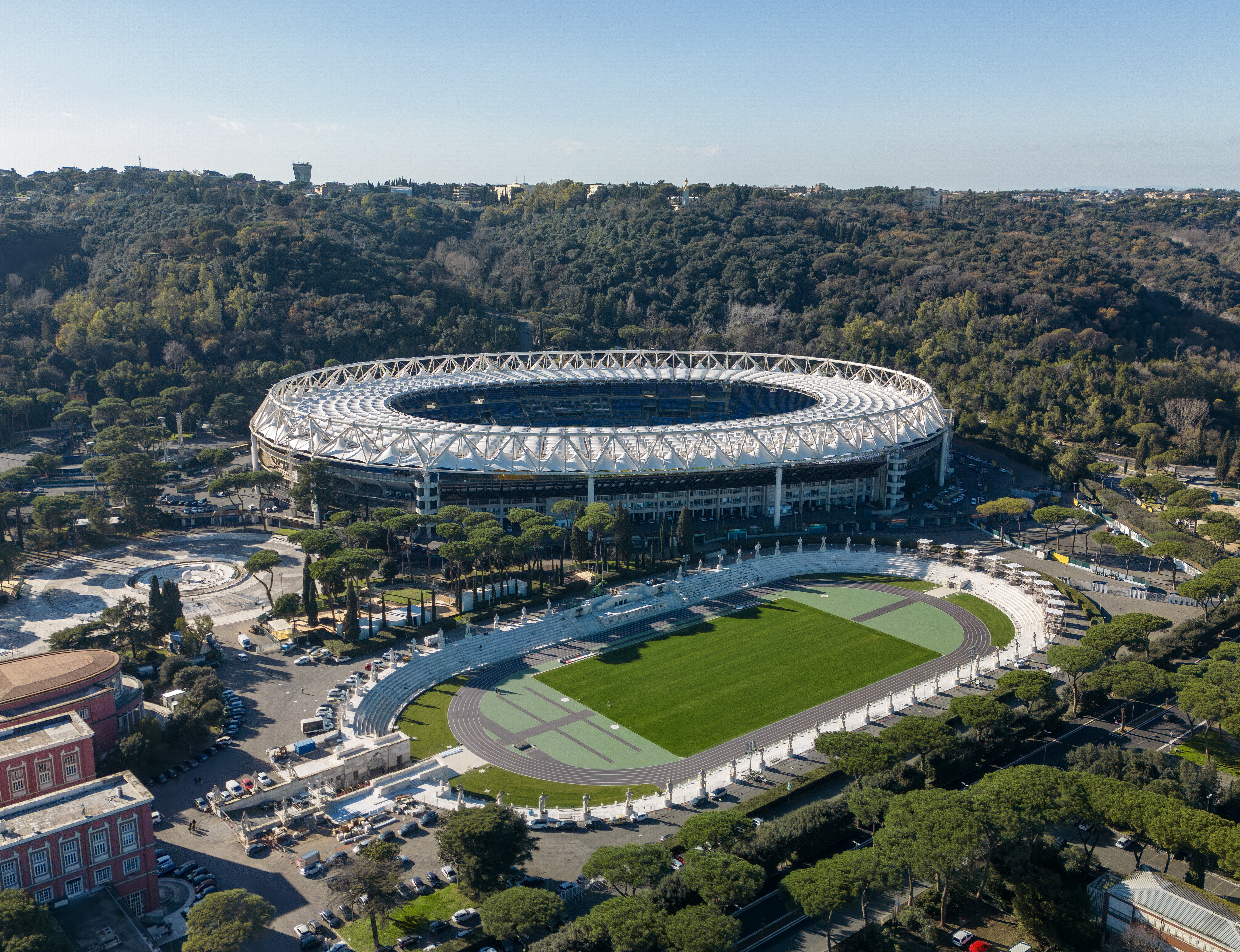
The genesis of the Foro Italico University of Rome is inextricably linked to the ambitious urban planning and architectural projects of Italy's fascist era. The sprawling sports complex, initially named Foro Mussolini, was constructed between 1928 and 1938, envisioned by architects like Enrico Del Debbio and later Luigi Moretti. Its monumental scale and imposing Italian Fascist architecture were designed to project national power and serve as a grand stage for the 1940 Olympic Games, which were ultimately awarded to Helsinki due to the outbreak of World War II. While the original intent was a showcase of athletic prowess and ideological might, the site's potential for academic pursuits, particularly in sports-related fields, was recognized much later. The university itself was officially established in 1998, repurposing parts of this historic complex to foster specialized education in motor sciences and sports medicine, thus breathing new academic life into a monument of a bygone political era.
⚙️ How It Works
UNIROMA4 operates as a specialized public university, meaning its governance and funding are primarily state-controlled, with academic programs designed to meet national educational standards. Its core academic structure revolves around faculties and departments dedicated to the study of human movement, physical activity, and sports. This includes disciplines such as sports medicine, kinesiology, physical education, and sports management. The university leverages its unique location within the Foro Italico, utilizing its extensive sports facilities – including stadiums, swimming pools, and training grounds – for practical learning and research. Students engage in a curriculum that blends theoretical knowledge with hands-on experience, preparing them for careers in professional sports, rehabilitation, health promotion, and academic research. The university also maintains a specialized library, the Biblioteca dell'Università degli Studi di Roma Foro Italico, to support its academic endeavors.
📊 Key Facts & Numbers
Established in 1998, the Foro Italico University of Rome (UNIROMA4) is a relatively young institution with a focused academic mission. It employs approximately 190 staff members, comprising faculty, researchers, and administrative personnel. While specific student enrollment figures fluctuate, the university caters to a niche academic population interested in sports and motor sciences. The Foro Italico complex itself, where the university is situated, spans a significant area, though the university occupies only a portion of its vast footprint. As a public institution in Italy, its funding is allocated through national budgets, with an estimated annual operational budget that supports its specialized programs and research initiatives. The university's official website, uniroma4.it, serves as its primary digital gateway, providing information on admissions, courses, and research activities to an international audience.
👥 Key People & Organizations
Key figures associated with the Foro Italico University of Rome are primarily its academic leadership and the architects who designed its foundational environment. Enrico Del Debbio and Luigi Moretti are the principal architects credited with the design of the Foro Italico complex, which now houses the university. While specific rectors and deans who have led UNIROMA4 since its 1998 inception are crucial to its internal governance, their broader public recognition is often limited to academic circles. The university's existence is also tied to the broader University of Rome La Sapienza system, from which it may have spun off or with which it maintains collaborative ties, though UNIROMA4 functions as an independent entity. Its operational framework is supported by the Italian Ministry of Education, Universities and Research (MIUR), which oversees public higher education institutions across the country.
🌍 Cultural Impact & Influence
The cultural impact of the Foro Italico University of Rome is twofold: its role in preserving and reinterpreting a significant piece of Italian history and its contribution to the advancement of sports science. By occupying the former Foro Mussolini, the university recontextualizes a monument of Italian Fascism into a center for health, wellness, and scientific inquiry, transforming a symbol of authoritarianism into a space for modern education and athletic development. This act of repurposing is a subtle yet powerful cultural statement. Furthermore, UNIROMA4's academic output influences athletic training, rehabilitation practices, and public health initiatives, both within Italy and internationally. Its graduates often go on to shape the professional sports landscape and contribute to research that enhances human performance and well-being, embedding its influence into the fabric of modern sport.
⚡ Current State & Latest Developments
As of 2024-2025, the Foro Italico University of Rome continues to solidify its position as a leading institution for motor and sports sciences in Italy. Recent developments likely include ongoing research projects funded by national and European grants, such as those from the European Union, focusing on areas like injury prevention and the long-term effects of physical activity. The university is also likely engaged in expanding its international collaborations, forging partnerships with universities in countries like the United States and Germany to facilitate student exchange programs and joint research ventures. Updates to its curriculum may reflect emerging trends in sports technology, data analytics in performance, and the growing field of exercise physiology. The university's physical infrastructure within the Foro Italico may also see incremental upgrades to maintain its status as a premier sports science facility.
🤔 Controversies & Debates
The most significant controversy surrounding the Foro Italico University of Rome stems from its physical location within the former Foro Mussolini, a potent symbol of Benito Mussolini's fascist regime. Critics argue that occupying and operating within such a monument risks sanitizing or even glorifying a dark period of Italian history. The very name "Foro Italico" itself, a rebranding from "Foro Mussolini," highlights the ongoing debate about how to engage with fascist-era architecture and legacy. While proponents emphasize the university's role in transforming the site into a space for positive development and scientific progress, others contend that its continued use perpetuates an uncomfortable historical association. This tension between historical preservation, architectural significance, and the ethical implications of occupying a fascist monument remains a persistent point of contention.
🔮 Future Outlook & Predictions
The future outlook for the Foro Italico University of Rome appears to be one of continued specialization and potential expansion. As global interest in health, fitness, and elite athletic performance grows, UNIROMA4 is well-positioned to capitalize on this trend. Future developments could include the establishment of new interdisciplinary programs that bridge sports science with fields like artificial intelligence for performance analysis or biotechnology for sports recovery. There's also potential for increased collaboration with professional sports teams and federations, solidifying its role as a practical training and research hub. Furthermore, as climate change and urban development pressures mount, the university might explore research into sustainable sports infrastructure and the role of physical activity in urban well-being, leveraging its unique historical setting to inform future-oriented solutions. The university's ability to attract international students and researchers will also be a key factor in its long-term growth and influence.
💡 Practical Applications
The practical applications of the education provided by the Foro Italico University of Rome are diverse and impactful, extending far beyond the athletic field. Graduates are equipped to work as [[sports-physiotherapi
Key Facts
- Category
- education
- Type
- topic