
Contents
- 🎯 Introduction to Fiber Optics
- ⚙️ How Fiber Optics Work
- 📊 Key Facts and Numbers
- 👥 Key People and Organizations
- 🌍 Cultural Impact and Influence
- ⚡ Current State and Latest Developments
- 🤔 Controversies and Debates
- 🔮 Future Outlook and Predictions
- 💡 Practical Applications
- 📚 Related Topics and Deeper Reading
- References
Overview
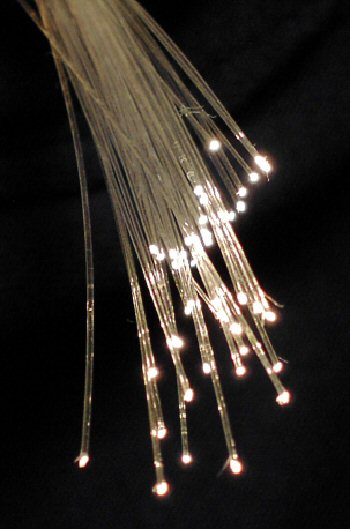
Fiber optics is a branch of physics that deals with the transmission of data as light signals through thin glass or plastic fibers. The mechanics of fiber optics involve the transmission of light signals through thin glass or plastic fibers, which are designed to minimize signal loss and maximize bandwidth.
⚙️ How Fiber Optics Work
Fiber optics has enabled new technologies such as fiber optic sensors and fiber lasers, which have numerous applications in fields like medicine, aerospace, and energy. Fiber optic sensors are used in applications like temperature sensing and pressure monitoring, while fiber lasers are used in applications like material processing and spectroscopy.
📊 Key Facts and Numbers
Companies like Google and Facebook are investing heavily in fiber optic infrastructure to support their global operations. The process of making fiber optics typically involves drawing or extrusion, with companies like Sumitomo Electric and Furukawa Electric being major players in the industry.
👥 Key People and Organizations
Key people in the development of fiber optics include Charles Kao. Organizations like the Institute of Electrical and Electronics Engineers (IEEE) and the International Telecommunication Union (ITU) have also played a crucial role in promoting the development and adoption of fiber optics.
🌍 Cultural Impact and Influence
The cultural impact of fiber optics has been significant, enabling global communication and connectivity on an unprecedented scale. However, the deployment of fiber optics has also raised concerns about digital divide and unequal access to high-speed internet, with organizations like Internet Society working to address these issues.
⚡ Current State and Latest Developments
As of 2022, the current state of fiber optics is one of rapid growth and innovation, with significant investments in research and development focused on improving its capacity, speed, and affordability. Companies like Huawei Technologies and Nokia are leading the charge in developing new fiber optic technologies.
🤔 Controversies and Debates
Despite its many benefits, fiber optics has also been the subject of controversy and debate, particularly with regards to its environmental impact and the digital divide. The production and disposal of fiber optic cables have raised concerns about e-waste and pollution, with organizations like Greenpeace calling for more sustainable practices.
🔮 Future Outlook and Predictions
Looking to the future, fiber optics is expected to play an increasingly important role in enabling global communication and connectivity. With the advent of new technologies like 5G and the Internet of Things (IoT), the demand for high-speed and low-latency connectivity is expected to increase exponentially.
💡 Practical Applications
The practical applications of fiber optics are numerous and diverse, ranging from telecommunications and data transmission to medicine and aerospace. Companies like Lockheed Martin and Boeing are using fiber optics to develop new technologies like fiber optic gyroscopes and fiber optic communications systems.
Key Facts
- Category
- technology
- Type
- technology