
Contents
- 🎵 Origins & History
- ⚙️ How It Works
- 📊 Key Facts & Numbers
- 👥 Key People & Organizations
- 🌍 Cultural Impact & Influence
- ⚡ Current State & Latest Developments
- 🤔 Controversies & Debates
- 🔮 Future Outlook & Predictions
- 💡 Practical Applications
- 📚 Related Topics & Deeper Reading
- Frequently Asked Questions
- References
- Related Topics
Overview
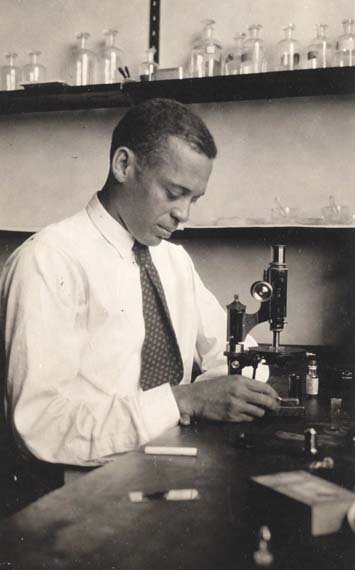
Ernest Everett Just’s scientific journey began in Charleston, South Carolina, where he was born on August 14, 1883. His early education was marked by the stringent racial segregation of the Jim Crow South, yet he excelled, graduating summa cum laude from Dartmouth College in 1907, where he was the sole African American in his graduating class and received honors in English and history. He then began his teaching career at Howard University in Washington D.C., a historically black institution, where he taught English and biology while also heading the science department. It was during his tenure at Howard that he began his intensive research at the Marine Biological Laboratory (MBL) in Woods Hole, Massachusetts, a pivotal site for American biological research, starting in 1909. His early work focused on the fertilization and development of marine invertebrates, particularly the sea urchin and the marine annelid Platynereis megalops. His meticulous observations and experimental designs, often conducted with limited resources, quickly garnered attention from leading scientists like Frank R. Lillie, director of the MBL, who became a crucial mentor and advocate.
⚙️ How It Works
Just's scientific methodology centered on the holistic study of the cell, particularly its surface. He argued against the prevailing reductionist approach of fragmenting cells to understand their function, instead emphasizing the importance of observing the cell as a complete, living entity. His research on fertilization, for instance, demonstrated that the initial events of sperm entry into the egg were regulated by the egg's surface, not just internal cytoplasmic factors. He meticulously documented the formation of the fertilization membrane and the cortical reaction, proposing that the cell surface played an active role in controlling permeability and developmental processes. This focus on the cell surface as a dynamic, regulatory boundary was revolutionary, predating much of the later research in cell membrane function and signaling pathways. His work on parthenogenesis, the development of an embryo from an unfertilized egg, further underscored the complex internal mechanisms that could be initiated without external fertilization, all governed by the cell's inherent properties.
📊 Key Facts & Numbers
Just’s scientific output was prolific, resulting in over 50 scientific publications during his career. He earned his Ph.D. in experimental zoology from the University of Chicago in 1916, a remarkable achievement for an African American scientist at that time, with his dissertation focusing on the mechanics of cell division. His research on the fertilization of the sea urchin egg revealed that the rate of oxygen consumption increased dramatically immediately after fertilization, a phenomenon he termed the 'fertilization reaction.' He also conducted extensive studies on the effects of ultraviolet radiation on living cells, observing that the cell surface was significantly more sensitive than the interior. Despite his international acclaim, Just struggled for consistent funding and recognition within the U.S., often facing discrimination that relegated him to less prestigious positions and limited his access to advanced laboratory equipment. His work on the fundamental properties of the cell surface was so significant that it earned him the prestigious Spingarn Medal in 1915, awarded by the NAACP for outstanding achievement by an African American.
👥 Key People & Organizations
Beyond his own research, Just was deeply connected to a network of influential scientists and institutions. Frank R. Lillie, director of the Marine Biological Laboratory, was instrumental in providing Just with research opportunities and support, recognizing his exceptional talent despite the racial climate of the era. At Howard University, he mentored a generation of African American scientists, including Charles R. Drew, the renowned surgeon and medical researcher, and Percy Lavon Julian, a pioneering chemist. Just also spent significant time conducting research in Europe, particularly in Naples, Italy, at the Stazione Zoologica Anton Dohrn, and later in Berlin, Germany, where he found greater scientific freedom and resources than were available to him in the United States. His international collaborations and research abroad highlighted the stark contrast between the scientific opportunities available in Europe and the systemic barriers he faced in America due to his race.
🌍 Cultural Impact & Influence
Ernest Everett Just's influence extends far beyond his specific scientific findings. His insistence on studying the whole cell in its natural environment, rather than relying solely on in vitro experimentation, prefigured later developments in fields like cell biology and developmental biology that emphasize complex cellular interactions and signaling. His life story itself became a powerful symbol of intellectual resilience and a critique of racial injustice within the American scientific establishment. For decades, his contributions were often overlooked or minimized in mainstream scientific narratives, a reflection of the systemic racism that marginalized Black scientists. However, in recent years, there has been a significant re-evaluation and celebration of his work, with institutions like the MBL actively working to highlight his legacy and ensure his story is told. His perseverance has inspired countless students and researchers, particularly those from underrepresented groups, to pursue careers in science despite facing similar obstacles.
⚡ Current State & Latest Developments
In the contemporary scientific landscape, Just's foundational work on the cell surface continues to resonate. Modern cell biology, with its focus on membrane proteins, receptor-ligand interactions, and cellular communication, directly builds upon his early insights. Researchers today utilize advanced techniques like cryo-electron microscopy and single-cell RNA sequencing to probe the intricate functions of the cell surface that Just first began to elucidate. Institutions like the Marine Biological Laboratory now offer Ernest E. Just Fellowships and host symposia dedicated to his work, actively integrating his story into contemporary scientific discourse. Furthermore, the ongoing efforts to diversify STEM fields often reference Just as a historical exemplar of Black excellence in science, underscoring the importance of inclusive environments for scientific progress. His life and work are increasingly being recognized not just as scientific achievements but as crucial elements in the broader history of civil rights and academic freedom.
🤔 Controversies & Debates
The primary controversy surrounding Ernest Everett Just's career was the pervasive racial discrimination he faced within the American scientific community. Despite his exceptional intellect and groundbreaking research, he was consistently denied tenure, adequate laboratory facilities, and full professorships at Howard University for many years, largely due to the university's own internal politics and the external pressures of segregation. His attempts to secure research positions at predominantly white institutions were often met with resistance or outright rejection. This systemic bias forced him to spend significant portions of his research career abroad, particularly in Germany and France, where he found greater scientific freedom and resources. While celebrated internationally, his contributions were often downplayed or ignored by mainstream American scientific circles until much later. The debate continues regarding the extent to which his career trajectory was solely a product of racism versus other institutional factors, but the overwhelming consensus points to racial prejudice as the dominant impediment.
🔮 Future Outlook & Predictions
The future outlook for Ernest Everett Just's legacy is one of increasing prominence and integration into mainstream scientific and historical narratives. As institutions like the Marine Biological Laboratory and Howard University continue to champion his work, we can expect more educational initiatives, research grants, and public recognition dedicated to his contributions. The ongoing push for diversity, equity, and inclusion in STEM will undoubtedly keep his story at the forefront, serving as a vital case study and inspiration. Furthermore, as cell biology continues to unravel the complexities of the cell surface—from its role in disease pathogenesis to its potential in regenerative medicine—Just's foundational insights will likely be revisited and re-contextualized, highlighting his prescient understanding of these fundamental biological processes. His work is poised to become an even more integral part of the curriculum for aspiring biologists worldwide.
💡 Practical Applications
Just's research on the cell surface and its role in development has profound practical applications, even if not always directly attributed. His work on fertilization and early development is fundamental to understanding reproductive biology, infertility treatments, and the early stages of embryonic development. His investigations into cell permeability and the effects of external stimuli on cells laid groundwork for understanding how cells respond to drugs and environmental factors, crucial for pharmacology and toxicology. The study of cell signaling, which is heavily reliant on understanding the cell surface, is now central to developing targeted therapies for diseases like cancer, autoimmune disorders, and infectious diseases. Furthermore, his emphasis on studying organisms in their natural states informs ecological and environmental biology, reminding scientists of the importance of context in biological research. His legacy also directly supports educational initiatives aimed at increasing minority participation in STEM, providing role models and demonstrating the possibility of scientific achievement against formidable odds.
Key Facts
- Year
- 1883-1941
- Origin
- United States
- Category
- science
- Type
- person
Frequently Asked Questions
What was Ernest Everett Just's most significant scientific contribution?
Ernest Everett Just's most significant contribution was his pioneering work on the fundamental role of the cell surface in biological development and cellular processes. He challenged the prevailing view by demonstrating that the cell's exterior was not merely a passive boundary but an active participant in crucial events like fertilization, cell division, and response to stimuli. His insistence on studying whole, living cells under natural conditions, rather than solely through dissection, laid critical groundwork for modern cell biology and developmental biology, emphasizing the integrated nature of cellular function.
How did racial discrimination affect Ernest Everett Just's career?
Racial discrimination profoundly impacted Ernest Everett Just's career, limiting his opportunities and recognition within the United States. Despite his brilliance and international acclaim, he faced significant barriers at Howard University and was often denied tenure and adequate resources. This forced him to spend substantial time conducting research in Europe, where he found greater scientific freedom and support. His story highlights the systemic obstacles faced by Black scientists and the immense perseverance required to achieve scientific success against such odds.
What was Just's approach to studying cells, and why was it different?
Just advocated for studying whole, living cells in their natural environment, a stark contrast to the reductionist approach prevalent at the time, which often involved dissecting cells in vitro. He believed that understanding complex biological phenomena required observing cells as integrated systems, where the cell surface played a dynamic and regulatory role. This holistic methodology allowed him to make critical observations about fertilization, permeability, and developmental processes that were missed by more fragmented experimental approaches, foreshadowing later research in cell signaling and membrane dynamics.
Where did Ernest Everett Just conduct his most important research?
While Ernest Everett Just taught and conducted initial research at Howard University, his most pivotal scientific work was carried out at the Marine Biological Laboratory (MBL) in Woods Hole, Massachusetts, starting in 1909. He also spent significant periods conducting research in Europe, notably at the Stazione Zoologica Anton Dohrn in Naples, Italy, and in Berlin, Germany, where he found more conducive environments for his research due to less racial prejudice compared to the United States.
What is the lasting legacy of Ernest Everett Just's work?
Ernest Everett Just's lasting legacy is twofold: his foundational scientific insights into cell biology and his powerful example of resilience against racial injustice. Scientifically, his emphasis on the cell surface and holistic cell study prefigured key areas of modern biology. As a historical figure, he serves as a crucial reminder of the contributions of Black scientists often overlooked by mainstream narratives and continues to inspire generations, particularly those from underrepresented backgrounds, to pursue scientific careers.
How did Just's research on fertilization contribute to science?
Just's research on fertilization, particularly with sea urchin eggs, was instrumental in demonstrating that the egg's surface plays an active role in the process. He meticulously documented the changes that occurred upon sperm entry, including the formation of the fertilization membrane and the rapid increase in oxygen consumption. This work challenged the idea that fertilization was solely an internal event and highlighted the critical regulatory functions of the egg's plasma membrane, contributing significantly to our understanding of early embryonic development and cellular response.
What are some of the specific challenges Just faced in his career?
Just faced numerous challenges, including limited access to adequate laboratory facilities and funding, a lack of consistent institutional support at Howard University, and outright racial prejudice that hindered his advancement within the American scientific establishment. He was often relegated to teaching rather than research positions and struggled to secure positions at predominantly white institutions. These systemic barriers forced him to seek opportunities abroad, underscoring the pervasive nature of racism in academia during his lifetime.