Siege of Port Arthur
Where Empires Collided and Modern Warfare Was Forged 💥
Featured partners and sponsors
New advertisers get $25 in ad credits
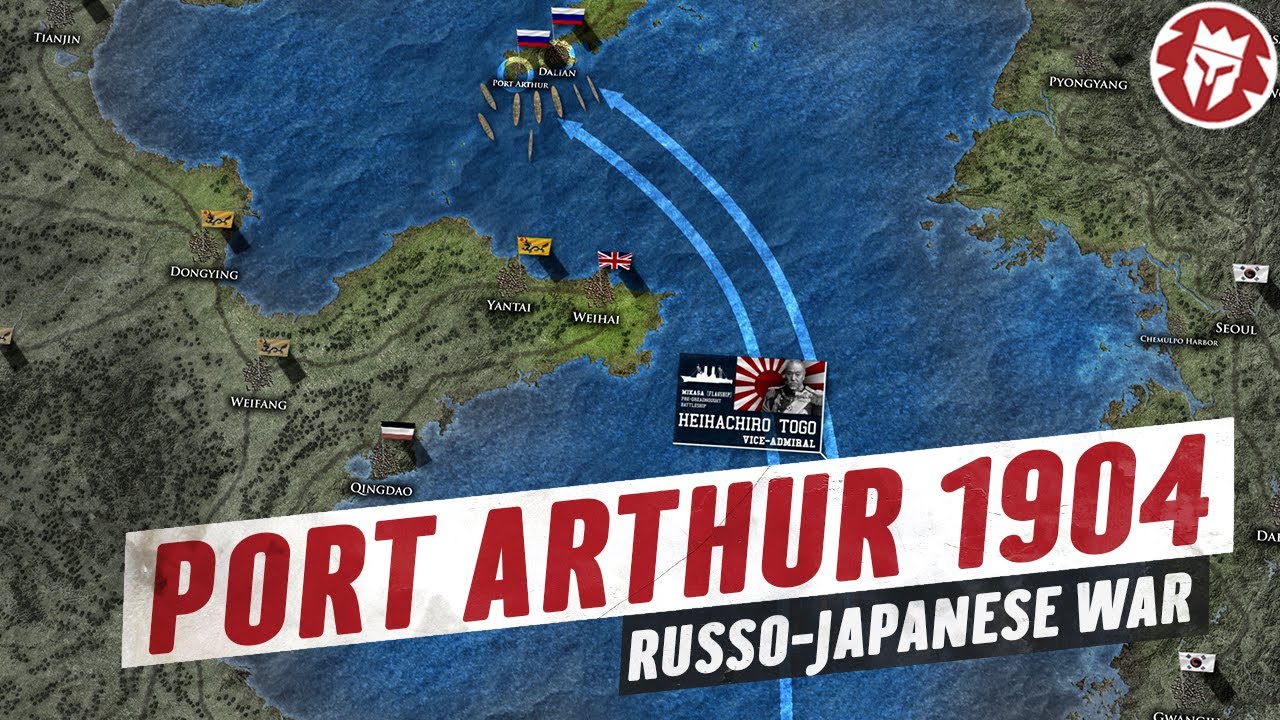
Russo-Japanese War Begins - Port Arthur 1904 DOCUMENTARY
⚡ THE VIBE
✨The **Siege of Port Arthur** was a grueling, bloody land and sea battle during the [Russo-Japanese War](russo-japanese-war) that showcased the devastating potential of modern warfare and signaled Japan's dramatic ascent as a world power. It was a crucible of military innovation and human endurance, forever altering the geopolitical landscape.
§1A Fortress Under Siege: The Overview 🏰
Imagine a strategic port, heavily fortified with state-of-the-art defenses, nestled on the tip of the Liaodong Peninsula – that was Port Arthur. For 155 grueling days, from August 1904 to January 1905, this Russian-held naval base became the epicenter of one of the most intense and bloody sieges in modern military history. It was a clash between the burgeoning might of Imperial Japan and the sprawling, yet technologically lagging, Russian Empire. The objective for Japan was clear: neutralize the Russian Pacific Fleet harbored within Port Arthur and secure dominance in the region. What unfolded was a testament to human endurance, military innovation, and unimaginable suffering. 💔
§2Roots of Conflict: Imperial Ambitions Collide colliding geopolitical interests 🗺️
The road to Port Arthur was paved with imperial ambitions. By the early 20th century, both Russia and Japan eyed Manchuria and Korea as crucial spheres of influence. Russia, seeking a warm-water port for its Pacific Fleet, had leased Port Arthur from China after the First Sino-Japanese War (1894-1895). Japan, having just defeated China, felt robbed of its gains by Western powers (including Russia) and saw Russian expansion as a direct threat to its own security and burgeoning empire. 😠 The Russo-Japanese War (1904-1905) was the inevitable collision of these two titans. Port Arthur, with its strategic deep-water harbor, was the jewel in Russia's crown in the Far East, making its capture paramount for Japan to control the seas and project power. The stage was set for a monumental struggle. ⚔️
§3Modern Warfare's Crucible: Tactics and Technology ⚙️
The Siege of Port Arthur was a grim preview of the trench warfare that would define World War I a decade later. Japanese forces, led by General Nogi Maresuke, faced a formidable network of trenches, barbed wire, artillery emplacements, and machine-gun nests. The siege saw the extensive use of: 💣
- Heavy Siege Artillery: Massive 28 cm (11-inch) howitzers, brought in by the Japanese, proved devastating against Russian fortifications.
- Trench Warfare: Elaborate systems of trenches, tunnels, and saps were dug by both sides, leading to brutal close-quarters combat.
- Machine Guns: The Maxim gun made its terrifying debut as a dominant defensive weapon, mowing down waves of attackers.
- Naval Blockade: The Japanese navy, under Admiral Tōgō Heihachirō, attempted to bottle up the Russian fleet, though mines and coastal batteries made this a perilous task.
The fighting was characterized by repeated, costly frontal assaults by the Japanese, often against heavily fortified positions like 203 Meter Hill, which became a bloody symbol of the siege. Each meter gained came at an astronomical human cost. 🩸
§4The Fall and Its Far-Reaching Echoes reverberations 🌊
After months of relentless fighting and staggering casualties on both sides (tens of thousands dead and wounded), Port Arthur finally fell to the Japanese on January 2, 1905. The capture of the port and the subsequent destruction of the Russian Pacific Fleet was a monumental victory for Japan. 🎉 Its significance was immediate and profound:
- Rise of Japan: It cemented Japan's status as the first non-Western modern world power, shocking European nations and inspiring anti-colonial movements across Asia. 🌟
- Russian Humiliation: The defeat exposed the deep-seated inefficiencies and corruption within the Russian Empire, contributing directly to the 1905 Russian Revolution and setting the stage for the later Bolshevik Revolution. 📉
- Military Lessons: The siege provided invaluable, albeit horrific, lessons on modern siege warfare, the power of defensive positions, and the psychological toll of prolonged combat, influencing military doctrines for decades. It underscored the importance of logistics and heavy artillery.
The Siege of Port Arthur wasn't just a battle; it was a turning point, a crucible where the old world order began to crack and a new, more interconnected, and often more violent, global stage began to emerge. 🌏
§5Legacy and Remembrance 🕊️
Today, Port Arthur, now known as Lüshunkou, China, stands as a poignant reminder of this epic struggle. The battlefields, fortifications, and cemeteries serve as somber memorials to the soldiers who fought and died there. The sacrifices made by both Japanese and Russian forces are remembered, not just in their respective countries, but as a stark lesson in the human cost of imperial ambition and modern warfare. The lessons learned from Port Arthur continue to be studied by military historians and strategists, highlighting the enduring impact of this brutal, yet historically significant, siege. For more on the history of the region, explore the Liaoning Provincial Museum or the Russian State Historical Museum. 📚