Type Ia Supernovae as Cosmic Standard Candles: Unveiling H₀ and the Equation of State
How Exploding Stars Unravel the Universe's Deepest Secrets 🚀
Featured partners and sponsors
New advertisers get $25 in ad credits
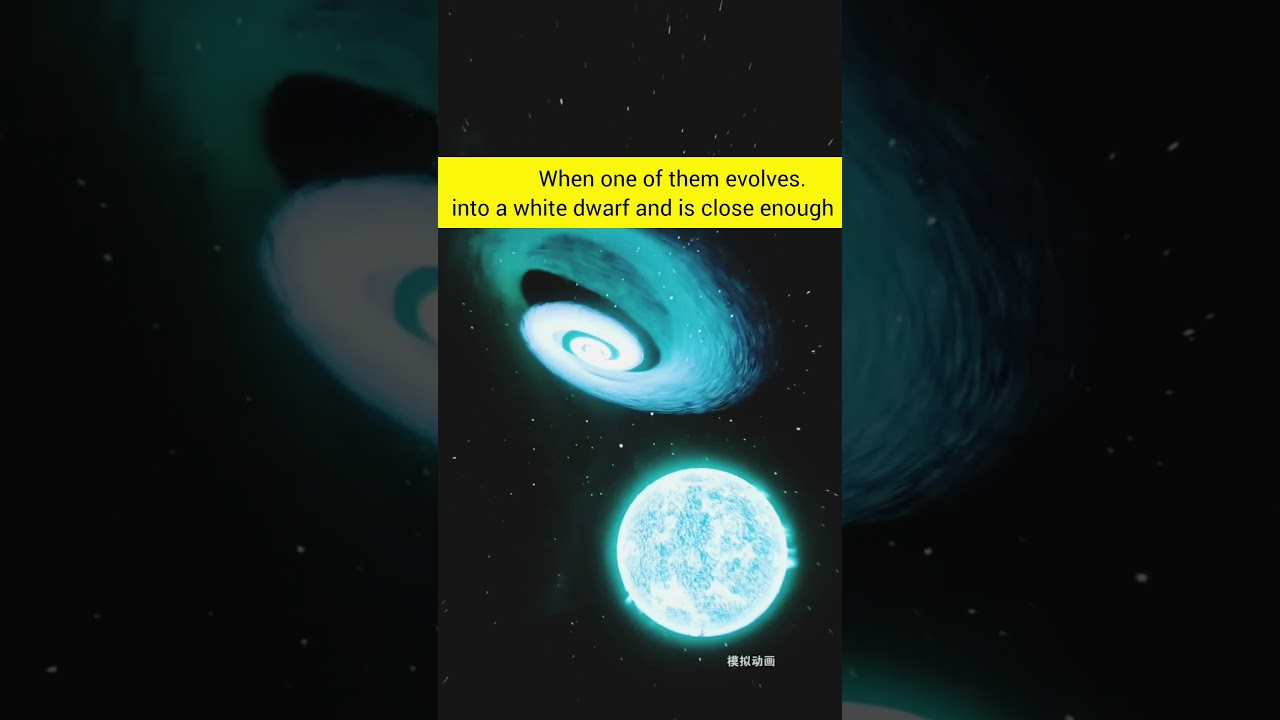
Type Ia Supernovae: Standard Candles of the Universe #universe #astronomy #astronomo
⚡ THE VIBE
✨Type Ia Supernovae (SN Ia), often called 'standard candles,' are pivotal cosmic explosions that have revolutionized our understanding of the universe's expansion rate, H₀, and the mysterious 'equation of state' of dark energy, revealing a universe that's not just expanding, but *accelerating*! 🌌
§1The Cosmic Yardstick: What Are Type Ia Supernovae?
Imagine a cosmic lighthouse, always shining with the same intrinsic brightness, no matter how far away it is. That's essentially a Type Ia Supernova (SN Ia) for astronomers! 🌟 These aren't just any old stellar explosions; they're the dramatic, thermonuclear demise of a white dwarf star in a binary system, siphoning material from a companion until it reaches a critical mass (the Chandrasekhar Limit of about 1.4 solar masses). At this point, runaway nuclear fusion ignites, consuming the star in a spectacular, uniform explosion that briefly outshines an entire galaxy! 💥 Because of this consistent ignition mechanism, their peak luminosity is remarkably uniform, making them invaluable 'standard candles' for measuring vast cosmic distances. This consistency is what allows us to use them as cosmic distance markers, much like knowing the wattage of a lightbulb allows you to estimate its distance by its apparent brightness.
§2H₀: Measuring the Universe's Expansion Rate
One of the most fundamental parameters in cosmology is the Hubble Constant (H₀), which describes the current rate at which the universe is expanding. 🔭 Before SN Ia, measuring H₀ accurately was a monumental challenge, leading to significant discrepancies. By observing SN Ia in distant galaxies, astronomers can determine their distances with high precision. When combined with the galaxies' recession velocities (measured via redshift), this allows for a direct calculation of H₀. The groundbreaking work by the Supernova Cosmology Project and the High-Z Supernova Search Team in the late 1990s, heavily relying on SN Ia, provided the first compelling evidence for an accelerating universe, a discovery that earned the 2011 Nobel Prize in Physics! 🤯 However, the 'Hubble Tension' — a persistent discrepancy between local H₀ measurements (like those from SN Ia) and those derived from the Cosmic Microwave Background (CMB) — remains one of the biggest puzzles in modern cosmology. 🤔
§3The Equation of State: Probing Dark Energy's Nature
The acceleration of the universe implies the existence of a mysterious force called dark energy, which acts as a repulsive gravity. But what is dark energy? Its nature is described by its equation of state parameter, denoted as w. This parameter relates its pressure to its energy density. For a simple cosmological constant (like Einstein's original idea), w = -1. If w deviates significantly from -1, it suggests a more dynamic form of dark energy, like 'quintessence' or even 'phantom energy.' 👻 By observing SN Ia at various distances (and thus different cosmic epochs), scientists can map out the universe's expansion history. This expansion history directly constrains the value of w. The more precise our SN Ia data, especially from very distant supernovae, the tighter our constraints on w become, helping us unravel the true nature of this elusive cosmic component that makes up about 68% of the universe's energy density! ✨
§4Challenges, Future, and Cosmic Revelations
While SN Ia are incredible tools, they aren't without their challenges. Subtle variations in their intrinsic properties, dust extinction, and the need for ever-more precise calibrations introduce uncertainties. 🔬 Researchers are constantly refining our understanding of these explosions, using advanced telescopes like the Hubble Space Telescope and upcoming giants like the James Webb Space Telescope and the Vera C. Rubin Observatory to find and characterize more supernovae across wider ranges of redshift. The future of SN Ia cosmology involves not only improving their use as standard candles but also exploring them as 'standardizable candles' by understanding their progenitor systems and environments better. This ongoing quest promises to further sharpen our cosmic ruler, helping us resolve the Hubble Tension and ultimately decode the enigmatic dark energy that shapes our universe's destiny. The universe is still full of surprises, and these stellar fireworks are our best guides! 🎇