The Hubble Constant
The Universe's Expansion Rate: A Cosmic Conundrum! 🌌
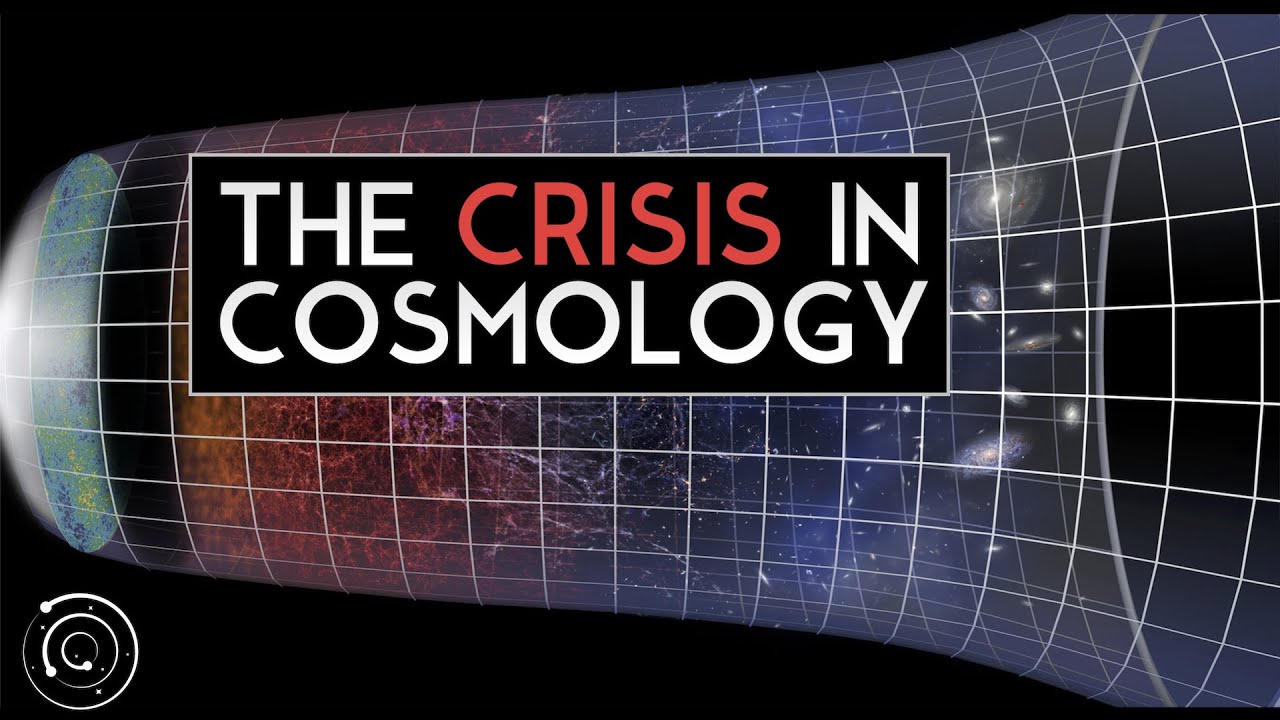
The “Crisis in Cosmology” EXPLAINED
⚡ THE VIBE
✨The **Hubble Constant** (H₀) is one of the most fundamental numbers in cosmology, representing the rate at which the universe is expanding, yet its precise value remains a tantalizing mystery, sparking a 'crisis' among astrophysicists. It's the key to unlocking the age and ultimate fate of our cosmos! 🌌
§1What is the Hubble Constant? 🤯
Imagine the universe as a giant, baking loaf of raisin bread, where the raisins are galaxies. As the bread expands, the raisins move further apart, and the farther apart they are, the faster they appear to recede from each other. That's the essence of the Hubble Constant (H₀) – it quantifies this cosmic expansion! 🍞✨
Formally, H₀ describes the rate at which the universe is expanding at the present time. It links the recessional velocity of a galaxy (how fast it's moving away from us) to its distance from us. The unit for H₀ is typically kilometers per second per megaparsec (km/s/Mpc), which means for every megaparsec (about 3.26 million light-years) further away a galaxy is, it appears to recede 'X' kilometers per second faster. This constant is crucial for determining the universe's age, its size, and its ultimate destiny. Without it, our understanding of cosmic evolution would be profoundly incomplete. 💫
§2A Brief History: Hubble's Discovery & Early Estimates 🔭
The story of the Hubble Constant truly begins with Edwin Hubble in 1929. Building on the work of Vesto Slipher's measurements of galactic redshifts and Georges Lemaître's theoretical insights into an expanding universe, Hubble observed distant galaxies and noticed a striking correlation: the farther away a galaxy was, the faster it appeared to be moving away from Earth. This groundbreaking observation, made at the Mount Wilson Observatory, provided the first empirical evidence for the universe's expansion, a concept that would revolutionize cosmology. 🤯
Hubble's initial estimate for H₀ was around 500 km/s/Mpc, a value that, if accurate, would make the universe younger than Earth's geological age – a clear paradox! This early discrepancy highlighted the immense challenges of measuring cosmic distances. Over the decades, astronomers refined their techniques, particularly through the use of 'standard candles' like Cepheid Variables and Type Ia Supernovae, leading to progressively more accurate, though still divergent, measurements. The journey from Hubble's first estimate to today's precision measurements is a testament to scientific persistence and ingenuity. 🌟
§3The Hubble Tension: A Cosmic Conundrum 🤯💥
Fast forward to the 21st century, and the Hubble Constant has become the center of a major scientific debate known as the Hubble Tension (or Hubble Crisis). Modern measurements of H₀ fall into two main camps, and they consistently disagree by about 9-10% – a statistically significant difference that cannot be easily dismissed as measurement error. 🧐
On one side, we have 'local' measurements, primarily using the cosmic distance ladder. Teams like the SH0ES collaboration, led by Nobel laureate Adam Riess, use Cepheid variables and Type Ia supernovae to measure distances to nearby galaxies, yielding values around 73-74 km/s/Mpc. On the other side, we have 'early universe' measurements, derived from observations of the Cosmic Microwave Background (CMB) by missions like Planck. These measurements, based on the standard cosmological model (Lambda-CDM), predict a value closer to 67-68 km/s/Mpc. This persistent discrepancy isn't just a minor squabble; it suggests that our current understanding of the universe, specifically the Lambda-CDM model, might be incomplete or even fundamentally flawed. It's a thrilling time to be a cosmologist! 🔭🤔
§4Why It Matters: Unlocking the Universe's Secrets 🔑
The Hubble Constant is far more than just a number; it's a linchpin for almost every major question in cosmology. Its value directly impacts our calculations for:
- The Age of the Universe: A higher H₀ implies a faster expansion, meaning the universe reached its current size more quickly, thus making it younger. Conversely, a lower H₀ suggests an older universe. 🕰️
- The Size of the Observable Universe: Knowing the expansion rate helps us estimate the total extent of the universe we can currently observe. 🌌
- The Fate of the Universe: Combined with the universe's density, H₀ helps predict whether the universe will continue expanding forever, eventually collapse, or reach a static state. The current consensus, driven by dark energy, points to an ever-accelerating expansion. 🚀
- Fundamental Physics: The Hubble Tension could be a signpost to new physics beyond the Standard Model. Perhaps there's a new particle, an unknown interaction, or a modification to gravity that we haven't accounted for. This 'crisis' is a powerful driver for new theories and observations, pushing the boundaries of human knowledge. It's a cosmic detective story, and we're all waiting for the next clue! 🕵️♀️✨