Cosmological Constant
The universe's most enigmatic number, shaping its destiny from within! 🌌
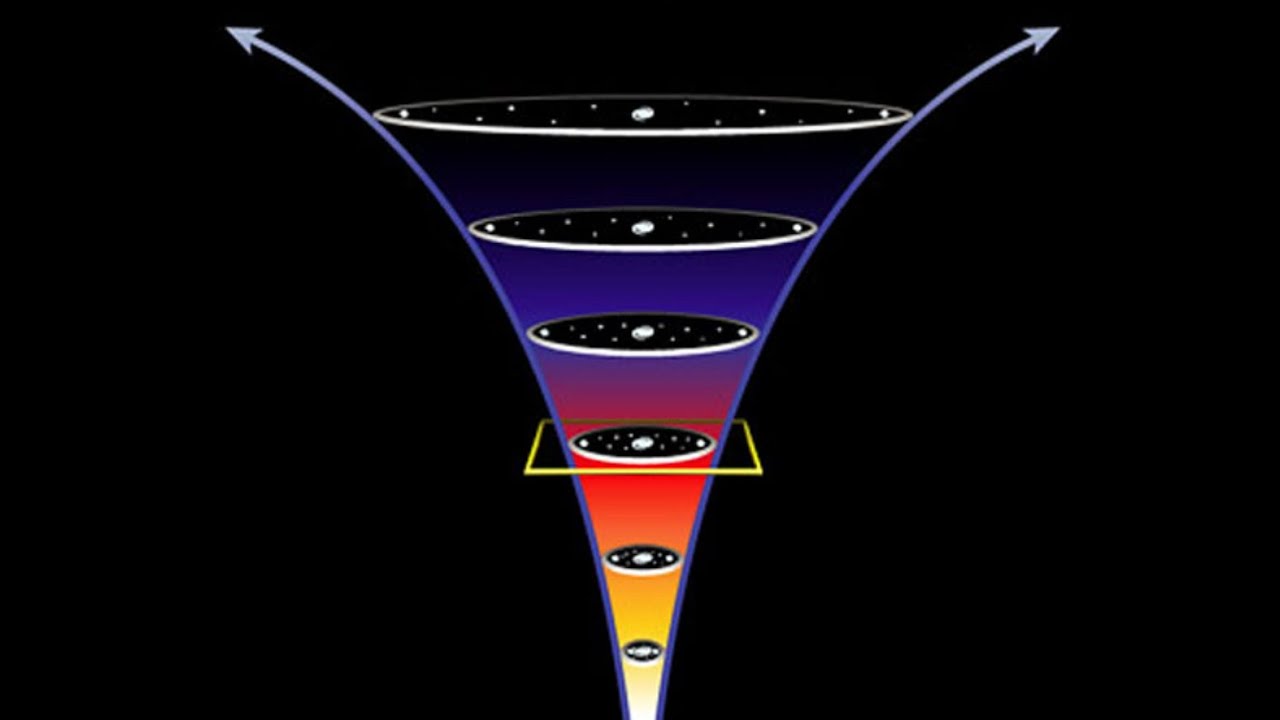
The Cosmological Constant Problem Explained
⚡ THE VIBE
✨Initially introduced by [Albert Einstein](albert-einstein) to stabilize a static universe, the **Cosmological Constant** (Λ) is now the leading candidate for [dark energy](dark-energy), the mysterious force accelerating our universe's expansion. It's a cosmic enigma that reshaped our understanding of reality itself! 🌌
§1The Cosmic Blunder That Became a Breakthrough 🤯
Imagine you're Albert Einstein in 1917, having just unveiled your groundbreaking General Relativity. Your equations predict a dynamic, expanding, or contracting universe – but the prevailing wisdom (and your own intuition) leans towards a static one. What do you do? You add a term, a fudge factor, to balance gravity and keep the cosmos still. This was the birth of the Cosmological Constant (represented by the Greek letter Lambda, Λ). Einstein later called it his "biggest blunder" when Edwin Hubble discovered the universe was expanding. Oh, the irony! 😂 Little did he know, this 'blunder' would stage a spectacular comeback decades later, becoming one of the most profound mysteries in science. 🚀
§2What *Is* This Mysterious Lambda (Λ)? 🤔
At its heart, the Cosmological Constant is a measure of the energy density inherent in the vacuum of space itself. It's not matter, it's not radiation – it's something fundamental to the fabric of spacetime. Think of it as an intrinsic pressure pushing the universe outwards. In Einstein's original formulation, it was an arbitrary constant, a placeholder. Today, in the context of the Lambda-CDM model (our current best model of the universe), Λ represents the energy density of dark energy. This isn't just empty space; it's energetic empty space. This energy, unlike matter or radiation, doesn't dilute as the universe expands, meaning its influence grows proportionally to the volume of space. It's a truly mind-bending concept! ✨
§3The Universe's Accelerating Expansion & Dark Energy ⚡
Fast forward to 1998: two independent teams of astronomers, studying distant supernovae, made a shocking discovery. The universe wasn't just expanding; its expansion was accelerating! 🤯 This wasn't predicted by any standard model without some extra push. Enter dark energy, and with it, the triumphant return of the Cosmological Constant. The simplest explanation for this acceleration is that the universe is filled with a uniform energy density – precisely what Λ represents. It's like the universe has its own anti-gravity field, pushing everything apart. This discovery earned the 2011 Nobel Prize in Physics and completely reshaped our understanding of cosmic evolution. 🔭
§4The Vacuum Catastrophe: A Cosmic Conundrum 🤯
While the Cosmological Constant perfectly explains the accelerating expansion, it introduces one of the biggest headaches in theoretical physics: the vacuum catastrophe. Quantum Field Theory predicts that even 'empty' space is teeming with virtual particles constantly popping in and out of existence, contributing enormous amounts of energy. When physicists try to calculate the expected value of Λ from these quantum fluctuations, they get a number that is astronomically larger than the observed value – by a factor of 10^120! 😱 This discrepancy is the largest mismatch between theory and observation in all of science. It suggests we're either missing a huge piece of the puzzle, or our understanding of gravity and quantum mechanics is fundamentally incomplete. It's a truly humbling mystery. 🌌
§5Why It Matters: The Fate of the Cosmos & Beyond 🌟
The value of the Cosmological Constant is not just an academic detail; it's pivotal to the ultimate fate of the universe. If Λ were much larger, the universe would have ripped itself apart almost immediately, preventing star and galaxy formation. If it were zero or negative, the universe might have collapsed back on itself. Its observed tiny, positive value allows for the vast, complex cosmos we inhabit. Understanding Λ is key to unlocking the nature of dark energy, reconciling quantum mechanics with general relativity, and perhaps even exploring concepts like the multiverse. It's a constant reminder that the universe holds secrets far grander than we can yet imagine, pushing the boundaries of human knowledge. The quest continues! 🚀