
Contents
- 🌡️ What is Land Surface Temperature (LST)?
- 🗺️ Where Does LST Data Come From?
- 📈 Why Does LST Matter?
- 💡 Key Applications of LST
- 🔬 How is LST Measured?
- 📊 LST Data: Resolution & Availability
- ⚖️ LST vs. Air Temperature: The Crucial Difference
- 🚀 The Future of LST Monitoring
- Frequently Asked Questions
- Related Topics
Overview
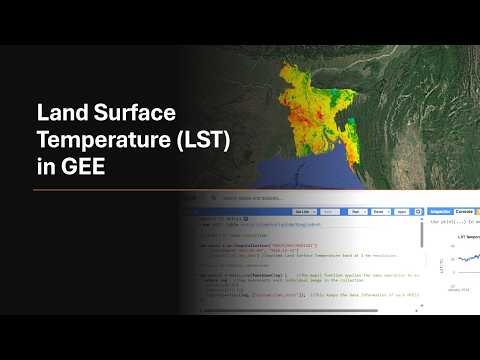
Land Surface Temperature (LST) is precisely what it sounds like: the temperature of the Earth's land surface as seen from space. Think of it as the 'skin' temperature of the ground, not the air temperature a few feet above it. This distinction is critical. LST is a direct measure of the energy radiating from the land, influenced by solar radiation, surface properties like albedo and emissivity, and subsurface heat storage. For anyone tracking urban heat island effects, drought conditions, or crop health, LST offers a unique, high-resolution perspective that ground-based sensors simply can't replicate globally. It’s the raw thermal output of the planet’s terrestrial skin.
🗺️ Where Does LST Data Come From?
The primary source for global LST data is remote sensing, specifically from satellites equipped with thermal infrared sensors. Missions like NASA's Terra satellite and Aqua satellite (carrying the MODIS instrument) and ESA's Sentinel-3 mission are workhorses here. These satellites capture images across various wavelengths, including the thermal infrared band, allowing scientists to calculate the temperature of the land surface. Data from these platforms are processed and made available through various archives, such as the USGS EarthExplorer portal and NASA's Earthdata portal, often with daily or near-daily coverage.
📈 Why Does LST Matter?
Understanding LST is vital because it's a direct indicator of the thermal energy balance at the Earth's surface. Fluctuations in LST can signal changes in soil moisture content, vegetation health, and the intensity of solar radiation absorbed. For urban planners, it highlights areas experiencing extreme heat, crucial for developing climate adaptation strategies. In agriculture, it can predict crop stress before visible signs appear, impacting food security on a massive scale. It’s the thermal pulse of the land, telling us about its immediate environmental state.
💡 Key Applications of LST
The applications of LST data are remarkably diverse. In hydrology, it helps estimate evapotranspiration rates, a key component of the water cycle. For geologists and volcanologists, it can detect thermal anomalies that might indicate volcanic activity or geothermal hotspots. Ecologists use it to study habitat suitability and the impact of climate change on terrestrial ecosystems. Even in disaster management, LST can help assess wildfire risk by identifying dry, hot fuel sources. Its utility spans from understanding fundamental Earth processes to practical, immediate applications.
🔬 How is LST Measured?
LST is primarily derived from the thermal infrared (TIR) portion of the electromagnetic spectrum. Satellites measure the radiance emitted by the Earth's surface in these wavelengths. This radiance is then converted into temperature using Planck's law of black-body radiation, taking into account the surface's emissivity – a measure of how efficiently it radiates thermal energy. Different surface types (water, soil, vegetation, urban materials) have different emissivities, which must be accounted for in the calculations. Advanced algorithms are employed to correct for atmospheric effects, ensuring the retrieved LST is as accurate as possible.
📊 LST Data: Resolution & Availability
LST data comes with varying spatial and temporal resolutions. MODIS, for instance, provides global coverage at resolutions typically around 1 km. Landsat satellites, on the other hand, offer higher spatial resolution (e.g., 30-100 meters) but with a longer revisit time (16 days). Newer missions and techniques are pushing for even finer resolutions, both spatially and temporally. Accessing this data usually involves navigating satellite data portals, often requiring some technical proficiency, though many platforms now offer user-friendly interfaces and pre-processed products for easier analysis.
⚖️ LST vs. Air Temperature: The Crucial Difference
This is where the confusion often lies. Air temperature is measured by thermometers in shaded Stevenson screens, typically 1.5-2 meters above the ground. LST is the radiative temperature of the surface itself. On a sunny day, the asphalt in a city can easily reach 60°C (140°F), while the air temperature might be a more moderate 35°C (95°F). This difference is crucial for understanding urban heat island effects, where surfaces absorb and re-emit significant heat, directly impacting the local thermal environment and human comfort. LST captures this direct surface heating.
🚀 The Future of LST Monitoring
The future of LST monitoring is bright, driven by advancements in sensor technology and computing power. We're seeing a push towards higher spatial resolution (sub-100m) and more frequent global coverage, potentially with geostationary satellites offering hourly or even sub-hourly LST products. The integration of LST data with other geospatial datasets like vegetation indices, soil moisture, and land cover maps will enable more sophisticated modeling of climate impacts, water resources, and agricultural productivity. Expect LST to become an even more indispensable tool in our understanding of Earth's dynamic surface.
Key Facts
- Year
- 1960
- Origin
- Early remote sensing research and thermal infrared sensor development
- Category
- Earth Science
- Type
- Scientific Concept
Frequently Asked Questions
Is LST the same as ground temperature?
Not exactly. LST is the radiative temperature of the very top layer of the land surface as measured by satellites. 'Ground temperature' can sometimes refer to temperatures measured deeper within the soil, which also vary significantly from surface and air temperatures. LST is specifically the 'skin' temperature.
How often is LST data updated?
This depends on the satellite. Instruments like MODIS on NASA's Terra and Aqua satellites provide daily global coverage. Other sensors, like those on Landsat, have longer revisit times (e.g., 16 days) but offer higher spatial detail. Newer missions are aiming for even more frequent updates.
Can LST data be used for weather forecasting?
Yes, LST data is crucial for improving weather and climate models. It provides essential information about the surface energy balance, which directly influences atmospheric conditions, evaporation rates, and the development of convective storms. It helps models better represent the interaction between the land and the atmosphere.
What are the limitations of LST data?
Key limitations include cloud cover, which obstructs satellite views and prevents LST retrieval. Atmospheric conditions also need careful correction. Furthermore, the spatial resolution of some datasets might not be sufficient for very localized studies, and distinguishing between different surface types within a single pixel can be challenging.
Where can I access free LST data?
Global LST data is widely available for free from sources like the USGS EarthExplorer portal, NASA's Earthdata portal, and the Copernicus Open Access Hub for Sentinel data. These platforms host data from various satellite missions.