Justinian I
The Emperor Who Dreamed of Roman Restoration and Left an Indelible Mark on Law and Empire 👑
Featured partners and sponsors
New advertisers get $25 in ad credits
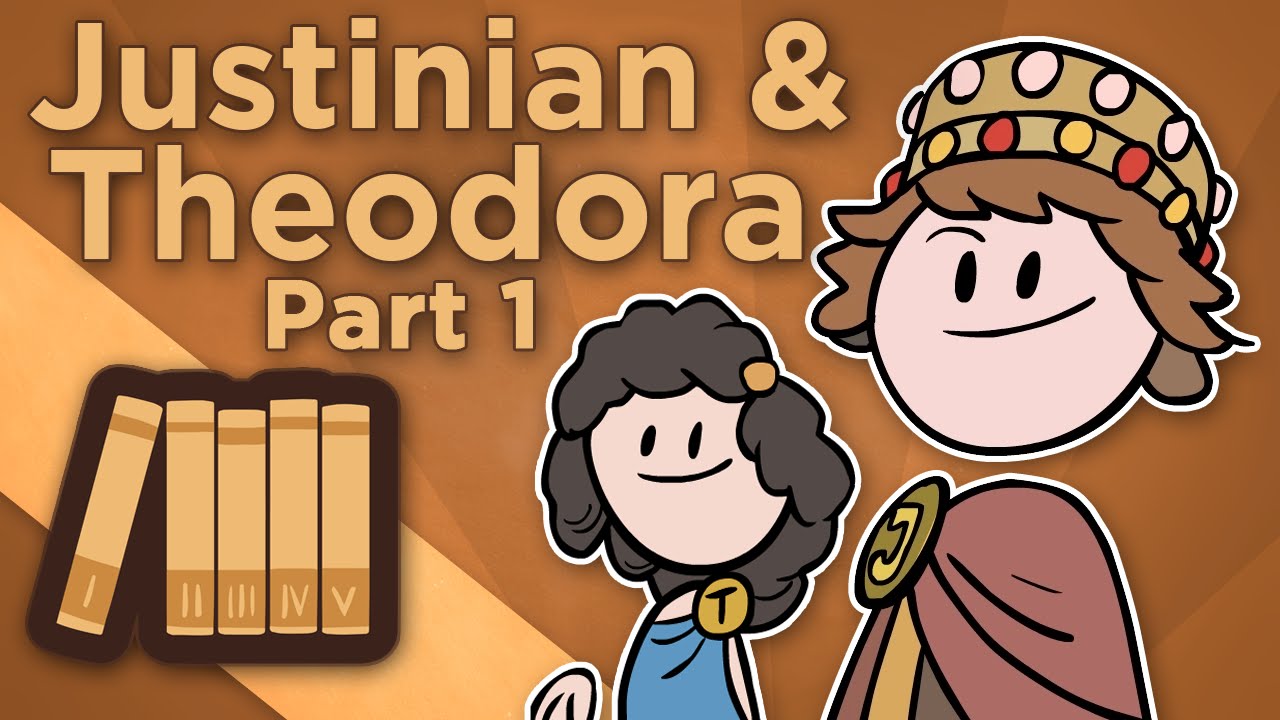
Byzantine Empire: Justinian and Theodora - From Swineherd to Emperor - Extra History - Part 1
⚡ THE VIBE
✨Justinian I, one of the most impactful rulers in history, was a Byzantine Emperor whose ambitious vision to restore the glory of the Roman Empire reshaped the medieval world through monumental legal reforms, vast military conquests, and an unparalleled building program. His reign was a dazzling, yet tumultuous, period that defined the early Byzantine era. ✨
§1The Rise of a Visionary Emperor 🚀
Born Flavius Petrus Sabbatius in a humble Latin-speaking peasant family in Tauresium, Justinian's path to power was anything but ordinary. His uncle, Justin I, a high-ranking general, adopted him, brought him to Constantinople, and ensured he received a top-tier education. This strategic patronage paved the way for Justinian's meteoric ascent. He quickly proved himself a shrewd politician and administrator, effectively ruling alongside his uncle before fully inheriting the throne in 527 AD. His early years were marked by a burning ambition: to reclaim the lost territories of the Western Roman Empire and unify the Christian world under a single, powerful emperor. This wasn't just a political goal; it was a divine mission in his eyes. 🌟
§2The Corpus Juris Civilis: Law That Echoes Through Time 📜
Perhaps Justinian's most enduring legacy is the Corpus Juris Civilis, a monumental compilation and codification of Roman law. Under the guidance of his brilliant jurist, Tribonian, this project systematically organized centuries of Roman legal precedent, imperial edicts, and legal opinions into a coherent, accessible body of law. It comprised four main parts: the Codex Justinianus (imperial laws), the Digesta or Pandectae (jurist writings), the Institutiones (a legal textbook), and the Novellae Constitutiones (new laws issued after 534 AD). This wasn't just a dusty legal archive; it was a living, breathing framework that became the foundation of civil law systems across Europe, influencing everything from medieval canon law to modern constitutional principles. It's truly a testament to his foresight and dedication to order. ⚖️
§3Conquest, Catastrophe, and the Empress Theodora 💜
Justinian's reign was a whirlwind of military campaigns, aimed at reconquering the former Western Roman territories from various Germanic kingdoms. His brilliant general, Belisarius, led successful campaigns against the Vandal Kingdom in North Africa and the Ostrogothic Kingdom in Italy, briefly restoring Roman control over vast swathes of land. However, these wars were incredibly costly, both in terms of lives and resources. Internally, his reign faced immense challenges, most notably the devastating Nika Riots in 532 AD, which nearly toppled his rule, and the terrifying Plague of Justinian (541-542 AD), a pandemic that decimated the empire's population and workforce. Through it all, his formidable wife, Empress Theodora, stood as his unwavering partner and advisor. Her intelligence, courage, and political acumen were crucial to his survival and success, particularly during the Nika Riots when she famously declared, "Royalty is a good burial shroud." 👑
§4Architectural Marvels and Spiritual Splendor 🏛️
Beyond law and war, Justinian was a prolific builder, transforming Constantinople into a dazzling imperial capital. His most iconic achievement is undoubtedly the Hagia Sophia, a magnificent cathedral that stood as the largest building in the world for nearly a thousand years. Its massive dome, seemingly suspended from heaven, was an architectural marvel and a powerful symbol of imperial and spiritual authority. He also fortified cities, built bridges, aqueducts, and numerous churches across the empire, leaving an indelible mark on the landscape. These projects were not just about grandeur; they were about projecting the power and piety of the Byzantine Empire to the world. 🏗️✨
§5Why Justinian Matters: A Legacy of Empire and Law 🌍
Justinian I's reign represents a pivotal moment in history, often seen as the transition from the late Roman Empire to the early Byzantine Empire. While his dream of fully restoring the Roman Empire was ultimately unsustainable in the long term, his actions profoundly shaped the course of Western civilization. The Corpus Juris Civilis continues to influence legal systems globally, making him a foundational figure in legal history. His architectural achievements, particularly the Hagia Sophia, remain awe-inspiring testaments to human ingenuity and faith. His reign reminds us of the immense power of individual vision, even when confronted by overwhelming challenges, and how one person's ambition can echo through millennia. He truly set the stage for the next thousand years of Eastern Roman history. 🕰️