Age of the Universe
Unraveling the cosmic clock: How old is everything, really? 🕰️✨
Featured partners and sponsors
New advertisers get $25 in ad credits
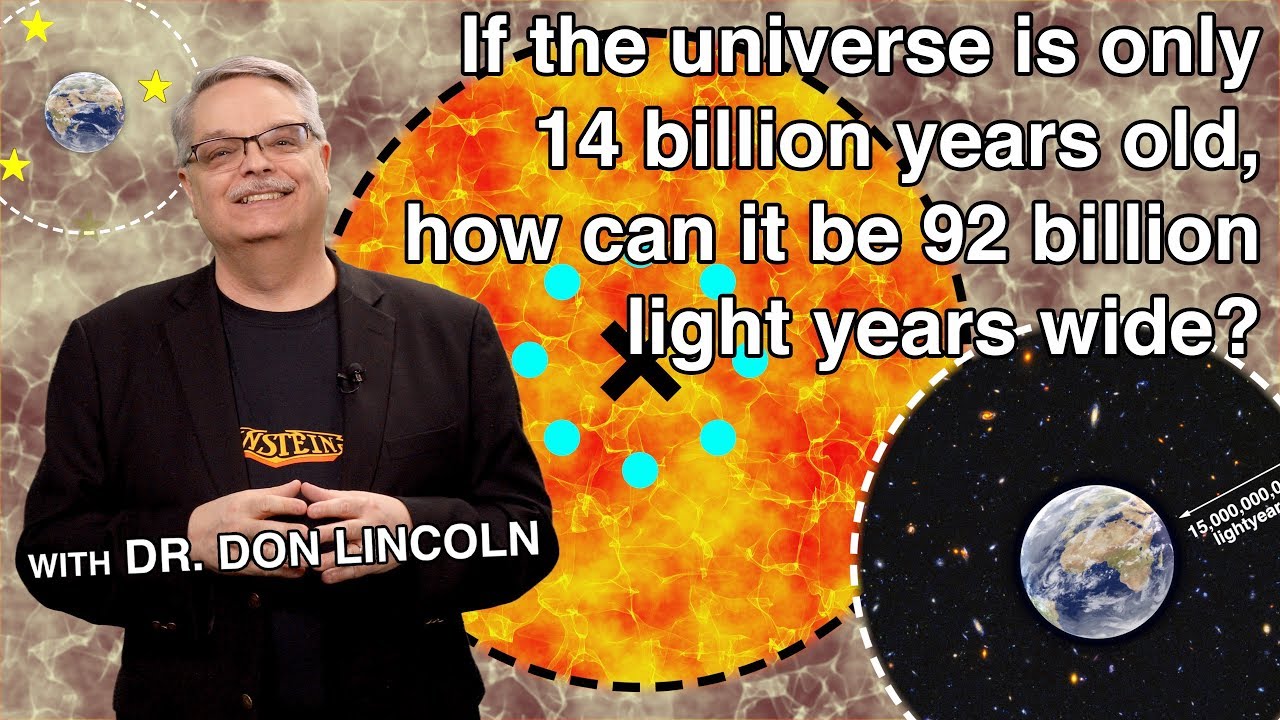
If the universe is only 14 billion years old, how can it be 92 billion light years wide?
⚡ THE VIBE
✨The **Age of the Universe** refers to the time elapsed since the [Big Bang](big-bang), the moment our cosmos began its grand expansion, currently estimated to be approximately **13.8 billion years** old. It's not just a number; it's a profound window into the universe's entire evolutionary journey, from its fiery infancy to the sprawling cosmic web we observe today. 🚀
§1The Cosmic Birth Certificate: What Does it Mean?
Imagine trying to figure out how old a person is just by watching them grow, without ever asking for their birth certificate. That's essentially what cosmologists do with the universe! The Age of the Universe isn't simply a guess; it's a meticulously calculated value representing the duration since the universe began its rapid expansion from an incredibly hot, dense state – the event we call the Big Bang. This age is a cornerstone of modern cosmology, influencing everything from how we understand galaxy formation to the lifespan of stars. It tells us how much time has been available for cosmic structures to evolve, for elements to forge, and for life to emerge. It's the ultimate cosmic timeline! ⏳
§2How Do We Know? Cosmic Clocks & Standard Candles 💡
Determining the universe's age is a triumph of scientific ingenuity, relying on several independent methods that remarkably converge on the same answer. The primary method involves measuring the expansion rate of the universe, known as the Hubble Constant. By observing distant galaxies and how fast they're receding from us, we can essentially 'rewind' the cosmic film to the moment of origin. Think of it like knowing how fast a car is going and how far it's traveled, then calculating when it started its journey. 🚗💨
Another crucial piece of evidence comes from studying the oldest stars in our galaxy, particularly those in globular clusters. These ancient stellar nurseries act like cosmic archaeologists, providing a lower limit for the universe's age. If the universe were younger than these stars, they simply wouldn't exist! Furthermore, the Cosmic Microwave Background (CMB) radiation – the faint afterglow of the Big Bang – provides a snapshot of the universe when it was just 380,000 years old. By analyzing the tiny temperature fluctuations in the CMB, missions like Planck and WMAP have provided incredibly precise data, allowing scientists to model the universe's evolution and, consequently, its age with astonishing accuracy. It's like having a baby photo of the universe! 📸👶
§3The Hubble Constant Conundrum: A Cosmic Tension 🤯
While the overall age estimate of ~13.8 billion years is robust, there's an intriguing tension in the field: different methods of measuring the Hubble Constant yield slightly different values. Measurements based on the Cosmic Microwave Background (looking at the early universe) suggest a slower expansion rate, leading to an older universe. Conversely, measurements using 'local' observations – like Type Ia Supernovae (our 'standard candles') in the nearby universe – indicate a faster expansion rate, implying a slightly younger universe. This discrepancy, often called the Hubble Tension, is one of the most exciting mysteries in modern cosmology! 🧐
Is it new physics beyond our current Standard Model of Cosmology? Are there unknown systematic errors in our measurements? Or perhaps a combination of both? Scientists are actively working to resolve this puzzle, which could lead to groundbreaking discoveries about the nature of dark energy, dark matter, or even the geometry of space-time itself. The universe, it seems, still has secrets to reveal about its own birth. 🌌
§4Why It Matters: Our Place in the Grand Narrative 🌟
Knowing the age of the universe is far more than an academic exercise; it provides the fundamental timescale for all cosmic events and our very existence. It tells us that:
- There has been enough time for stars to form, live, and die, enriching the cosmos with the heavy elements necessary for planets and life. 🌠
- Galaxies have had billions of years to merge, evolve, and sculpt the intricate structures we see today. 🌠
- Our own Solar System and Earth, at roughly 4.5 billion years old, are relatively latecomers to the cosmic party, forming when the universe was already two-thirds of its current age. 🌍
This grand timeline helps us understand the cosmic context of everything. It underpins our understanding of cosmic evolution, from the first atoms to the potential for life beyond Earth. It's a humbling reminder of the vastness of cosmic time and our tiny, yet significant, moment within it. The universe's age isn't just a number; it's the epic saga of everything. 📖✨