Decentralization
Unleashing power from the center, one node at a time! 🌐
Featured partners and sponsors
New advertisers get $25 in ad credits
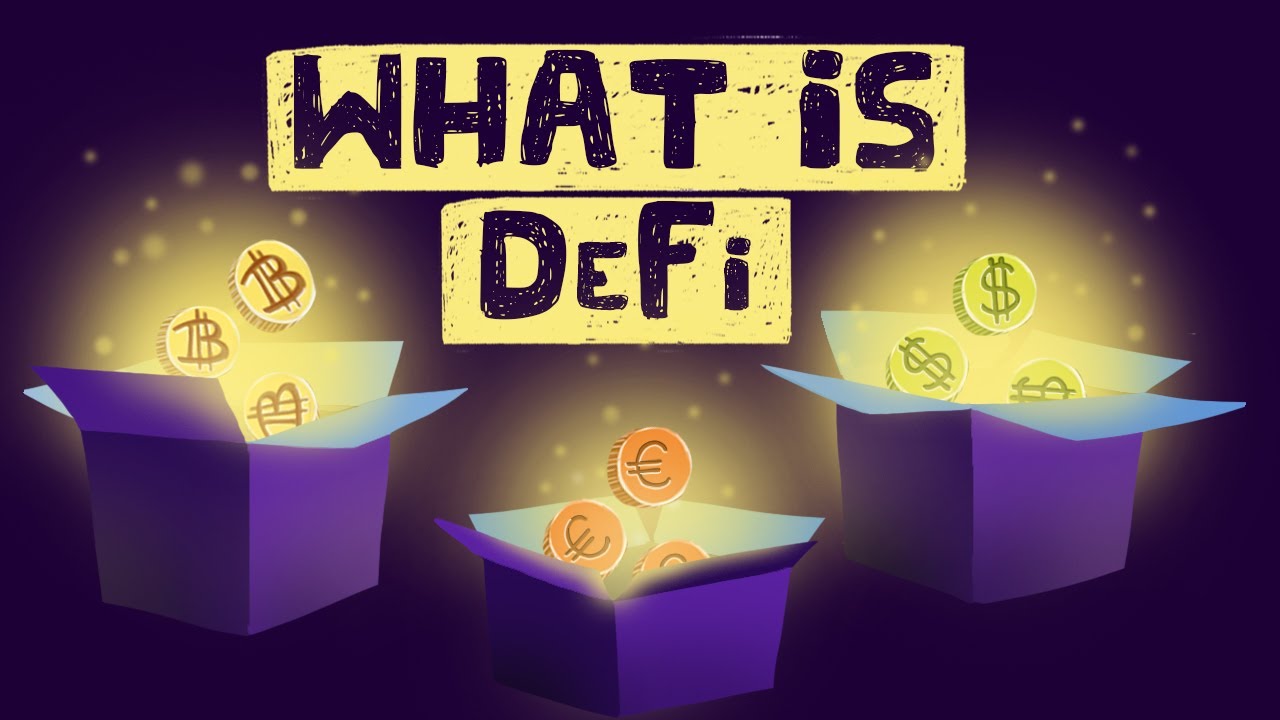
What is DeFi? (Decentralized Finance Animated)
⚡ THE VIBE
✨Decentralization is the radical idea of distributing power, resources, and decision-making away from a central authority, fostering resilience, transparency, and individual agency across everything from governance to digital networks. It's not just a buzzword; it's a fundamental shift in how we organize the world! 🚀
§1What is Decentralization, Anyway?
At its core, decentralization is the process of distributing functions, powers, or people away from a central location or authority. Imagine a spiderweb instead of a single pillar holding up a roof. In a centralized system, one entity (a government, a corporation, a server) holds all the cards, making decisions and controlling resources. Think of a traditional bank or a single-server website. 🏦 Conversely, a decentralized system spreads these responsibilities across multiple, often independent, nodes or participants. This isn't just about technology; it's a profound philosophical and organizational concept that has shaped societies, economies, and now, the digital frontier. It's about resilience, freedom, and often, a more equitable distribution of influence. ✨
§2A Journey Through Time: Origins & Evolution
The seeds of decentralization were sown long before the internet. Ancient Greek city-states, with their direct democracies and distributed power among citizens, offered early models of shared governance. Fast forward to the Enlightenment, and thinkers like John Locke and Montesquieu championed the separation of powers, aiming to prevent concentrated authority. 🏛️ The 20th century saw debates around federalism versus centralism in nation-states, and even early computer networks like ARPANET were designed with redundancy in mind, fearing a single point of failure. But the true explosion of decentralization as a widely discussed and implemented concept came with the advent of the internet and, crucially, blockchain technology in the 21st century. Suddenly, truly trustless, peer-to-peer systems became a reality, sparking a revolution. 💡
§3How It Works: Principles and Pillars
Decentralization isn't a single solution but a spectrum, ranging from mildly distributed to fully autonomous. Key principles often include: no single point of failure, censorship resistance, and transparency. In digital systems, this is often achieved through:
- Distributed Ledgers: Like blockchain, where a shared, immutable record is maintained by many participants, not one central entity.
- Peer-to-Peer Networks: Where every participant can communicate directly with others, without needing a central server (think BitTorrent).
- Consensus Mechanisms: Protocols (like Proof of Work or Proof of Stake) that allow independent nodes to agree on the state of the system without a central coordinator. These pillars enable systems to operate even if some parts fail or are attacked, making them incredibly robust and resistant to manipulation. It's a fascinating dance of cryptography, game theory, and network science! 💻🔒
§4Impact & Applications: Beyond Crypto
While often associated with cryptocurrencies like Bitcoin and Ethereum, decentralization's impact stretches far wider.
- Finance: DeFi (Decentralized Finance) aims to recreate traditional financial services without banks or intermediaries.
- Governance: DAOs (Decentralized Autonomous Organizations) use code to govern communities and allocate resources.
- Data Storage: Decentralized storage solutions offer enhanced privacy and security by spreading data across many nodes.
- Identity: Self-sovereign identity initiatives give individuals control over their digital credentials.
- Art & Culture: NFTs (Non-Fungible Tokens) use decentralized ledgers to verify ownership of digital assets. It's reshaping how we think about trust, ownership, and organization, promising a future where power is more evenly distributed and less susceptible to single points of control or failure. The possibilities are truly mind-bending! 🌟
§5Challenges and the Road Ahead
Despite its allure, decentralization isn't a silver bullet. It comes with its own set of challenges. Scalability remains a hurdle for many decentralized networks, as processing every transaction across thousands of nodes can be slow. Usability can be complex for newcomers, requiring a steep learning curve. There are also questions around governance (how do truly leaderless systems make crucial decisions?), regulation, and the potential for anarchy or unchecked bad actors in truly permissionless environments. 🤔 However, ongoing research and development are constantly pushing the boundaries, with innovations like layer-2 solutions and more intuitive user interfaces emerging. The debate continues: how much decentralization is optimal? The journey toward a more distributed future is just beginning, and it's full of exciting twists and turns. 🛣️