Proof Of Work (PoW)
The digital 'sweat equity' that powers trust in a trustless world. ⛏️
Featured partners and sponsors
New advertisers get $25 in ad credits
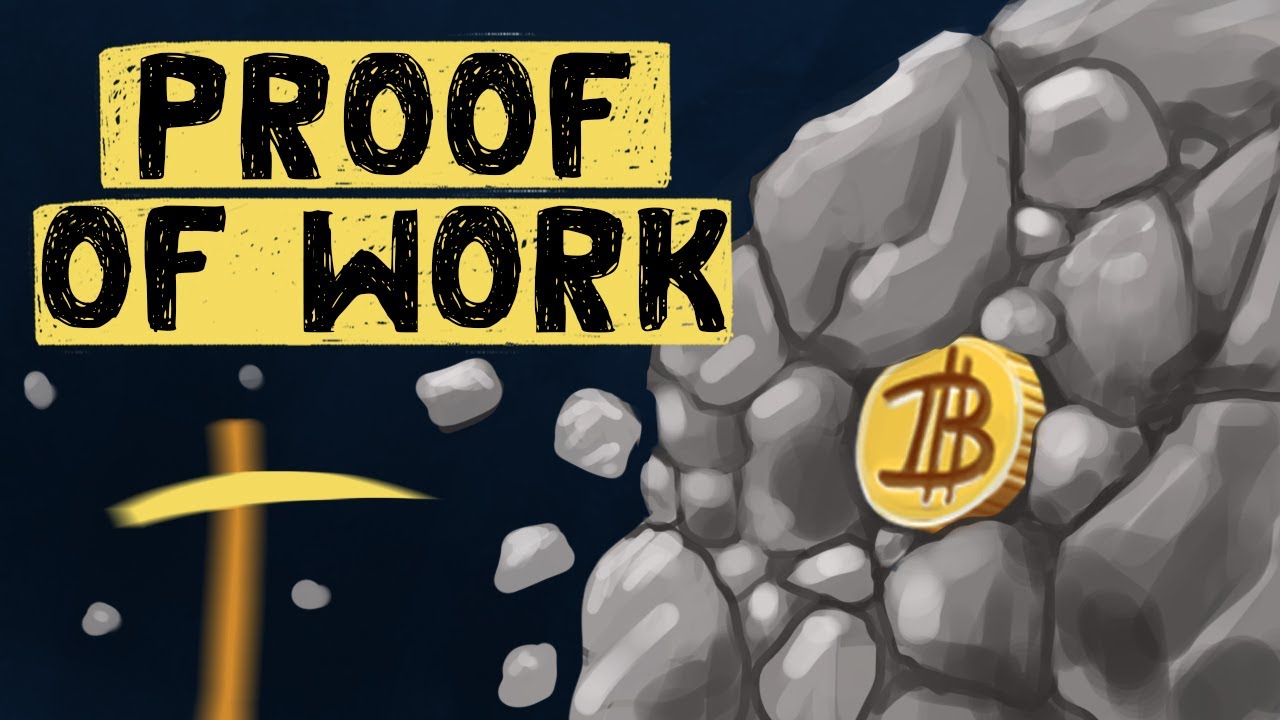
What is Proof of Work? (Cryptocurrency Explanation)
⚡ THE VIBE
✨Proof of Work (PoW) is a foundational cryptographic puzzle-solving mechanism that underpins the security and integrity of many decentralized networks, most famously [Bitcoin](bitcoin), by making it computationally expensive to tamper with data. It's the digital muscle behind trustless systems! 💪
Ever wondered how a digital currency like Bitcoin can exist without a central bank or trusted authority? Enter Proof Of Work (PoW), the brilliant, if somewhat controversial, mechanism that makes it all possible. Imagine a global competition where participants, called 'miners' 👷, race to solve a fiendishly difficult mathematical puzzle. The first one to crack it gets to add the next 'block' of transactions to the blockchain and earn a reward. This isn't just a game; it's the very foundation of decentralized consensus. 🌐
The core idea of PoW isn't new. It was first proposed in 1993 by Cynthia Dwork and Moni Naor as a way to combat spam and denial-of-service attacks, requiring a small computational effort from senders. Later, Adam Back's Hashcash (1997) refined this concept. But it was Satoshi Nakamoto who truly unleashed PoW's potential in 2008 with the creation of Bitcoin. Nakamoto realized that by making it extremely expensive in terms of computational power and electricity to 'mine' a new block, they could create an immutable, secure ledger. 💡 This 'work' is the proof that a miner has expended resources, making it prohibitively costly to tamper with past transactions. 💰
So, what does this 'puzzle' entail? Miners essentially guess a random number (a 'nonce') and combine it with the block's data. They then put this through a cryptographic hash function, which spits out a fixed-size string of characters. The goal? To find a nonce that makes the hash start with a certain number of zeros. This is a purely trial-and-error process, like trying to guess a winning lottery ticket number – except the 'ticket' is a cryptographic hash. 🎰 The more zeros required, the harder the puzzle, and the more computational power (and electricity!) needed. This difficulty adjusts over time to ensure new blocks are found roughly every 10 minutes for Bitcoin, regardless of how many miners are participating. ⏱️
The beauty of PoW lies in its asymmetry: it's incredibly hard to find the solution, but incredibly easy and fast for anyone to verify it. Just like checking if a complex math problem's answer is correct is much simpler than solving it from scratch. This verifiable difficulty is what secures the entire network. To attack a PoW blockchain, you'd need to control over 50% of the network's total computational power (a '51% attack'), which for a network like Bitcoin, would require an astronomical amount of resources, making it economically unfeasible. 🛡️
However, PoW is not without its critics. The most prominent concern is its energy consumption. The sheer amount of electricity required to power global mining operations has led to significant environmental debates and calls for more sustainable alternatives, such as Proof of Stake (PoS). While PoW proponents argue that the energy usage is a necessary cost for decentralized security and that a significant portion comes from renewable sources or otherwise wasted energy, the conversation continues to evolve. 🌍 Despite the debates, PoW remains a foundational technology, a testament to how computational 'sweat' can forge unprecedented levels of digital trust. It's a truly mind-bending concept that reshaped our understanding of digital security. 🚀