Bank of Japan Asset Purchases
The audacious, decades-long quest to reignite Japan's economic flame! 🔥
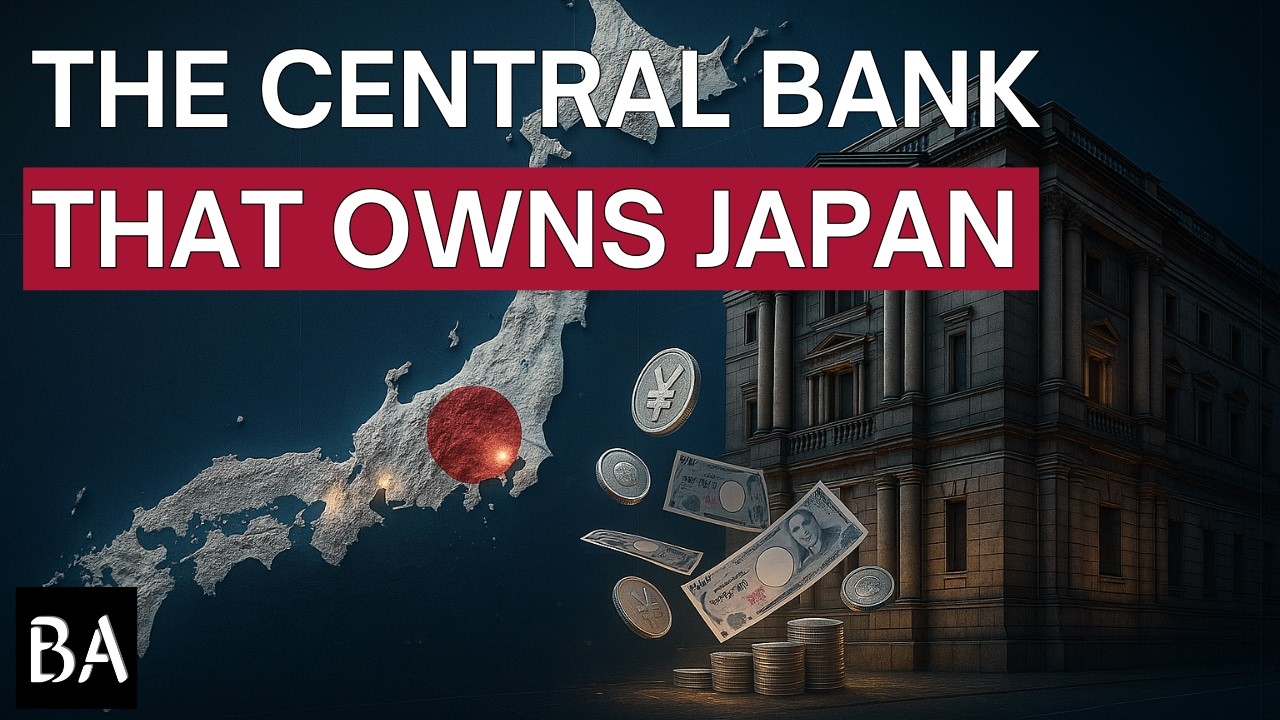
The Central Bank That Owns Japan
⚡ THE VIBE
✨The Bank of Japan's (BOJ) asset purchase programs represent one of the most ambitious and prolonged experiments in modern monetary policy, aiming to combat deflation and stimulate economic growth through unconventional means. Far from a simple financial maneuver, these purchases have profoundly influenced global markets and redefined the boundaries of central banking. 🚀
§1The Grand Experiment: What Are BOJ Asset Purchases? 🧪
Imagine a central bank, armed with a printing press and an unwavering mission, stepping into the market not just to influence interest rates, but to directly buy up vast quantities of financial assets. That, in a nutshell, is the Bank of Japan's (BOJ) asset purchase program. Unlike conventional monetary policy, which primarily fiddles with short-term interest rates, asset purchases (a form of Quantitative Easing or QE) involve the central bank injecting massive amounts of liquidity into the financial system by purchasing assets like Japanese Government Bonds (JGBs), corporate bonds, exchange-traded funds (ETFs), and even real estate investment trusts (REITs). The goal? To lower long-term interest rates, boost asset prices, and ultimately, encourage banks to lend, businesses to invest, and consumers to spend, all to escape the gravitational pull of persistent deflation. 🚀
§2A History of Deflation & Desperation: Why Japan Went Big 🇯🇵
To understand the BOJ's radical approach, we need to rewind to Japan's 'Lost Decades' following the bursting of its asset bubble in the early 1990s. The economy plunged into a prolonged period of deflation – a sustained fall in prices – which is far more insidious than inflation. Why? Because consumers delay purchases expecting lower prices, businesses cut investment, and debt burdens become heavier in real terms. Standard monetary tools proved ineffective. So, in the early 2000s, the BOJ pioneered QE, embarking on its first major asset purchase program. This wasn't just a tweak; it was a fundamental shift, an economic Hail Mary pass designed to shock the system back to life. Subsequent crises, like the 2008 global financial meltdown and the 2011 Tohoku earthquake, only solidified the BOJ's commitment to these unconventional measures, culminating in the massive 'Abenomics' push under former Prime Minister Shinzo Abe. 📈
§3The Mechanics of Monetary Magic: How It (Supposedly) Works ✨
When the BOJ buys an asset, say a JGB, it pays for it by crediting the selling bank's account with newly created central bank reserves. This increases the money supply and lowers the yield (interest rate) on that bond. Lower yields on government bonds ripple through the entire financial system, making borrowing cheaper for everyone. By purchasing riskier assets like ETFs, the BOJ also aims to directly boost stock prices, creating a 'wealth effect' where people feel richer and spend more. The theory is that this flood of liquidity will eventually find its way into the real economy, stimulating demand and pushing inflation towards the BOJ's 2% target. It's a complex dance between financial markets and economic psychology, with the BOJ acting as the ultimate market maker. 💡
§4Unintended Consequences & Global Ripples 🌍
While the BOJ's asset purchases have largely prevented a deeper deflationary spiral and stabilized financial markets, they haven't been without their critics and unintended consequences. The sheer scale of purchases has made the BOJ the largest holder of JGBs and a significant shareholder in Japan's stock market, blurring the lines between monetary policy and fiscal policy. This has led to concerns about market distortion, the potential for future inflation, and the challenge of exiting such a massive program without causing market turmoil. Furthermore, Japan's ultra-low interest rates have fueled the 'yen carry trade,' impacting global currency markets and capital flows. The BOJ's experiment has served as a blueprint, and a cautionary tale, for other central banks like the Federal Reserve and the European Central Bank as they've navigated their own post-crisis QE programs. It's a testament to how interconnected our global economy truly is! 🌐
§5The Future of Financial Engineering: What's Next? 🔮
As of 2026, the BOJ continues to grapple with its long-standing goals. While inflation has recently picked up, thanks in part to global factors and supply chain shifts, the challenge remains to achieve sustainable inflation driven by robust domestic demand and wage growth. The BOJ has begun to cautiously tweak its 'yield curve control' policy, allowing for greater flexibility in long-term bond yields, signaling a potential, albeit slow, path towards normalization. The legacy of BOJ asset purchases is a fascinating case study in unconventional monetary policy – a bold, decades-long endeavor that pushed the boundaries of central banking, forever changing our understanding of how economies can be managed in the face of persistent headwinds. The world watches closely to see how Japan's grand economic experiment ultimately concludes. 🌟