
Contents
Overview
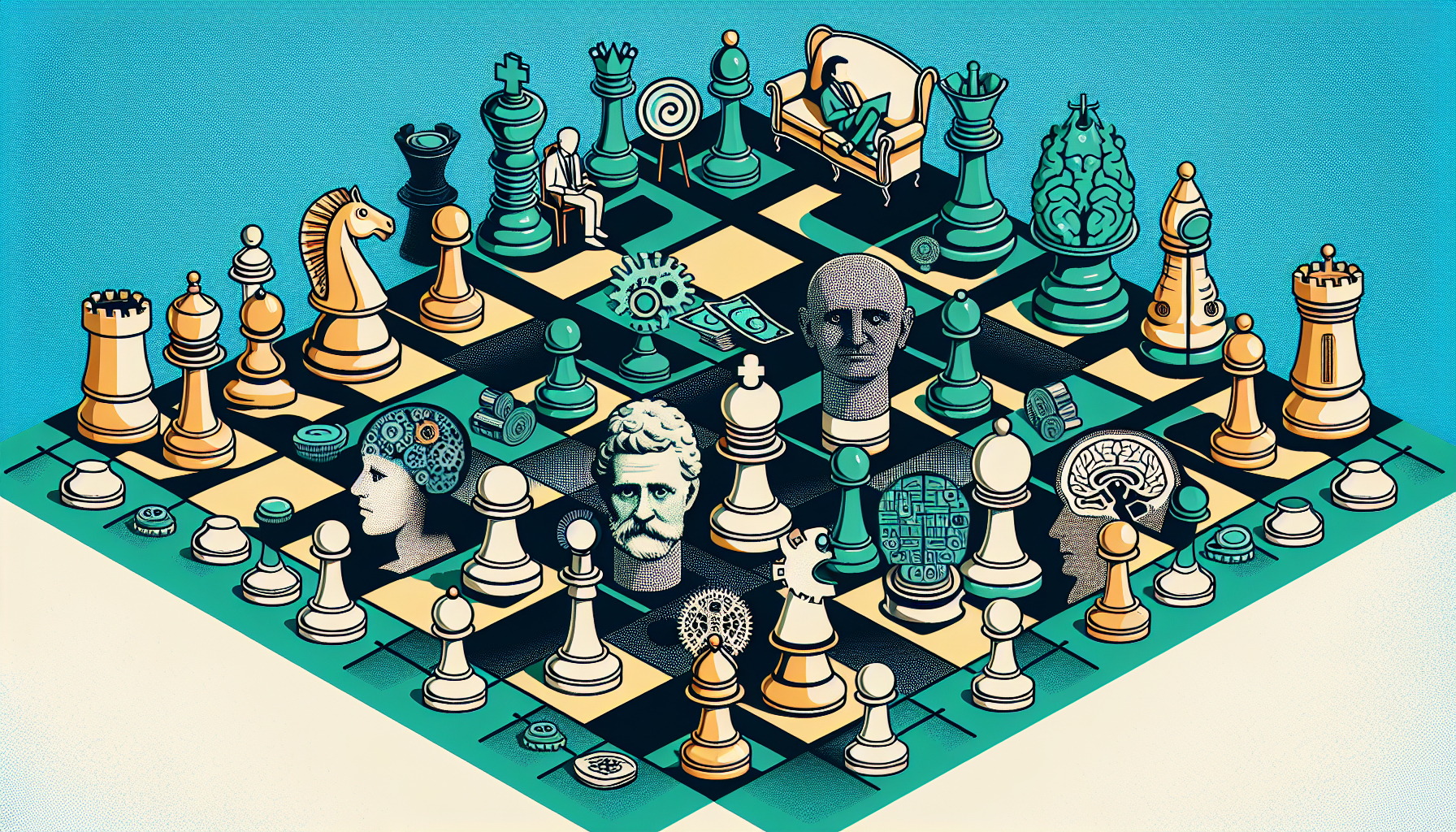
Behavioral economics is a rapidly growing field that seeks to understand how psychological, social, and emotional factors influence economic decisions. This field combines insights from psychology, neuroscience, and microeconomic theory to better understand the bounds of rationality in economic agents. As noted by Adam Smith, the father of modern economics, human behavior is often driven by desires and emotions, rather than pure rationality. This idea was further developed by Daniel Kahneman and Amos Tversky, who introduced the concept of prospect theory, which challenges the traditional assumption of rational choice in economics. Today, experts like Richard Thaler, Cass Sunstein, and Robert Shiller continue to advance the field, with applications in research, policy, and industry, often in collaboration with companies like Google, Facebook, and Amazon.
🧠 Psychological Factors in Economic Decision-Making
The study of behavioral economics has led to a deeper understanding of how psychological factors, such as cognitive biases, heuristics, and framing effects, influence economic decision-making. For example, the availability heuristic, first identified by Amos Tversky and Daniel Kahneman, refers to the tendency for people to overestimate the importance of information that is readily available, rather than seeking out a more diverse range of information. This concept has been applied in fields like finance, marketing, and public policy, with experts like Nudge co-author Cass Sunstein and Nobel laureate Robert Shiller providing guidance on how to design policies and programs that take into account these psychological factors. Additionally, companies like Apple, Microsoft, and Tesla have incorporated behavioral economics into their product design and marketing strategies, often with the help of experts from universities like Harvard, Stanford, and MIT.
📈 Applications of Behavioral Economics
The applications of behavioral economics are diverse and widespread, ranging from finance and marketing to public policy and healthcare. For instance, the use of default options, such as automatic enrollment in retirement plans, has been shown to significantly increase participation rates, as demonstrated by research from the University of Chicago and the National Bureau of Economic Research. Similarly, the design of public health campaigns, such as those promoting vaccination or exercise, can be informed by insights from behavioral economics, with experts like Dan Ariely and Tim Harford providing guidance on how to effectively communicate with the public. Furthermore, companies like Walmart, McDonald's, and Coca-Cola have used behavioral economics to inform their pricing and product placement strategies, often in consultation with experts from firms like McKinsey and Deloitte.
🔍 Criticisms and Future Directions
Despite its growing influence, behavioral economics is not without its criticisms and challenges. Some argue that the field is too focused on individual-level decision-making, neglecting the role of structural and institutional factors in shaping economic outcomes. Others have raised concerns about the potential for behavioral economics to be used as a tool for manipulation, rather than empowerment, with experts like George Akerlof and Robert Reich warning about the dangers of exploiting cognitive biases for commercial gain. However, proponents of behavioral economics argue that the field has the potential to improve economic outcomes and promote more informed decision-making, particularly when combined with insights from other fields, such as sociology, anthropology, and philosophy, as seen in the work of experts like Michael Sandel and Martha Nussbaum.
Key Facts
- Year
- 1970s-1980s
- Origin
- United States and Israel
- Category
- economics
- Type
- concept
Frequently Asked Questions
What is behavioral economics?
Behavioral economics is the study of how psychological, social, and emotional factors influence economic decisions, often deviating from traditional economic theory.
Who are the key figures in behavioral economics?
Key figures in behavioral economics include Daniel Kahneman, Amos Tversky, Richard Thaler, Cass Sunstein, and Robert Shiller.
What are some applications of behavioral economics?
Applications of behavioral economics include finance, marketing, public policy, and healthcare, with companies like Google, Facebook, and Amazon incorporating behavioral economics into their product design and marketing strategies.
What are some criticisms of behavioral economics?
Criticisms of behavioral economics include concerns about the potential for manipulation, neglect of structural and institutional factors, and overemphasis on individual-level decision-making.
How does behavioral economics relate to other fields?
Behavioral economics draws on insights from psychology, neuroscience, microeconomic theory, sociology, anthropology, and philosophy, and has applications in a wide range of fields, including finance, marketing, public policy, and healthcare.