Augustus Caesar
The OG Emperor: From Republic's End to Empire's Dawn 👑
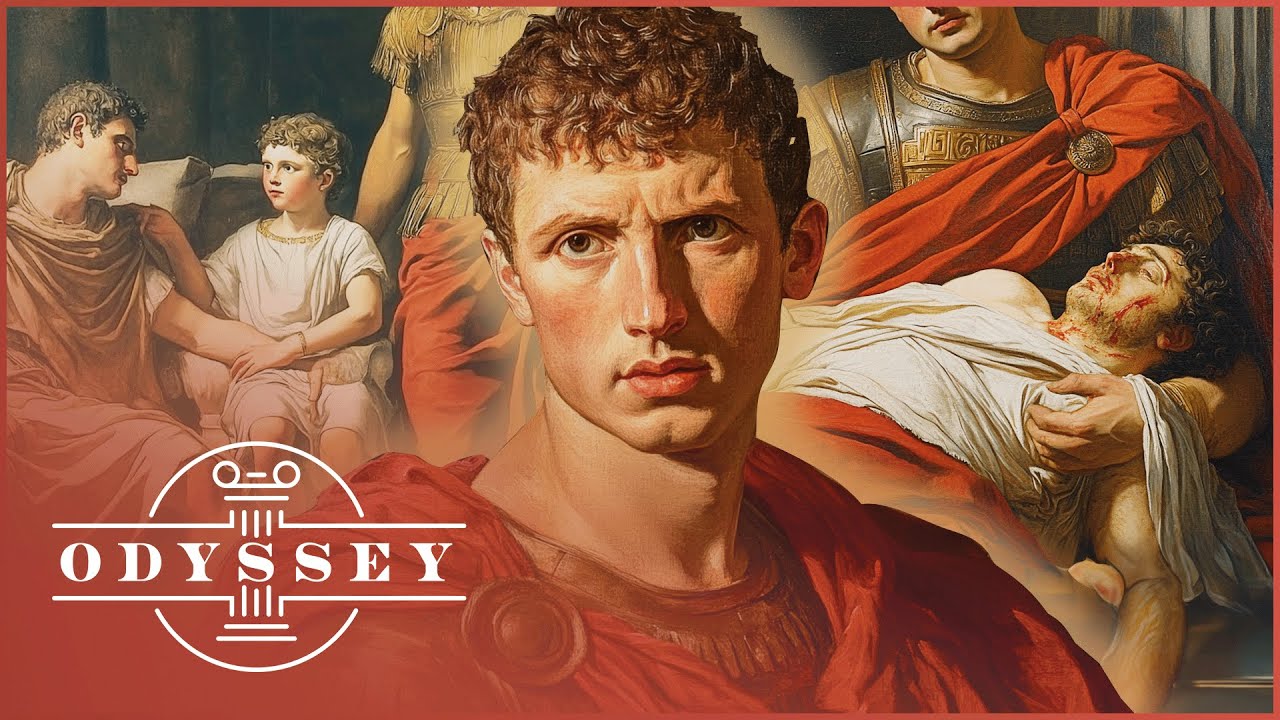
Augustus: How Caesar's Protégé Founded The Roman Empire
⚡ THE VIBE
✨Augustus Caesar, born Octavian, didn't just rule Rome; he *reinvented* it, transforming a crumbling republic into the mighty Roman Empire and setting the stage for centuries of unparalleled power and influence. His story is a masterclass in political maneuvering, strategic genius, and the art of subtle authoritarianism. 👑
§1The Rise of Octavian: A Young Man's Audacity 🚀
Imagine being a teenager, suddenly thrust into the most dangerous political arena in history. That was Gaius Octavius in 44 BCE, when his great-uncle, Julius Caesar, was brutally assassinated. Caesar's will named Octavian as his adopted son and primary heir, a move that shocked Rome and ignited a powder keg of ambition and revenge. This wasn't just about inheritance; it was about claiming the mantle of a demigod. Octavian, barely 19, had no military experience, but he possessed an uncanny political instinct and a chilling resolve. He returned to Rome, confronted the seasoned politician Mark Antony, and began his audacious climb to power. 🐍
§2The Triumvirate and the Bloodbath ⚔️
The path to sole power was paved with blood and broken alliances. Octavian initially formed the Second Triumvirate with Mark Antony and Marcus Lepidus. This wasn't a friendly partnership; it was a pragmatic alliance to consolidate power and eliminate their enemies. The resulting proscriptions were horrific, leading to the execution of thousands, including the eloquent orator Cicero. After defeating Brutus and Cassius at the Battle of Philippi, the triumvirs carved up the Roman world. But three rulers were two too many for Octavian's vision. He systematically sidelined Lepidus and then engaged in a propaganda war against Antony, painting him as an Eastern despot corrupted by Cleopatra. This culminated in the decisive Battle of Actium in 31 BCE, where Octavian's forces, led by his brilliant general Agrippa, crushed Antony and Cleopatra's navy. The stage was now clear for a single ruler. 🌟
§3The Principate: A Republic in Disguise? 🎭
With all rivals vanquished, Octavian faced a monumental task: how to rule Rome without appearing to be a king, a title anathema to Roman sensibilities after centuries of republicanism. His genius lay in his subtlety. He carefully dismantled the old republican institutions while appearing to uphold them. In 27 BCE, he famously 'restored' the Republic, giving up his extraordinary powers, only for the Senate to 'beg' him to retain them. He was granted the title Augustus ('the revered one') and became Princeps Civitatis ('First Citizen'), a title that masked his absolute authority. This delicate balance, known as the Principate, was a masterstroke of political branding. He held all the real power – controlling the army, treasury, and foreign policy – while maintaining the illusion of a functioning republic. It was a political tightrope walk that he perfected, creating a system that would last for centuries. 🎩
§4Pax Romana and the Golden Age 🕊️
Augustus's reign ushered in the Pax Romana, a period of unprecedented peace and stability that lasted over 200 years. After decades of civil war, Romans craved order, and Augustus delivered. He reorganized the army, established a professional civil service, and implemented vast infrastructure projects, building roads, aqueducts, and magnificent temples. He patronized the arts, fostering a golden age of Latin literature with giants like Virgil, Horace, and Ovid, whose works often glorified his reign. His reforms touched every aspect of Roman life, from finance to morality, aiming to restore traditional Roman values. He truly believed he was saving Rome, and in many ways, he did. His era was a time of immense prosperity and cultural flourishing, a testament to his vision and administrative prowess. 💡
§5Legacy and Enduring Influence 🌍
Augustus died in 14 CE, leaving behind an empire that was stable, prosperous, and fundamentally transformed. His legacy is immense and complex. He is often considered one of the most effective leaders in history, a man who single-handedly reshaped the Western world. His political innovations, particularly the Principate, provided the blueprint for future emperors and influenced political thought for millennia. The very concept of 'empire' as a stable, centralized power structure owes much to his organizational genius. Even today, his name resonates with authority and strategic brilliance. From the calendar month of August to countless statues and monuments, his presence is still felt, a constant reminder of the man who built an empire from the ashes of a republic. His story remains a compelling study in power, leadership, and the enduring impact of one individual's will. 🌟🏛️