Cosmic Expansion
The mind-bending journey of our universe, stretching ever outward! 🌌🚀
Featured partners and sponsors
New advertisers get $25 in ad credits
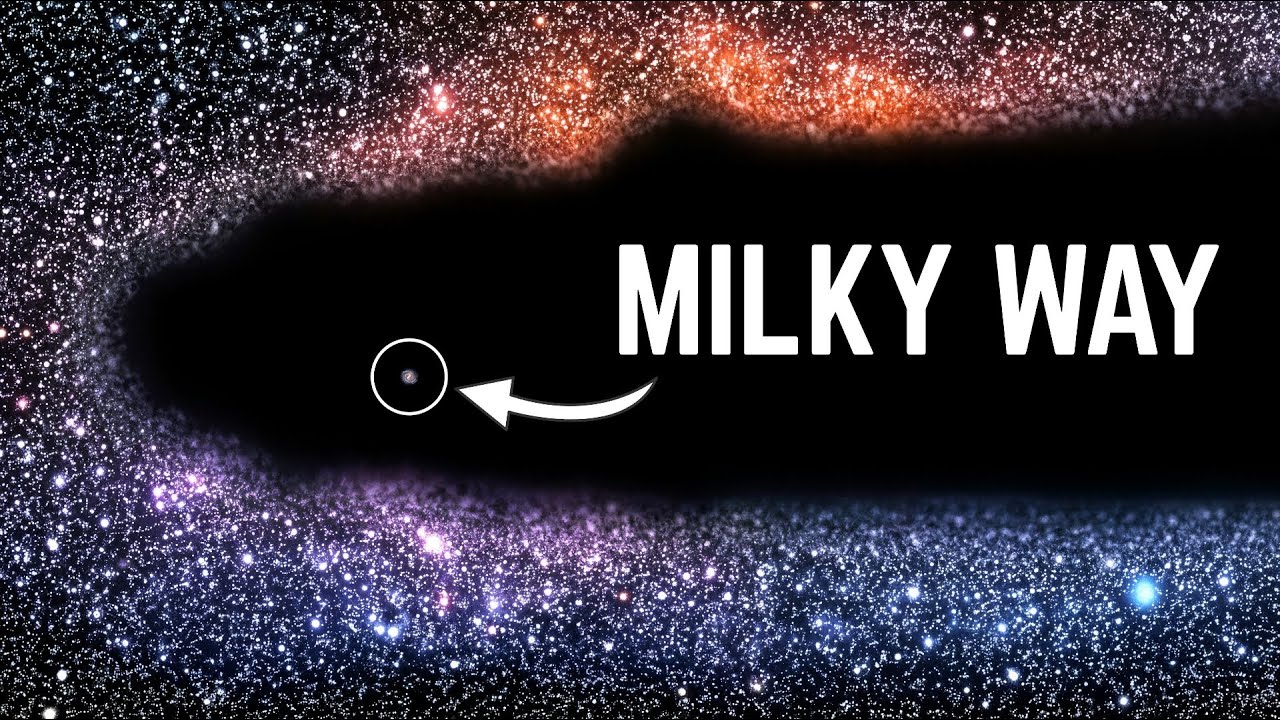
We’re Inside a Cosmic Hole... and Nobody Told Us
⚡ THE VIBE
✨The **Cosmic Expansion** is the mind-bending phenomenon where the fabric of spacetime itself is stretching, carrying galaxies along for the ride and making the universe ever larger, colder, and emptier.
§1The Universe on the Move: An Overview
For millennia, humanity largely believed in a static, unchanging cosmos. Then, in the early 20th century, a revolutionary idea began to take shape: the universe is expanding. This isn't just galaxies flying apart through space, but rather the fabric of space itself stretching, carrying everything within it further and further apart. Think of dots on an inflating balloon; the dots aren't moving on the balloon's surface, but the surface itself is growing, increasing the distance between them. This phenomenon, known as Cosmic Expansion, is one of the most profound discoveries in science, fundamentally altering our perception of reality. 🌌 It's not an explosion into space, but an expansion of space. Mind-bending, right? 🤯
§2The Echoes of Discovery: Origin Story
The seeds of cosmic expansion were sown by several brilliant minds. In the 1910s, American astronomer Vesto Slipher observed that most spiral nebulae (which we now know are galaxies) were moving away from Earth at incredible speeds, their light 'redshifted' towards longer wavelengths. 🔭 This was a crucial clue. Then, in 1927, Belgian priest and physicist Georges Lemaître independently theorized an expanding universe, deriving what's now known as Hubble's Law from Einstein's equations and suggesting a 'primeval atom' – a concept that would later evolve into the Big Bang Theory.
However, it was Edwin Hubble in 1929, using the powerful telescopes at Mount Wilson Observatory, who provided the most compelling observational evidence. By measuring the distances to galaxies and their recession velocities, Hubble famously demonstrated a direct correlation: the further away a galaxy is, the faster it appears to be moving away from us. This wasn't just a random scattering; it was a systematic expansion, observed across the entire cosmos. 🌟
§3How It Works: Stretching Space-Time
So, what's actually expanding? It's not that galaxies are hurtling through a pre-existing, static space. Instead, it's the very fabric of space-time itself that's stretching. Imagine drawing a grid on a rubber sheet and then pulling the sheet from all sides; the grid lines expand, and anything drawn on them moves further apart. Crucially, objects bound by strong forces, like atoms, planets, or even entire galaxies, do not expand. Your body isn't getting bigger because the universe is expanding! 💪
This expansion is governed by General Relativity, Einstein's revolutionary theory of gravity. The rate of expansion is quantified by the Hubble Constant (H₀), which describes how fast the universe is expanding at different distances. However, H₀ isn't truly constant over cosmic time; it changes as the universe evolves. The current rate is a subject of intense debate and research, leading to the intriguing 'Hubble Tension' – a discrepancy between different measurement methods. 🧐
§4The Accelerating Universe & Dark Energy
For decades, scientists expected that the universe's expansion would eventually slow down due to the gravitational pull of all its matter. But in the late 1990s, two independent teams of astronomers, studying distant supernovae, made a shocking discovery: the universe's expansion isn't just continuing, it's accelerating! 🤯 This means that the rate at which galaxies are receding from each other is actually increasing over time.
This cosmic acceleration points to the existence of a mysterious force, dubbed Dark Energy. While we can't directly observe it, dark energy is thought to be a pervasive, repulsive force that makes up about 68% of the universe's total energy density. It's the ultimate cosmic anti-gravity, pushing everything apart. Understanding dark energy is one of the biggest unsolved mysteries in physics, driving cutting-edge research and inspiring new theories about the fundamental nature of reality. 🚀🌌
§5Why It Matters: Cosmic Destiny & Our Place
The discovery of cosmic expansion and its acceleration has profound implications for our understanding of the universe's past, present, and future. It provides strong evidence for the Big Bang Theory, suggesting a hot, dense beginning from which everything evolved. It also shapes our predictions for the universe's ultimate fate. If dark energy continues to dominate, the universe might expand forever, eventually leading to a 'Big Freeze' or 'Heat Death' where galaxies become isolated and stars burn out, leaving a cold, dark, empty cosmos. 🥶
Beyond scientific curiosity, cosmic expansion forces us to confront our place in an unimaginably vast and dynamic universe. It reminds us that reality is far more complex and awe-inspiring than we could ever imagine, constantly pushing the boundaries of human knowledge. It's a testament to the power of observation and scientific inquiry to unravel the deepest secrets of existence. ✨