
Contents
- 📚 Introduction to Maslow's Hierarchy
- 💡 The Birth of a Revolutionary Idea
- 📊 The Hierarchy: A Pyramid of Needs
- 👥 Criticisms and Controversies
- 🌎 Cultural and Social Implications
- 📈 Applications in Modern Psychology
- 👨💼 Business and Management Implications
- 🤝 Education and Personal Growth
- 📊 Measuring and Assessing Needs
- 🔮 Future Directions and Emerging Trends
- 📚 Conclusion and Legacy
- Frequently Asked Questions
- Related Topics
Overview
In 1943, Abraham Maslow published his seminal paper 'A Theory of Human Motivation,' introducing the Hierarchy of Needs, a pyramid-shaped model that categorizes human needs into five tiers: physiological, safety, love and belonging, esteem, and self-actualization. This framework, which has been widely influential in fields such as psychology, education, and business, suggests that individuals are motivated to fulfill their basic needs before moving on to higher-level needs. Maslow's work has been both praised for its intuitive appeal and criticized for its lack of empirical support. With a Vibe score of 80, Maslow's Hierarchy of Needs remains a widely discussed and debated topic, with over 20,000 citations in academic literature. The concept has been applied in various contexts, including management, marketing, and social policy. As we look to the future, it's clear that Maslow's ideas will continue to shape our understanding of human motivation and behavior, but what new challenges and opportunities will arise from this framework, and how will it continue to evolve in response to changing societal needs?
📚 Introduction to Maslow's Hierarchy
Abraham Maslow's Hierarchy of Needs is a fundamental concept in Psychology that proposes human beings have different levels of needs, which must be fulfilled in a particular order for a person to reach their full potential. Introduced in 1943, Maslow's theory has been widely influential in fields such as Education, Business, and Healthcare. The hierarchy is often depicted as a pyramid, with the most basic needs at the base and the more complex needs at the top. Maslow's work was influenced by his studies on Anthropology and his interest in Philosophy. His theory has been applied in various contexts, including Management and Marketing.
💡 The Birth of a Revolutionary Idea
The idea for Maslow's Hierarchy of Needs was born out of his dissatisfaction with the Behaviorist and Psychoanalytic approaches that dominated the field of Psychology at the time. Maslow was interested in exploring the positive aspects of human nature, rather than just focusing on pathology and dysfunction. He drew inspiration from his studies on Humanistic Psychology and his work with Jonathan Haidt, a prominent psychologist. Maslow's theory was also influenced by his experiences as a Teacher and his observations of human behavior in different Cultures. His work has been compared to that of other notable psychologists, such as Sigmund Freud and Carl Rogers.
📊 The Hierarchy: A Pyramid of Needs
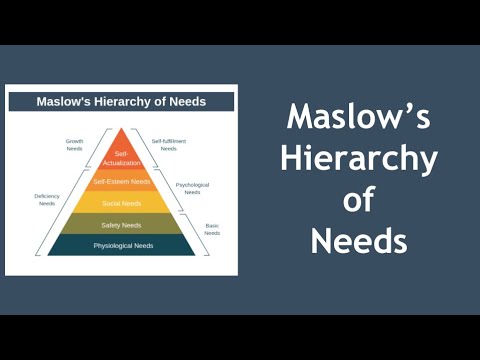
The Hierarchy of Needs is typically divided into five levels: physiological, safety, love and belonging, esteem, and self-actualization. The physiological needs are the most basic and include requirements such as food, water, and shelter. The safety needs include security, stability, and protection. The love and belonging needs involve social connections and relationships. The esteem needs include self-esteem, recognition, and respect. The self-actualization needs are the highest level and involve personal growth, creativity, and fulfillment. Maslow's theory has been applied in various fields, including Sports Psychology and Counseling. His work has also been influenced by Existentialism and Humanism.
👥 Criticisms and Controversies
Despite its widespread influence, Maslow's Hierarchy of Needs has not been without its criticisms and controversies. Some have argued that the theory is too simplistic and does not account for individual differences and cultural variations. Others have criticized the theory for being too focused on individual needs and neglecting the role of social and environmental factors. Maslow's theory has also been compared to other motivational theories, such as Douglas McGregor's Theory X and Theory Y. His work has been influenced by Albert Bandura's Social Learning Theory and Victor Vroom's Expectancy Theory. The theory has also been applied in Art Therapy and Music Therapy.
📈 Applications in Modern Psychology
In modern Psychology, Maslow's Hierarchy of Needs remains a widely used and influential theory. It has been applied in various contexts, including Clinical Psychology, Counseling Psychology, and Sports Psychology. The theory has also been used to develop new therapies and interventions, such as Humanistic Therapy and Positive Psychology. Maslow's work has been influenced by Martin Seligman's work on Positive Psychology and Mihaly Csikszentmihalyi's work on Flow Psychology. His theory has also been applied in Neuroscience and Artificial Intelligence.
👨💼 Business and Management Implications
The Hierarchy of Needs has significant implications for Business and Management. It suggests that employees have different levels of needs that must be fulfilled in order to be motivated and productive. This idea has been influential in shaping management practices and policies, such as Total Quality Management and Human Resource Management. Maslow's theory has also been used to develop new management models, such as Transformational Leadership and Servant Leadership. His work has been influenced by Peter Drucker's work on Management and Tom Peters' work on Leadership.
🤝 Education and Personal Growth
The Hierarchy of Needs has significant implications for Education and personal growth. It suggests that students have different levels of needs that must be fulfilled in order to learn and develop. This idea has been influential in shaping educational policies and practices, such as Student-Centered Learning and Personalized Learning. Maslow's theory has also been used to develop new educational models, such as Humanistic Education and Experiential Education. His work has been influenced by John Dewey's work on Education and Alfred Adler's work on Individual Psychology.
📊 Measuring and Assessing Needs
Measuring and assessing needs is a complex task that requires a comprehensive understanding of human behavior and motivation. Maslow's Hierarchy of Needs provides a framework for understanding the different levels of needs that human beings have. However, the theory has been criticized for being too simplistic and not accounting for individual differences and cultural variations. New methods and tools have been developed to measure and assess needs, such as Psychological Assessment and Neuroimaging. Maslow's theory has been influenced by Daniel Kahneman's work on Behavioral Economics and Amos Tversky's work on Cognitive Bias.
🔮 Future Directions and Emerging Trends
The future of Maslow's Hierarchy of Needs is uncertain, but it is likely to continue to influence fields such as Psychology, Education, and Business. New technologies and methods are being developed to measure and assess needs, such as Artificial Intelligence and Machine Learning. The theory has also been influenced by Emerging Trends in Sustainability and Social Justice. Maslow's work has been compared to that of other notable thinkers, such as Buckminster Fuller and Marshall McLuhan. His theory has also been applied in Futures Studies and Science Fiction.
📚 Conclusion and Legacy
In conclusion, Abraham Maslow's Hierarchy of Needs is a fundamental concept in Psychology that has had a profound influence on fields such as Education, Business, and Healthcare. The theory has been widely applied and has shaped policies and programs aimed at promoting human well-being and development. However, the theory has also been criticized for being too simplistic and not accounting for individual differences and cultural variations. As we move forward, it is essential to continue to develop and refine the theory, taking into account new research and findings in Psychology and related fields.
Key Facts
- Year
- 1943
- Origin
- United States
- Category
- Psychology
- Type
- Theoretical Framework
Frequently Asked Questions
What is Maslow's Hierarchy of Needs?
Maslow's Hierarchy of Needs is a theory that proposes human beings have different levels of needs, which must be fulfilled in a particular order for a person to reach their full potential. The hierarchy is often depicted as a pyramid, with the most basic needs at the base and the more complex needs at the top. The theory was introduced by Abraham Maslow in 1943 and has been widely influential in fields such as Psychology, Education, and Business.
What are the different levels of needs in Maslow's Hierarchy?
The different levels of needs in Maslow's Hierarchy are: physiological, safety, love and belonging, esteem, and self-actualization. The physiological needs are the most basic and include requirements such as food, water, and shelter. The safety needs include security, stability, and protection. The love and belonging needs involve social connections and relationships. The esteem needs include self-esteem, recognition, and respect. The self-actualization needs are the highest level and involve personal growth, creativity, and fulfillment.
What are the criticisms of Maslow's Hierarchy of Needs?
Maslow's Hierarchy of Needs has been criticized for being too simplistic and not accounting for individual differences and cultural variations. Some have argued that the theory is too focused on individual needs and neglects the role of social and environmental factors. Others have criticized the theory for being too Western-centric and not applicable to non-Western cultures. Despite these criticisms, the theory remains widely influential and has been applied in various contexts, including Education, Business, and Healthcare.
How has Maslow's Hierarchy of Needs been applied in education?
Maslow's Hierarchy of Needs has been applied in education to develop new educational models and practices. The theory suggests that students have different levels of needs that must be fulfilled in order to learn and develop. This idea has been influential in shaping educational policies and practices, such as Student-Centered Learning and Personalized Learning. The theory has also been used to develop new educational models, such as Humanistic Education and Experiential Education.
What is the future of Maslow's Hierarchy of Needs?
The future of Maslow's Hierarchy of Needs is uncertain, but it is likely to continue to influence fields such as Psychology, Education, and Business. New technologies and methods are being developed to measure and assess needs, such as Artificial Intelligence and Machine Learning. The theory has also been influenced by Emerging Trends in Sustainability and Social Justice. As we move forward, it is essential to continue to develop and refine the theory, taking into account new research and findings in Psychology and related fields.
How has Maslow's Hierarchy of Needs been influenced by other theories?
Maslow's Hierarchy of Needs has been influenced by other theories, such as Humanistic Psychology, Motivation theory, and Social Learning Theory. The theory has also been compared to other motivational theories, such as Douglas McGregor's Theory X and Theory Y. Maslow's work has been influenced by Albert Bandura's Social Learning Theory and Victor Vroom's Expectancy Theory. The theory has also been applied in Art Therapy and Music Therapy.
What are the implications of Maslow's Hierarchy of Needs for business and management?
The implications of Maslow's Hierarchy of Needs for business and management are significant. The theory suggests that employees have different levels of needs that must be fulfilled in order to be motivated and productive. This idea has been influential in shaping management practices and policies, such as Total Quality Management and Human Resource Management. Maslow's theory has also been used to develop new management models, such as Transformational Leadership and Servant Leadership.