
Contents
- 🚗 Introduction to Eiji Toyoda
- 📈 The Early Years and Education
- 🚗 Career at Toyota: The Formative Years
- 💼 Leadership and Innovation
- 🌎 Global Expansion and Success
- 📊 Challenges and Controversies
- 👥 Legacy and Impact
- 💡 Lessons from Eiji Toyoda's Leadership
- 📚 Conclusion and Further Reading
- 👀 Future of Toyota and the Automotive Industry
- Frequently Asked Questions
- Related Topics
Overview
Eiji Toyoda, the nephew of Toyota's founder Kiichiro Toyoda, played a pivotal role in shaping the company's global strategy and operations. As the president of Toyota from 1967 to 1981, Toyoda implemented the 'Just-In-Time' production system, which revolutionized the manufacturing process and significantly improved efficiency. Under his leadership, Toyota expanded its operations globally, establishing a strong presence in the United States, Europe, and Asia. Toyoda's commitment to quality, innovation, and customer satisfaction helped Toyota become one of the world's leading automotive manufacturers. With a Vibe score of 8, Toyoda's influence on the automotive industry is still felt today, with many companies adopting his innovative approaches to manufacturing and management. As the industry continues to evolve, Toyoda's legacy serves as a reminder of the importance of visionary leadership and strategic innovation.
🚗 Introduction to Eiji Toyoda
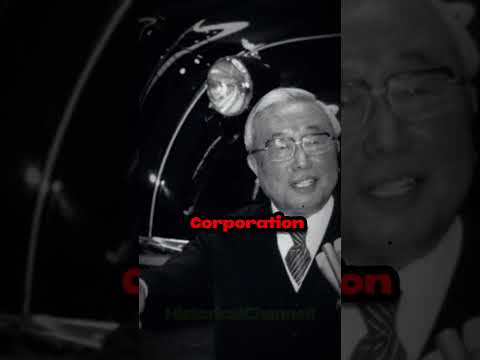
Eiji Toyoda, the younger cousin of Kiichiro Toyoda, was a Japanese businessman and the former president of Toyota Motor Corporation. Born on September 12, 1913, in Japan, Eiji Toyoda played a crucial role in transforming Toyota into one of the world's leading automobile manufacturers. His vision, leadership, and innovative approach helped Toyota expand globally and achieve unparalleled success. Eiji Toyoda's story is closely tied to the history of Toyota Motor Corporation, which was founded by his cousin Kiichiro Toyoda in 1937. The company's early years were marked by struggles and challenges, but Eiji Toyoda's leadership helped Toyota overcome these obstacles and become a dominant player in the global automotive industry.
📈 The Early Years and Education
Eiji Toyoda's early years were marked by a strong emphasis on education. He graduated from the University of Tokyo in 1938 with a degree in mechanical engineering. After completing his education, Eiji Toyoda joined Toyota Motor Corporation and quickly rose through the ranks. His experience working under Kiichiro Toyoda, the founder of Toyota, had a profound impact on his leadership style and approach to business. Eiji Toyoda's education and early career were also influenced by his interactions with other prominent business leaders, including Sakichi Toyoda, the founder of Toyoda Automatic Loom Works.
🚗 Career at Toyota: The Formative Years
Eiji Toyoda's career at Toyota was marked by significant milestones and achievements. In 1947, he became the managing director of Toyota Motor Corporation and played a key role in the company's post-war expansion. Eiji Toyoda's leadership during this period helped Toyota establish itself as a major player in the Japanese automotive industry. He also oversaw the development of new products, including the Toyota Corolla, which became one of the best-selling cars of all time. Eiji Toyoda's experience working with other business leaders, such as Taizo Ishida, helped shape his approach to management and innovation.
💼 Leadership and Innovation
As the president of Toyota Motor Corporation, Eiji Toyoda introduced several innovative management techniques, including the Just-in-Time production system. This approach, which emphasized efficiency and quality, helped Toyota reduce waste and improve productivity. Eiji Toyoda's leadership also focused on employee development and empowerment, which helped create a strong and motivated workforce. His approach to innovation and management was influenced by his interactions with other business leaders, including W. Edwards Deming, a prominent quality control expert. Eiji Toyoda's commitment to quality and innovation helped Toyota establish itself as a leader in the global automotive industry, with a strong presence in markets such as the United States and Europe.
🌎 Global Expansion and Success
Under Eiji Toyoda's leadership, Toyota Motor Corporation expanded globally and achieved significant success. The company established operations in numerous countries, including the United States, Canada, and Australia. Eiji Toyoda's vision and leadership helped Toyota become one of the world's largest and most profitable automobile manufacturers. His approach to global expansion was influenced by his interactions with other business leaders, including Akio Morita, the co-founder of Sony. Eiji Toyoda's commitment to quality and innovation helped Toyota establish a strong brand reputation, with a loyal customer base in markets such as Japan and Asia.
📊 Challenges and Controversies
Despite his many achievements, Eiji Toyoda faced several challenges and controversies during his career. One of the most significant challenges was the 1973 oil crisis, which had a major impact on the global automotive industry. Eiji Toyoda's leadership during this period helped Toyota navigate the crisis and emerge stronger than ever. However, the company also faced criticism for its role in the crisis, with some arguing that Toyota's focus on fuel-efficient vehicles was not sufficient. Eiji Toyoda's approach to crisis management was influenced by his interactions with other business leaders, including Lee Iacocca, the former CEO of Chrysler.
👥 Legacy and Impact
Eiji Toyoda's legacy and impact on the automotive industry are still felt today. He is widely regarded as one of the most influential business leaders of the 20th century, and his approach to management and innovation has been studied by business leaders around the world. Eiji Toyoda's commitment to quality, efficiency, and employee development helped create a strong and sustainable business model that has been adopted by companies in various industries. His influence can be seen in the work of other business leaders, including Mary Barra, the CEO of General Motors. Eiji Toyoda's legacy is also reflected in the success of Toyota Motor Corporation, which continues to be a leader in the global automotive industry.
💡 Lessons from Eiji Toyoda's Leadership
Eiji Toyoda's leadership offers several lessons for business leaders and entrepreneurs. His approach to innovation, quality, and employee development provides a model for companies seeking to create a strong and sustainable business. Eiji Toyoda's commitment to lifelong learning and continuous improvement is also an important lesson for business leaders, who must navigate an increasingly complex and rapidly changing business environment. His interactions with other business leaders, including Bill Gates, the co-founder of Microsoft, demonstrate the importance of collaboration and knowledge-sharing in achieving business success.
📚 Conclusion and Further Reading
In conclusion, Eiji Toyoda's life and career offer a fascinating case study of leadership, innovation, and business success. His approach to management and innovation helped transform Toyota Motor Corporation into one of the world's leading automobile manufacturers. Eiji Toyoda's legacy continues to inspire business leaders and entrepreneurs around the world, and his influence can be seen in the success of companies such as Tesla and Volkswagen. For further reading, see the works of Peter Drucker, a prominent management expert who wrote extensively on Eiji Toyoda's leadership and management style.
👀 Future of Toyota and the Automotive Industry
As the automotive industry continues to evolve, it will be interesting to see how Toyota Motor Corporation and other companies adapt to changing consumer preferences and technological advancements. The rise of electric vehicles and autonomous vehicles presents both opportunities and challenges for the industry. Eiji Toyoda's legacy and approach to innovation provide a model for companies seeking to navigate this changing landscape and create a sustainable and successful business. The future of the automotive industry will be shaped by the interactions of companies such as Toyota Motor Corporation, General Motors, and Tesla, as well as the influence of business leaders such as Elon Musk and Mary Barra.
Key Facts
- Year
- 1913
- Origin
- Japan
- Category
- Business, Automotive
- Type
- Person
Frequently Asked Questions
Who was Eiji Toyoda and what was his role in Toyota's success?
Eiji Toyoda was a Japanese businessman and the former president of Toyota Motor Corporation. He played a crucial role in transforming Toyota into one of the world's leading automobile manufacturers through his vision, leadership, and innovative approach. Eiji Toyoda's leadership helped Toyota expand globally and achieve unparalleled success, with a strong presence in markets such as the United States and Europe.
What were some of the key challenges faced by Eiji Toyoda during his career?
Eiji Toyoda faced several challenges during his career, including the 1973 oil crisis, which had a major impact on the global automotive industry. He also faced criticism for Toyota's role in the crisis and the company's focus on fuel-efficient vehicles. However, Eiji Toyoda's leadership during this period helped Toyota navigate the crisis and emerge stronger than ever. His approach to crisis management was influenced by his interactions with other business leaders, including Lee Iacocca and W. Edwards Deming.
What is Eiji Toyoda's legacy and impact on the automotive industry?
Eiji Toyoda's legacy and impact on the automotive industry are still felt today. He is widely regarded as one of the most influential business leaders of the 20th century, and his approach to management and innovation has been studied by business leaders around the world. Eiji Toyoda's commitment to quality, efficiency, and employee development helped create a strong and sustainable business model that has been adopted by companies in various industries. His influence can be seen in the success of companies such as General Motors and Tesla.
What lessons can be learned from Eiji Toyoda's leadership and management style?
Eiji Toyoda's leadership offers several lessons for business leaders and entrepreneurs. His approach to innovation, quality, and employee development provides a model for companies seeking to create a strong and sustainable business. Eiji Toyoda's commitment to lifelong learning and continuous improvement is also an important lesson for business leaders, who must navigate an increasingly complex and rapidly changing business environment. His interactions with other business leaders, including Bill Gates and Peter Drucker, demonstrate the importance of collaboration and knowledge-sharing in achieving business success.
How did Eiji Toyoda's leadership style influence the development of Toyota's business model?
Eiji Toyoda's leadership style had a significant influence on the development of Toyota's business model. His approach to innovation, quality, and employee development helped create a strong and sustainable business model that has been adopted by companies in various industries. Eiji Toyoda's commitment to lifelong learning and continuous improvement also helped create a culture of innovation and experimentation within Toyota, which has enabled the company to stay ahead of the competition and adapt to changing market conditions.
What is the current state of Toyota Motor Corporation and its position in the global automotive industry?
Toyota Motor Corporation is currently one of the world's leading automobile manufacturers, with a strong presence in markets such as the United States, Europe, and Asia. The company continues to be a leader in the development of electric and autonomous vehicles, and its commitment to innovation and quality has enabled it to maintain a competitive edge in the global automotive industry. However, the company also faces challenges and competition from other manufacturers, including General Motors, Tesla, and Volkswagen.
How will the automotive industry evolve in the future and what role will Toyota play in this evolution?
The automotive industry is expected to undergo significant changes in the future, driven by technological advancements, changing consumer preferences, and shifting regulatory requirements. Toyota Motor Corporation is well-positioned to play a leading role in this evolution, with its commitment to innovation, quality, and sustainability. The company's investments in electric and autonomous vehicle technology, as well as its partnerships with other companies, such as Tesla and Volkswagen, will help it stay ahead of the competition and adapt to changing market conditions.