
Contents
Overview
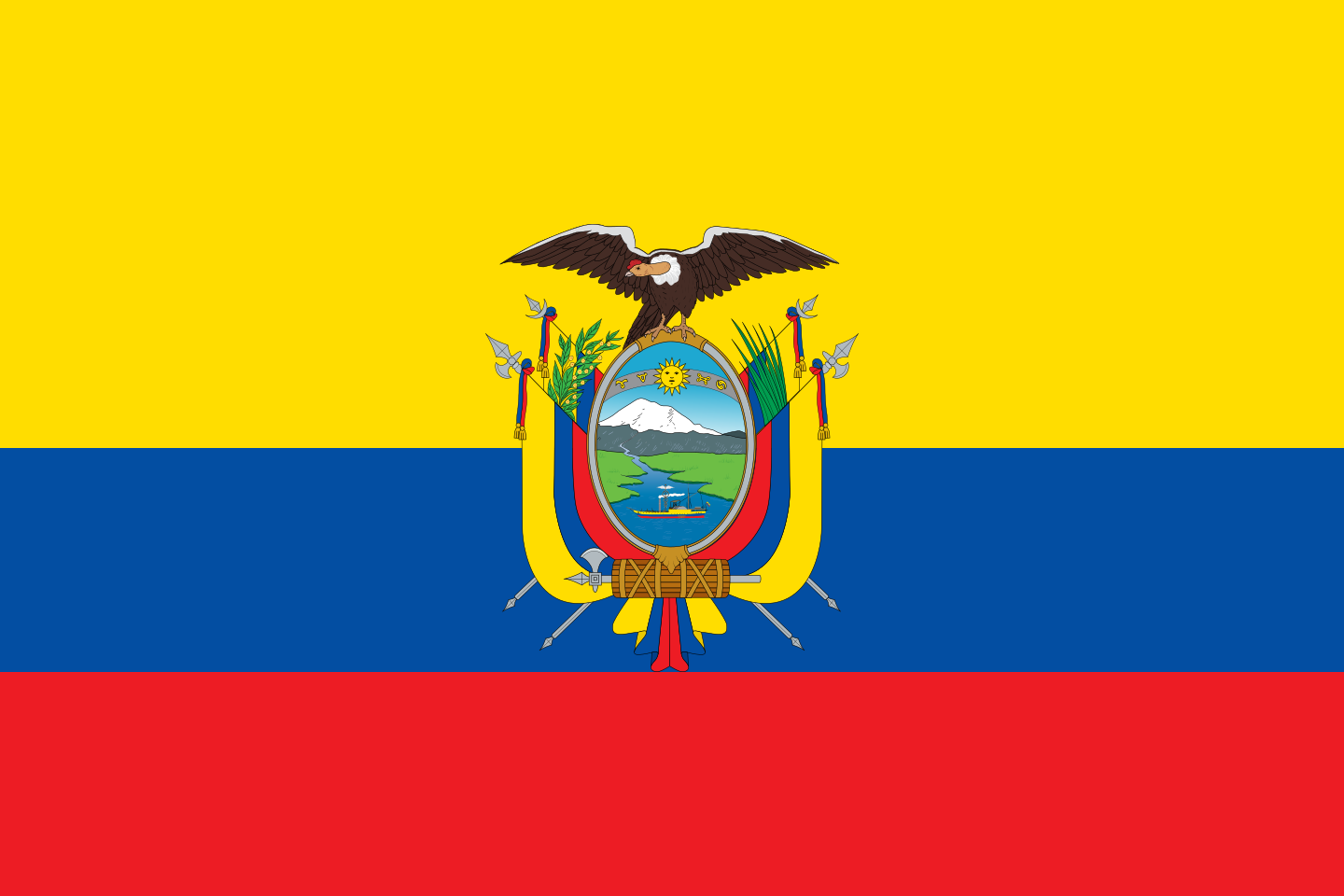
The land that comprises modern-day Ecuador was once home to several groups of indigenous peoples, including the Inca Empire, which gradually incorporated these groups during the 15th century. The territory was later colonized by the Spanish Empire during the 16th century, achieving independence in 1820 as part of Gran Colombia. Ecuador emerged as a sovereign state in 1830, with its capital in Quito and its largest city in Guayaquil. The legacy of both empires is reflected in Ecuador's ethnically diverse population, with most of its people being Mestizos, followed by large minorities of Europeans, Native American, African, and Asian descendants.
🏞️ Geography & Climate
Ecuador's geography is characterized by its unique blend of Andes Mountains, Amazon Rainforest, and coastal regions along the Pacific Ocean. The country is home to the famous Galápagos Islands, a unique ecosystem that inspired Charles Darwin's theory of evolution. The islands are a popular tourist destination, with many visitors drawn to their stunning natural beauty and diverse wildlife, including Giant Tortoises and Marine Iguanas.
🌈 Cultural Impact
Ecuador's cultural impact is significant, with a mix of indigenous, European, African, and Asian influences. The country is known for its vibrant festivals, including the Quito Festival, which showcases the city's rich cultural heritage. Ecuador is also home to a thriving arts scene, with many notable artists, including Oswaldo Guayasamín, who was influenced by the country's indigenous culture and the works of Pablo Picasso.
🔮 Legacy & Future
Ecuador's legacy and future are closely tied to its natural resources and cultural heritage. The country is working to balance its economic development with environmental protection, particularly in the Amazon Rainforest and the Galápagos Islands. Ecuador is also a member of the United Nations and the Organization of American States, and plays an active role in regional and international affairs, including its relationships with United States, China, and European Union.
Key Facts
- Year
- 1830
- Origin
- South America
- Category
- history
- Type
- country
Frequently Asked Questions
What is the capital of Ecuador?
The capital of Ecuador is Quito, a city known for its well-preserved colonial architecture and vibrant cultural scene, with many notable landmarks, including the Quito Cathedral and the Iglesia de la Compañía de Jesús.
What is the largest city in Ecuador?
The largest city in Ecuador is Guayaquil, a major port city and commercial center, with a rich history and cultural heritage, including the Guayaquil Historic Center and the Malecón 2000.
What is the significance of the Galápagos Islands?
The Galápagos Islands are a unique ecosystem that inspired Charles Darwin's theory of evolution, with a diverse range of flora and fauna, including Giant Tortoises, Marine Iguanas, and Blue-footed Boobies. The islands are a popular tourist destination and a national park, with many conservation efforts in place to protect the fragile environment, including the Galapagos Conservation Trust and the World Wildlife Fund.
What is the cultural heritage of Ecuador?
Ecuador has a rich cultural heritage, with a mix of indigenous, European, African, and Asian influences, reflected in its vibrant festivals, including the Quito Festival, and its thriving arts scene, with many notable artists, including Oswaldo Guayasamín, who was influenced by the country's indigenous culture and the works of Pablo Picasso.
What are the main challenges facing Ecuador?
Ecuador faces several challenges, including balancing its economic development with environmental protection, particularly in the Amazon Rainforest and the Galápagos Islands, as well as addressing social and economic inequalities, with many organizations, including the United Nations and the World Bank, working to support the country's development and conservation efforts, including the Ecuador Poverty Reduction Program and the Galapagos Conservation Initiative.