
Contents
Overview
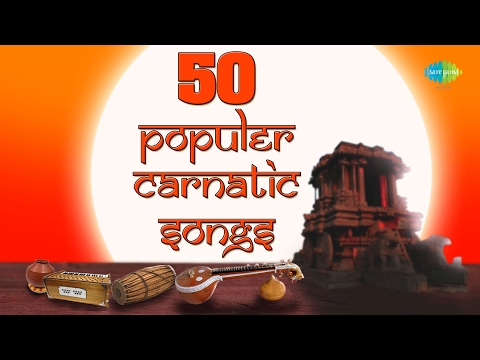
Carnatic music is the classical music tradition of South India, a complex system of melody and rhythm that has been meticulously codified over centuries. Unlike its Hindustani counterpart in the North, Carnatic music is largely devotional, with a significant portion of its repertoire dedicated to Hindu deities. It's characterized by its intricate melodic frameworks called Ragas and complex rhythmic cycles known as Talas. The music is primarily vocal-centric, even when performed on instruments, emphasizing lyrical content and emotional expression. It's a living tradition, deeply embedded in the cultural fabric of states like Tamil Nadu, Karnataka, Andhra Pradesh, and Kerala.
📍 Where to Experience It
The heartland for experiencing authentic Carnatic music is the southern Indian states, particularly cities like Chennai, Bengaluru, and Hyderabad. Chennai, especially, is considered the epicenter, hosting the world-renowned Margazhi festival every December-January, a month-long extravaganza of concerts. Beyond India, major diaspora hubs in the United States, United Kingdom, and Australia also host regular performances and festivals. Many sabhas (cultural organizations) in these cities serve as regular venues, offering a consistent schedule of concerts throughout the year.
💰 Cost of Entry
The cost of experiencing Carnatic music varies wildly. Attending a concert at a major sabha during the Margazhi festival might range from a nominal fee of ₹100-₹500 (approx. $1.20-$6.00 USD) for general seating to several thousand rupees for premium seats at renowned artists' performances. Many smaller, informal performances or temple concerts are free or by donation. Learning Carnatic music involves tuition fees, which can range from $20-$100+ per month depending on the teacher's reputation and location, and the intensity of the lessons.
⭐ Vibe Score & Audience
Carnatic music boasts a Vibe Score of 85/100 for cultural depth and 70/100 for accessibility. Its audience is a mix of dedicated connoisseurs, students of the art form, and those with a deep appreciation for classical traditions. While it can appear esoteric to newcomers, the emotional resonance of the melodies and the sheer virtuosity of the performers often captivate even casual listeners. The devotional aspect also draws a significant spiritual audience.
🤔 Similar Genres & Comparisons
Carnatic music shares its classical roots with Hindustani classical music, but they diverge significantly in melodic ornamentation, instrumentation, and theoretical frameworks. While both systems are based on Ragas and Talas, their interpretations and structures are distinct. In terms of global genres, it's often compared to Western classical music for its complexity and adherence to established forms, but Carnatic music's improvisational elements and its vocal-centricity set it apart. It also shares a spiritual connection with Bhakti music and devotional chants.
💡 Essential Listening
Essential listening for any newcomer includes the compositions of the Trinity of Carnatic Music: Tyagaraja, Muthuswami Dikshitar, and Shyama Shastri. Their kritis (songs) form the bedrock of the repertoire. Key pieces to start with include Tyagaraja's 'Jagadānandakārakam' (in Nata raga), Dikshitar's 'Ananda Natarajan' (in Todi raga), and Shastri's 'Devi Brova Samāram' (in Chintamani raga). Listening to iconic vocalists like M.S. Subbulakshmi and D.K. Pattammal provides a foundational understanding of the vocal aesthetic.
🎓 Learning the Ropes
Learning Carnatic music is traditionally a guru-shishya parampara (teacher-disciple tradition), though formal institutions now play a significant role. Aspiring musicians typically start with vocal training, learning basic Swaras (notes) and simple compositions. The journey involves mastering Gamaka (ornamentation), understanding the nuances of various Ragas, and internalizing complex Talas. Many universities and cultural centers offer structured courses, and online platforms have made learning more accessible globally, connecting students with teachers across continents.
🗓️ Key Festivals & Events
The most significant event is the Margazhi festival in Chennai, a month-long cultural marathon featuring thousands of concerts by artists of all calibers. Other notable events include the Thyagaraja Aradhana in Thiruvaiyaru, a massive gathering celebrating the composer Tyagaraja, and the Music Academy Conference in Chennai, a more academic and critical forum. Many smaller sabhas and organizations across South India and in diaspora communities host annual music festivals throughout the year.
🗣️ What the Purists Say
Purists often emphasize the importance of adherence to traditional forms and the devotional intent behind the compositions. Debates frequently arise regarding the balance between tradition and innovation, the role of improvisation versus strict adherence to the composer's intent, and the increasing influence of fusion and cross-cultural collaborations. Some lament the perceived decline in rigorous theoretical training among younger generations, while others champion the evolution of the art form to remain relevant.
🚀 The Future Sound
The future of Carnatic music is a dynamic interplay between preserving its rich heritage and embracing contemporary influences. We're seeing exciting cross-pollinations with jazz, electronic music, and world music, pushing the boundaries of what Carnatic music can be. Digital platforms are democratizing access to learning and performance, allowing for global collaborations and new avenues for dissemination. The challenge lies in maintaining the depth and integrity of the tradition while fostering innovation that resonates with a new generation of listeners and artists.
Key Facts
- Year
- c. 1500 BCE - Present
- Origin
- South India
- Category
- Music
- Type
- Art Form
Frequently Asked Questions
Is Carnatic music only sung in temples?
While many Carnatic compositions are devotional and often performed in temples, it's far from exclusive. Concerts are held in dedicated music halls (sabhas), auditoriums, and cultural centers. The devotional aspect is strong, but the music is a secular art form enjoyed in various settings, not confined to religious spaces.
How difficult is it for a beginner to understand Carnatic music?
It can be challenging initially due to the unfamiliar melodic structures and rhythmic cycles. However, focusing on the emotional arc of a performance and appreciating the instrumental virtuosity can be a good starting point. Many resources, including introductory concerts and online guides, are available to ease the learning curve.
What's the difference between a Raga and a scale?
A Raga is much more than a scale; it's a melodic framework with specific rules for ascending and descending notes, characteristic phrases, and emotional associations. While a scale provides the notes, a Raga dictates how those notes are used, creating a distinct mood and identity. It's a complex system of melodic grammar.
Can I appreciate Carnatic music without knowing Tamil or other South Indian languages?
Absolutely. While understanding the lyrics enhances the experience, the emotional impact of the music, the intricate melodies, and the rhythmic complexity are universally appreciable. Many concert programs provide translations, and the vocalists' expressiveness often conveys meaning beyond language.
What instruments are commonly used in Carnatic music?
How does Carnatic music improvisation work?
Improvisation, known as Manodharma Sangeetham, is a crucial element. Artists improvise within the strict framework of the Raga and Tala, exploring melodic possibilities through sections like Raga Alapana (unmetered melodic exploration) and Niraval (improvisation on a line of text). It requires deep knowledge and creativity.