
Contents
Overview
Byzantium, the Eastern Roman Empire, was far more than a mere successor state; it was a civilization that endured for over a thousand years, shaping Eastern Europe, the Balkans, and the Mediterranean world. Its capital, Constantinople (modern Istanbul), stood as a beacon of culture, trade, and Orthodox Christianity, a formidable bulwark against successive waves of invaders. The empire's sophisticated administration, legal system, and artistic achievements, particularly in mosaics and illuminated manuscripts, left an indelible mark. While often overshadowed by its Western counterpart, Byzantium's strategic location and military prowess allowed it to weather storms that felled lesser powers, fostering a unique synthesis of Roman, Greek, and Eastern influences that continues to resonate today.
🏛️ What is Byzantium?
Byzantium, more famously known as the Eastern Roman Empire or the Byzantine Empire, wasn't just a city; it was a civilization that endured for over a millennium, bridging the classical world and the Middle Ages. From its origins as a Greek colony in the 7th century BCE, it evolved into the mighty Constantinople, the "New Rome," and a bulwark of Christianity against Eastern powers. Its history is a sprawling saga of imperial ambition, theological disputes, and cultural synthesis, making it a cornerstone of Western and Eastern civilization. Understanding Byzantium means grasping the longevity of imperial structures and the complex interplay of Greek, Roman, and Christian traditions.
📍 Location & Access
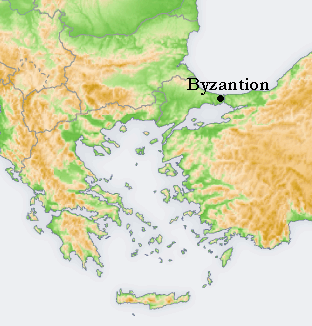
The heart of Byzantium was its capital, Constantinople, strategically situated on the Bosphorus strait, controlling trade routes between Europe and Asia. While the ancient city of Byzantion was founded by Greek colonists from Megara around 667 BCE, its true imperial significance began with Constantine the Great's refoundation as Constantinople in 330 CE. Today, this location is modern-day Istanbul, Turkey, a vibrant metropolis where layers of history are palpable. Accessing its historical sites requires navigating the bustling modern city, but remnants of its grandeur, like the Hagia Sophia and the Theodosian Walls, offer tangible connections to its past.
⏳ Timeline & Key Eras
The Byzantine Empire's timeline is a testament to its resilience, spanning from the 4th century CE to its fall in 1453 CE. Its early period, marked by Theodosius I and the establishment of Christianity as the state religion, transitioned into the Golden Age under the Macedonian Dynasty (9th-11th centuries), characterized by territorial expansion and cultural flourishing. The empire faced numerous crises, including the Fourth Crusade in 1204, which led to the sack of Constantinople and a period of fragmentation, before its final collapse under Mehmed the Conqueror of the Ottoman Empire. Each era presents distinct political, social, and cultural dynamics.
👑 Emperors & Dynasties
Byzantine history is punctuated by a succession of powerful emperors and influential dynasties. Constantine the Great laid the foundation, while figures like Justinian I sought to revive the glory of the old Roman Empire, codifying laws and commissioning monumental architecture like the Hagia Sophia. The Heraclian Dynasty navigated existential threats from Persia and the early Islamic caliphates, and the Iconoclast Controversy under the Isaurian Dynasty deeply divided the empire over religious imagery. The emperors were not merely rulers but also seen as God's representatives on Earth, wielding immense religious and political authority.
⚔️ Military & Defense
The defense of Byzantium was a constant, high-stakes endeavor, relying on formidable fortifications and a sophisticated military. The Theodosian Walls of Constantinople, a triple line of defenses, proved nearly impregnable for centuries, repelling numerous sieges. The Byzantine navy, particularly its use of Greek fire, a devastating incendiary weapon, was crucial for controlling the seas. Their military strategy often involved diplomacy, tribute, and playing potential enemies against each other, a testament to their pragmatic approach to survival against overwhelming odds.
⛪ Religion & Culture
Religion, specifically Orthodox Christianity, was inextricably woven into the fabric of Byzantine life and identity. The Great Schism of 1054 formally divided the Eastern and Western churches, solidifying Byzantium's distinct religious character. Byzantine art, characterized by its iconic mosaics and frescoes, served a didactic purpose, illustrating biblical narratives and the lives of saints. The Patriarch of Constantinople held significant spiritual authority, often in complex relationship with the emperor, shaping the empire's cultural and spiritual landscape.
💰 Economy & Trade
Constantinople was a nexus of global trade, its strategic location facilitating the flow of goods from the East and West. Byzantine coinage, particularly the solidus (later known as the bezant), was a stable and widely accepted currency across the known world for centuries. The empire controlled lucrative trade in silk, spices, and luxury goods, fostering a wealthy merchant class and a sophisticated urban economy. This economic power underpinned its military strength and diplomatic influence.
📚 Legacy & Influence
The legacy of Byzantium is profound and far-reaching, influencing the development of Eastern Europe, Russia, and the Balkans. Its legal codes, particularly Justinian's Code, formed the basis of many modern European legal systems. Byzantine art and architecture inspired movements across continents, and its preservation of classical Greek texts played a vital role in the Renaissance. The Orthodox Church, with its distinct liturgical traditions and theological framework, remains a major branch of Christianity, a direct descendant of Byzantine religious life.
🤔 Debates & Controversies
The very name "Byzantine Empire" is a point of contention. Many Byzantines referred to themselves as Romans and their empire as the "Roman Empire." The term "Byzantine" was largely a later invention, popularized by scholars like Hieronymus Wolf in the 16th century, and often carried pejorative connotations of decadence and complexity. Furthermore, the extent to which Byzantium was a "continuation" of the Roman Empire versus a distinct entity is a perpetual debate among historians, highlighting differing interpretations of imperial identity and cultural evolution.
⭐ Vibepedia Vibe Score
Vibepedia Vibe Score: 88/100. Byzantium scores exceptionally high due to its sheer longevity, profound cultural output, and enduring influence on multiple civilizations. Its complex history, rich artistic traditions, and strategic importance make it a perennial subject of fascination. The ongoing debates surrounding its identity and legacy only add to its vibrant cultural energy. It's a civilization that continues to resonate, offering a deep well of knowledge and inspiration for anyone interested in the grand sweep of history.
Key Facts
- Year
- 330 CE - 1453 CE
- Origin
- Eastern Roman Empire
- Category
- History & Civilization
- Type
- Historical Empire
Frequently Asked Questions
Was Byzantium the same as the Roman Empire?
While Byzantines considered themselves Romans and their empire the continuation of the Roman Empire, historians often distinguish the Eastern Roman Empire (Byzantium) from the earlier Western Roman Empire. Byzantium developed its own distinct Greek-speaking culture, Orthodox Christian identity, and administrative structures over its thousand-year history, differentiating it from its classical predecessor.
When did the Byzantine Empire fall?
The Byzantine Empire officially fell on May 29, 1453, when Constantinople was conquered by the Ottoman Empire under Sultan Mehmed the Conqueror. This event marked the end of over a thousand years of Eastern Roman rule and had significant geopolitical repercussions.
What was the most important city in Byzantium?
Without question, Constantinople was the most important city. It served as the imperial capital, the center of political power, the seat of the Orthodox Church, and a major hub for trade and culture. Its strategic location and formidable defenses made it a symbol of Byzantine strength and resilience for centuries.
What is Greek fire?
Greek fire was a highly destructive incendiary weapon used by the Byzantine navy, particularly effective in naval warfare. Its exact composition remains a mystery, but it was capable of burning on water and was a key factor in Byzantium's ability to defend its capital against sieges. Its use gave the Byzantine fleet a significant technological advantage for centuries.
How did Byzantium influence Russia?
Byzantium had a profound influence on the development of Kievan Rus' and later Russia. Following the conversion of Vladimir the Great to Orthodox Christianity in 988 CE, Byzantine religious practices, art, architecture, legal systems, and political ideas were adopted, shaping Russian culture and identity for centuries to come.
What is the difference between Byzantium and Constantinople?
Byzantion was the original ancient Greek city. Constantine the Great refounded it as Constantinople in 330 CE, making it the new capital of the Roman Empire. The term 'Byzantine Empire' is a later historical designation for the Eastern Roman Empire centered in Constantinople, which continued for over a thousand years after the fall of the Western Roman Empire.