
Contents
Overview
The genesis of Greek fire is shrouded in the mists of the 7th century. While the exact inventor is lost to time, the Byzantine historian Theophanes the Confessor attributes its creation to a Syrian architect named Kallinikos of Heliopolis, who allegedly defected to the Byzantine Empire. This incendiary compound was a closely guarded state secret, a cornerstone of Byzantine military doctrine and a symbol of their technological prowess. Its development marked a significant escalation in naval warfare, providing the Byzantines with a decisive advantage against their numerous enemies, including the Umayyad Caliphate and later the Bulgarian Empire. The formula was reportedly confined to a select few within the imperial court, and its production was centralized in secret workshops.
⚙️ How It Works
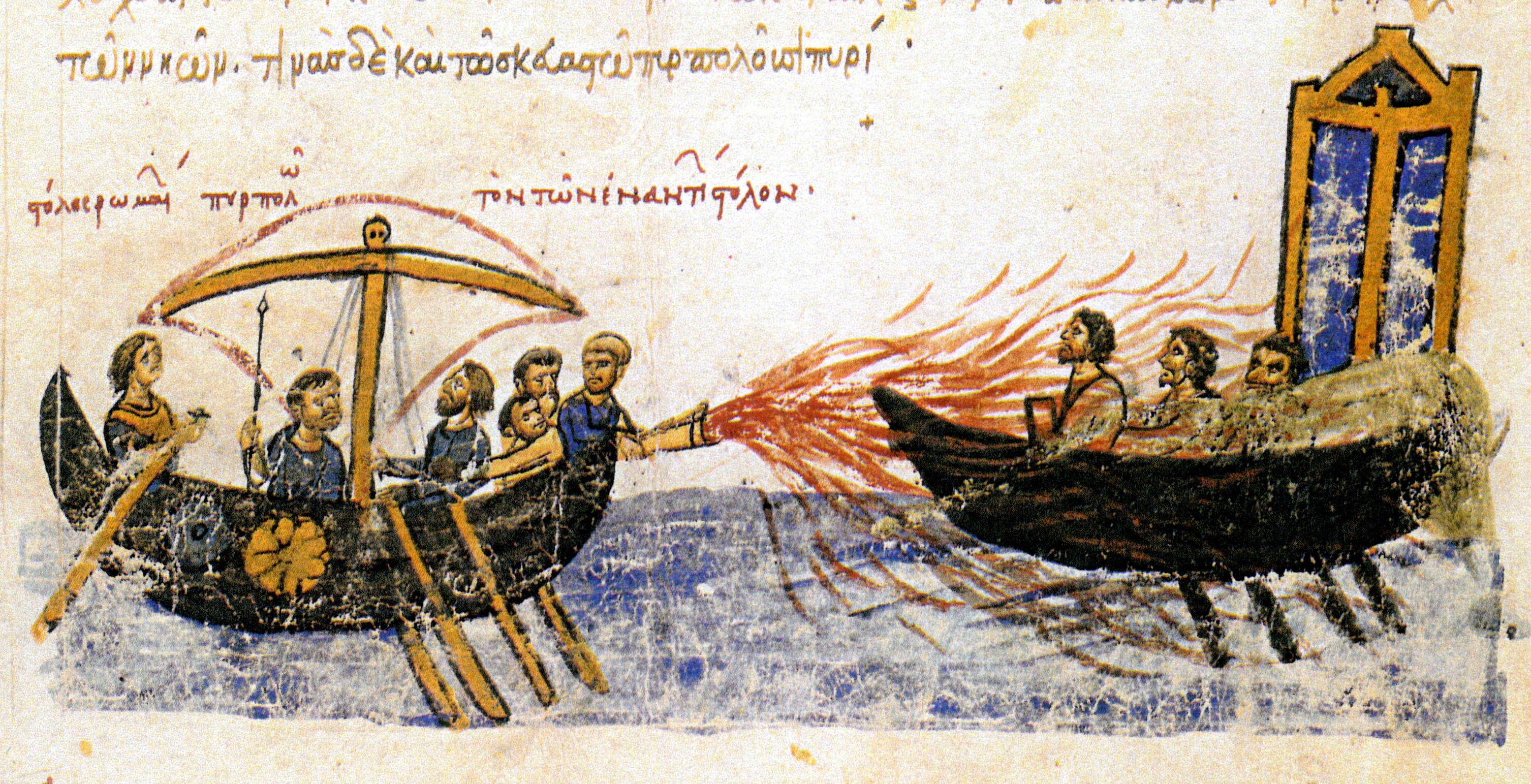
The true genius of Greek fire lay in its unique properties, most notably its ability to burn vigorously even when floating on water, a characteristic that confounded and terrified naval opponents. While the precise recipe remains elusive, scholarly consensus, bolstered by analyses of historical accounts and chemical properties, suggests a petroleum distillate as the primary component, mixed with substances like sulfur and resins. This viscous liquid was typically deployed from siphons, often mounted on the prows of Byzantine warships, projecting a terrifying stream of flame. It could also be contained in ceramic grenades, which would shatter on impact, spreading the burning substance. The sheer terror it inspired, coupled with its destructive power, made it a formidable psychological and physical weapon.
📊 Key Facts & Numbers
Greek fire was instrumental in repelling at least two major Arab sieges of Constantinople: the first from 674 to 678 AD, which saw the destruction of a massive Arab fleet, and the second in 717-718 AD, where it is credited with saving the city. Over its centuries of use, from the 7th to the 14th century, it is estimated that Greek fire was responsible for the destruction of thousands of enemy vessels. The Byzantine Empire maintained a monopoly on its production for over 600 years, a testament to their stringent security measures. The cost of producing this weapon was significant, contributing to the Byzantine treasury's strain, yet its strategic value far outweighed its expense, preventing the loss of the empire's capital on multiple occasions.
👥 Key People & Organizations
The primary custodians and users of Greek fire were the Byzantine Emperors and their naval forces. Emperors like Heraclius (who reigned during the early period of its development) and Leo III the Isaurian (who utilized it effectively against the Umayyads) understood its immense strategic importance. The Byzantine navy, particularly the Dromon warships, were specifically equipped to deploy the weapon. While the exact identity of the chemists or engineers responsible for its initial creation and ongoing refinement is largely unknown, figures like Kallinikos of Heliopolis are often cited. Organizations like the Byzantine Arsenal were responsible for its production and distribution, operating under the strictest imperial secrecy.
🌍 Cultural Impact & Influence
The cultural impact of Greek fire reverberated throughout the medieval world, solidifying the image of the Byzantine Empire as a formidable military power. Its terrifying efficacy inspired awe and fear, becoming a legend whispered in enemy camps and a symbol of Byzantine resilience. The inability of rivals to replicate the formula fueled Byzantine prestige and contributed to their long-term survival against overwhelming odds. The weapon's mystique also permeated Byzantine art and literature, often depicted in illuminated manuscripts like the Madrid Skylitzes, where its destructive power is vividly illustrated. The legend of Greek fire persisted long after its use, influencing later military thinkers and contributing to the lore of ancient and medieval warfare.
⚡ Current State & Latest Developments
The use of Greek fire effectively ceased by the late 14th century, coinciding with the decline and eventual fall of the Byzantine Empire in 1453. The secret of its composition was lost, either through deliberate destruction of records, the dispersal of knowledge during the empire's final collapse, or simply the obsolescence of its production methods. While attempts were made by various powers throughout history to recreate similar incendiary weapons, none matched the specific properties of Greek fire. Modern military science has developed advanced incendiary agents like napalm and white phosphorus munitions, but these are distinct in their chemical makeup and deployment methods, though conceptually similar in their aim to inflict widespread destruction.
🤔 Controversies & Debates
The most significant controversy surrounding Greek fire is, of course, its precise chemical composition. Despite numerous scholarly investigations, a definitive, universally accepted formula has never been established. Theories range from simple petroleum-based mixtures to more complex concoctions involving sulfur, resins, and even naphtha. Another point of debate is the extent of its actual effectiveness versus the psychological terror it instilled; while undeniably potent, its impact might have been amplified by the fear it generated. Furthermore, the ethical implications of such a devastating weapon, even in a historical context, are a subject of ongoing discussion among historians and ethicists, particularly when considering its role in the brutal sieges of Constantinople.
🔮 Future Outlook & Predictions
While the original Greek fire is lost to history, the principles behind its devastating effectiveness continue to inform the development of modern incendiary and incendiary-like weapons. Future military technologies might explore self-igniting or water-resistant chemical agents, though ethical considerations and international treaties severely restrict the development and deployment of such weapons. The enduring mystery of its composition may also inspire further scientific investigation into historical chemical processes and materials science. The legend of Greek fire serves as a perpetual reminder of the ingenuity and terror that can be achieved through sophisticated, albeit destructive, technological innovation.
💡 Practical Applications
The primary practical application of Greek fire was as a naval weapon, designed to destroy enemy fleets and demoralize their crews. Its ability to burn on water made it uniquely suited for sea battles, allowing Byzantine ships to engage and annihilate larger enemy armadas. Beyond naval engagements, it was also reportedly used in sieges, either hurled from catapults in specialized containers or deployed from defensive positions to repel attackers. The psychological impact was immense, often causing panic and rout among enemy soldiers who witnessed its seemingly unquenchable flames. Its application was strictly military, aimed at achieving decisive battlefield victories and preserving the integrity of the Byzantine Empire.
Key Facts
- Category
- history
- Type
- technology