
Contents
Overview
Building recommendation systems with deep learning represents a significant leap beyond traditional methods like collaborative filtering and content-based filtering. Deep learning models, particularly deep neural networks, can capture complex, non-linear user-item interactions and learn rich, latent representations of users and items. This allows for more nuanced and accurate personalization, driving engagement on platforms like Netflix, Spotify, and Amazon. The field has rapidly evolved, moving from matrix factorization techniques to sophisticated architectures like Recurrent Neural Networks (RNNs) for sequential recommendations and Transformers for understanding context. While offering unprecedented personalization capabilities, these systems also raise questions about data privacy, algorithmic bias, and the 'filter bubble' effect, making their development and deployment a continuous area of research and ethical consideration.
🎵 Origins & History
The quest for personalized recommendations predates deep learning, with early systems relying on association rules and k-nearest neighbors algorithms. While matrix factorization techniques like Singular Value Decomposition (SVD) and Alternating Least Squares (ALS) dominated for years, the resurgence of neural networks in the 2010s, fueled by increased computational power and data availability, paved the way for deep learning's integration. Early deep learning approaches often used autoencoders to learn latent representations, followed by the application of Convolutional Neural Networks (CNNs) for feature extraction from item content and Recurrent Neural Networks (RNNs) for modeling sequential user behavior, notably by researchers at Google and Meta.
⚙️ How It Works
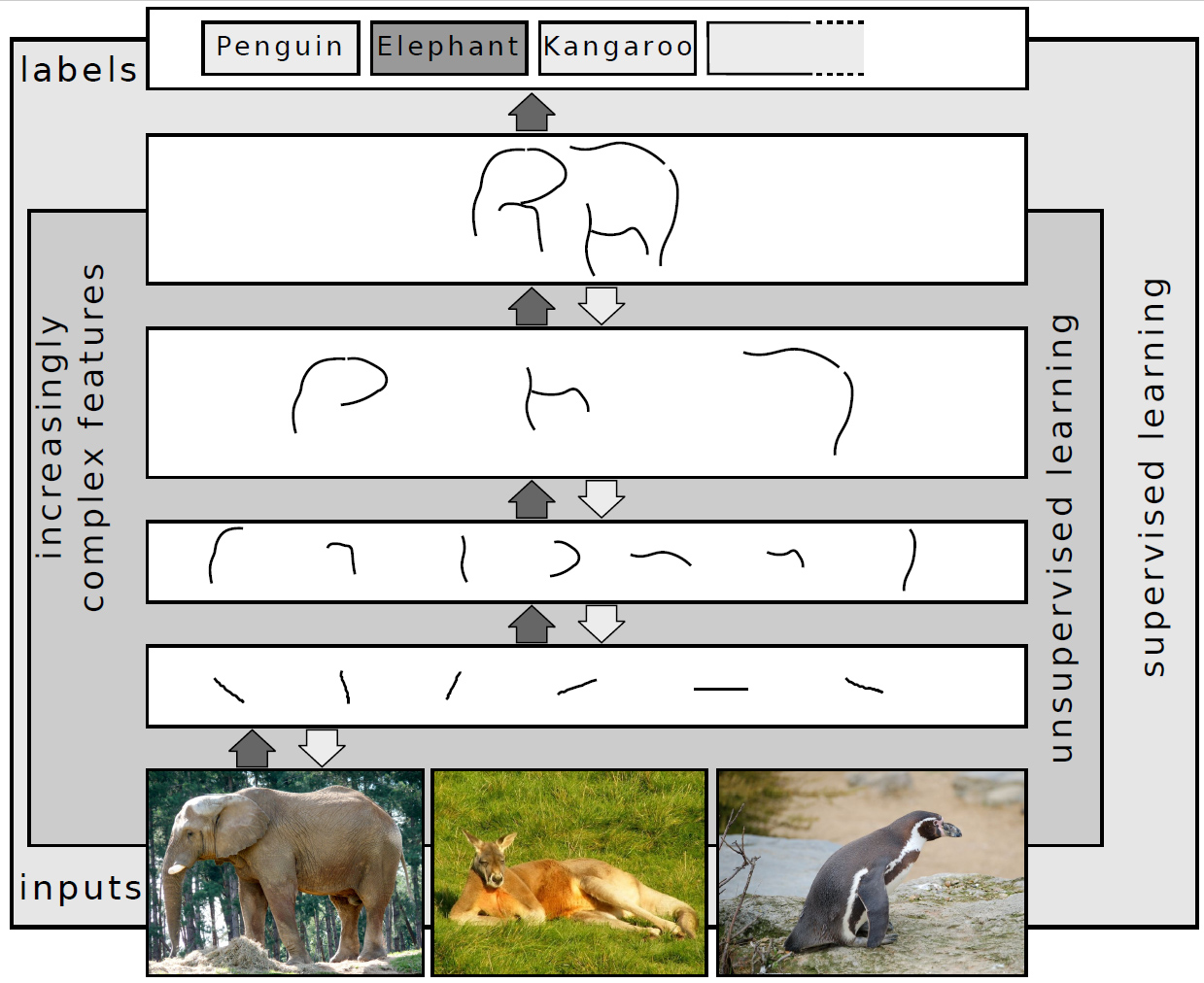
Deep learning recommendation systems typically involve learning dense, low-dimensional embeddings for users and items. These embeddings capture latent features that represent user preferences and item characteristics. Models like Deep & Wide Learning combine the memorization capabilities of linear models with the generalization power of deep neural networks. RNNs, particularly LSTMs, are adept at processing sequential data, allowing systems to understand the order of user interactions and predict the next likely action. More recently, Transformer architectures, originally developed for natural language processing, have shown remarkable success in capturing long-range dependencies in user sequences, leading to more context-aware recommendations. The training process involves optimizing a loss function (e.g., mean squared error for rating prediction or binary cross-entropy for click-through rate prediction) using gradient descent variants like Adam.
📊 Key Facts & Numbers
Deep learning models can process datasets with billions of user-item interactions, often requiring hundreds of gigabytes or terabytes of training data. Training complex models can take days or weeks on clusters of hundreds of GPUs.
👥 Key People & Organizations
Pioneers in this field include researchers from major tech companies and academia. Companies like Google, Meta, Microsoft, and Amazon are major contributors, both through research publications and the deployment of these systems at scale. Academic institutions like Stanford University and Carnegie Mellon University also play a crucial role in advancing the theoretical underpinnings.
🌍 Cultural Impact & Influence
Deep learning-powered recommendation systems have fundamentally reshaped how users discover content and products online. They are the invisible engines behind the personalized feeds on social media platforms, the curated music playlists on Spotify, and the product suggestions on e-commerce giants like Amazon. This pervasive personalization has led to increased user engagement, longer session times, and higher conversion rates across various digital services. The cultural impact is profound, influencing consumer behavior, shaping trends, and creating 'filter bubbles' where users are primarily exposed to content that aligns with their existing preferences, potentially limiting exposure to diverse viewpoints. The success of these systems has also spurred a global race among tech companies to develop more sophisticated and effective recommendation algorithms.
⚡ Current State & Latest Developments
The current state of deep learning for recommendations is characterized by a move towards more sophisticated architectures and a greater focus on explainability and fairness. Transformer models are increasingly being adopted for their ability to capture complex sequential patterns. Research is actively exploring Graph Neural Networks (GNNs) to model complex relationships within user-item interaction graphs. There's also a growing emphasis on reinforcement learning for optimizing long-term user engagement rather than just immediate clicks or purchases. Furthermore, the industry is grappling with the need for more interpretable models, moving beyond black-box approaches to provide users with insights into why certain recommendations are made. The development of real-time recommendation systems that can adapt instantly to user behavior is another key trend, seen in live-streaming platforms and dynamic e-commerce environments.
🤔 Controversies & Debates
Significant controversies surround deep learning recommendation systems. The 'filter bubble' or 'echo chamber' effect, where users are increasingly exposed only to content that confirms their existing beliefs, is a major concern, potentially contributing to societal polarization. Algorithmic bias, stemming from biased training data or model design, can lead to unfair or discriminatory recommendations, particularly for underrepresented groups. For instance, a movie recommendation system might disproportionately suggest films by male directors to male users. The 'cold-start' problem, recommending items to new users or recommending new items with no interaction history, remains a challenge, though deep learning offers some promising solutions through transfer learning and meta-learning. The ethical implications of pervasive surveillance and data collection required to train these models are also under intense scrutiny.
🔮 Future Outlook & Predictions
The future of deep learning in recommendations points towards hyper-personalization and greater user control. Expect to see more sophisticated causal inference techniques used to understand the true impact of recommendations, moving beyond mere correlation. Federated learning and differential privacy will likely become more prevalent to address privacy concerns, allowing models to be trained on decentralized user data without compromising individual privacy. Explainable AI (XAI) will become a standard feature, not an afterthought, enabling users to understand and even influence their recommendations. The integration of multimodal da
Key Facts
- Category
- technology
- Type
- topic