
Contents
Overview
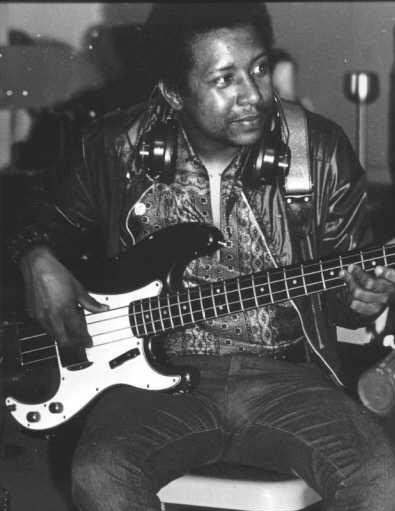
Billy Cox is a foundational figure in psychedelic rock and funk, his distinctive basslines anchoring some of Jimi Hendrix's most iconic recordings. Emerging from the Cleveland soul scene, Cox's journey took him through military bands and stints with artists like Buddy Miles before finding his most significant artistic partnership with Hendrix. His playing is characterized by a fluid, melodic approach that seamlessly blended R&B sensibilities with the raw power of rock.
Cox's tenure with Hendrix, particularly during the Band of Gypsys era and the Woodstock performance, cemented his place in music history. He co-wrote several key Hendrix tracks, including "Message to Love" and "Power of Soul," demonstrating his songwriting prowess alongside his instrumental talent. Post-Hendrix, Cox continued a prolific career, leading his own bands and collaborating with a variety of artists, always bringing his signature groove and musicality to the forefront.
Early Life & Musical Beginnings
Born in Wheeling, West Virginia, and raised in Cleveland, Ohio, Billy Cox's musical journey began early. He honed his skills in the vibrant Cleveland music scene of the late 1950s and early 1960s, playing in local R&B and soul groups. His foundational experience was further solidified during his time in the U.S. Army, where he played in the 9th Infantry Division Band. This period exposed him to a diverse range of musical styles and sharpened his technical abilities. His early influences included jazz bassists and the emerging sounds of Motown and Stax soul.
The Jimi Hendrix Years
Cox's career trajectory shifted dramatically when he met Jimi Hendrix in the late 1960s. Initially playing with Buddy Miles in the band The 5 Sta Jats, Cox, along with Miles, was recruited by Hendrix to form the Band of Gypsys. This trio, alongside drummer Buddy Miles, released the seminal self-titled album in 1970, featuring a potent blend of funk, rock, and blues. Cox's basslines on tracks like "Who Knows" and "Machine Gun" were not merely rhythmic support but melodic counterpoints that drove the music forward. He also played a pivotal role in Hendrix's final studio album, The Cry of Love, contributing significantly to its more introspective and soulful sound. His contributions to Hendrix's work are often cited as crucial to the unique sonic identity of that period, particularly bridging the gap between Hendrix's guitar pyrotechnics and a solid, grooving rhythm section. He co-wrote several key tracks with Hendrix, including "Message to Love" and "Power of Soul," showcasing his own creative input.
Post-Hendrix Career & Solo Work
Following Hendrix's untimely death in 1970, Billy Cox continued to be a vital force in music. He led his own bands, including the Billy Cox Experience and Brass Knuckle Evidence, exploring various facets of funk, soul, and blues. He has consistently released new material and performed live, maintaining a dedicated following. Cox's legacy is intrinsically linked to his work with Hendrix, but his extensive solo discography and ongoing performances reveal an artist with a deep well of creativity and musicality all his own. His influence can be heard in countless bassists who admire his ability to blend technical prowess with an undeniable feel for groove. He remains a respected elder statesman of funk-rock and a living link to one of music's most transformative eras.
Enduring Influence & Cultural Significance
The cultural impact of Billy Cox's bass playing is undeniable, particularly through his association with Jimi Hendrix. He was instrumental in shaping the sound of Band of Gypsys and the later recordings of Hendrix, a period often seen as a crucial evolution in psychedelic rock and funk. His ability to provide a grounded, soulful foundation while simultaneously engaging in melodic interplay with Hendrix's guitar created a dynamic that was both innovative and highly influential. Cox's participation in the Woodstock festival with Hendrix in 1969, performing a blistering rendition of "The Star-Spangled Banner," is a landmark moment in music history, showcasing his powerful stage presence and musical dexterity. His work stands as a testament to the essential role of the bass guitar in defining a band's sound and driving its artistic vision, particularly within the context of the late 1960s and early 1970s burgeoning funk and hard rock scenes.
Key Facts
- Year
- 1941-present
- Origin
- Wheeling, West Virginia
- Category
- music
- Type
- artist
Frequently Asked Questions
What is Billy Cox's most notable work?
Billy Cox's most notable work is his collaboration with Jimi Hendrix and the Band of Gypsys. Their album Band of Gypsys (1970) is widely regarded as one of the most influential and innovative albums of the 1960s and 1970s. Cox's unique playing style and musical chemistry with Jimi Hendrix are particularly notable, with the bassist's ability to blend different musical influences and create a unique sound.
What is Billy Cox's playing style?
Billy Cox's playing style is characterized by his use of funk and R&B rhythms, combined with a strong emphasis on rock and blues influences. His playing style is highly distinctive, with a strong focus on melodic lines and a willingness to experiment with new sounds and techniques. Cox has cited a range of influences, including James Jamerson and John Entwistle, and has been praised for his ability to blend different musical styles and create a unique sound.
What are some of Billy Cox's most notable collaborations?
Billy Cox has collaborated with a range of musicians throughout his career, including Jimi Hendrix, Eric Clapton, and Steve Miller. His collaborations with Jimi Hendrix and the Band of Gypsys are particularly notable for their innovative use of funk and R&B rhythms, with songs like Who Knows and Machine Gun showcasing the bassist's ability to create complex, groove-oriented music.
What is Billy Cox's legacy?
Billy Cox's legacy is undeniable, with the bassist's work with Jimi Hendrix and the Band of Gypsys widely regarded as some of the most influential and innovative music of the 1960s and 1970s. Cox's unique playing style and musical chemistry with Jimi Hendrix have been praised by critics and fans alike, with many noting the bassist's ability to blend different musical influences and create a unique sound. Cox's legacy continues to inspire new generations of musicians and fans, with his work with Jimi Hendrix and the Band of Gypsys remaining some of the most iconic and influential music of the 1960s and 1970s.
How can I get started with Billy Cox's music?
To get started with Billy Cox's music, listeners can explore some of his most notable works, including Band of Gypsys (1970) and Live at the Fillmore East (1999). Cox's collaborations with Jimi Hendrix and the Band of Gypsys are particularly notable for their innovative use of funk and R&B rhythms, with songs like Who Knows and Machine Gun showcasing the bassist's ability to create complex, groove-oriented music. Fans of funk, rock, and blues music will likely appreciate Cox's work, as well as fans of Jimi Hendrix and the Band of Gypsys.