
Contents
Overview
The journey to understanding autophagy-related genes (ATGs) began in the 1960s with Christian de Duve's work on lysosomes, the cellular organelles responsible for degradation. However, the genetic basis of autophagy remained elusive until the late 1980s and early 1990s, when Yoshinori Ohsumi and his team at the University of Tokyo employed a systematic genetic screen in the yeast Saccharomyces cerevisiae. This groundbreaking research, published in seminal papers like the 1992 Journal of Cell Biology article "Two new classes of vacuolar mutants affecting degradation of cytoplasmic components in yeast," identified the first ATG genes. Ohsumi's subsequent work, which earned him the 2016 Nobel Prize in Physiology or Medicine, meticulously mapped the functions of these genes and proteins, revealing the core machinery of macroautophagy. This yeast-centric approach proved remarkably effective, as homologous genes and proteins were soon discovered in higher eukaryotes, including humans, solidifying the conservation of this vital pathway across kingdoms.
⚙️ How It Works
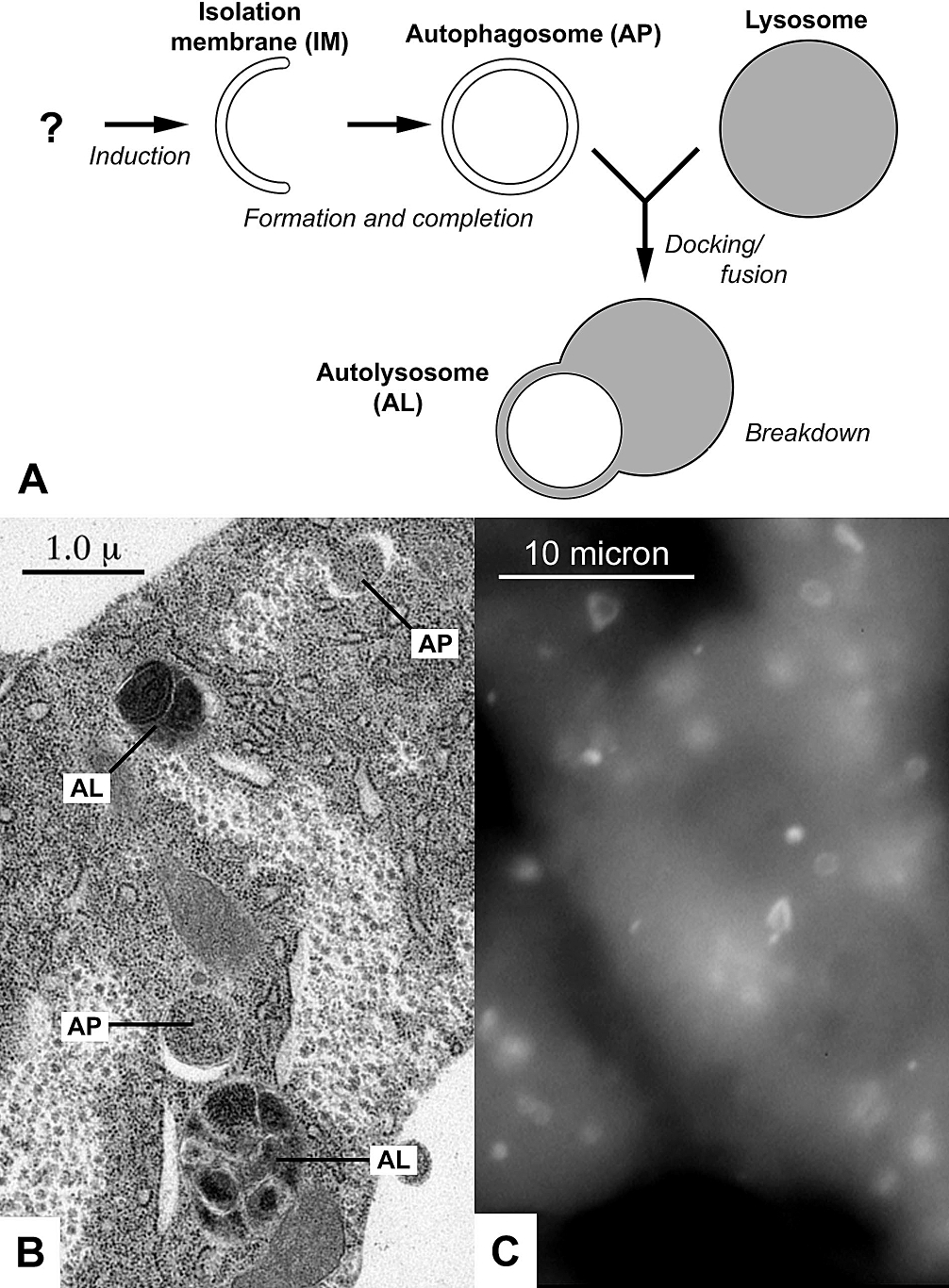
Autophagy, orchestrated by ATGs, is a multi-step process initiated by the formation of a phagophore, a double-membrane structure that engulfs cytoplasmic cargo. This process is tightly regulated by two ubiquitin-like conjugation systems. The first involves ATG12, which is conjugated to ATG5, forming a complex that associates with ATG16L1 to create a larger scaffold. The second system centers on the formation of a phosphatidylethanolamine (PE)-conjugated form of ATG8 (LC3 in mammals), which is crucial for autophagosome expansion and cargo recognition. Key ATG proteins like ATG9, a transmembrane protein, are thought to serve as a scaffold for membrane recruitment, while ATG2 and ATG5-ATG12-ATG16L1 complexes facilitate membrane elongation. Finally, the completed autophagosome fuses with a lysosome, where the engulfed material is degraded by lysosomal hydrolases, and the resulting components are recycled back into the cytoplasm. This intricate dance of ATG proteins ensures cellular cleanup and resource management.
📊 Key Facts & Numbers
In humans, the ATG family includes genes like MAP1LC3 (encoding LC3, a key marker for autophagosomes), BECN1 (Beclin 1, a core component of the PI3K complex that initiates phagophore formation), and ULK1 (a serine/threonine kinase essential for initiating autophagy).
👥 Key People & Organizations
The foundational work on autophagy-related genes was pioneered by Yoshinori Ohsumi, whose systematic genetic screens in yeast earned him the Nobel Prize in Physiology or Medicine in 2016. Other pivotal researchers include Daniel J. Klionsky, who extensively studied the molecular mechanisms and regulation of autophagy in yeast, and Betty Y. Liu, whose work has elucidated the role of ATGs in cancer biology. Key organizations driving research include the Autophagy, Inflammation, and Metabolism Center of Excellence (AIM-CoiE) and the Autophagy Society, which foster collaboration and disseminate findings. Pharmaceutical companies like Veru Inc. and Genfit are actively developing ATG-modulating drugs, highlighting the translation of basic science into clinical applications.
🌍 Cultural Impact & Influence
The discovery of ATGs has profoundly reshaped our understanding of cellular life, moving autophagy from a mere starvation response to a central player in cellular health and disease. This has led to a surge in scientific literature. The concept of 'self-eating' has captured the public imagination, appearing in popular science books and documentaries, often framed as a key to longevity and disease prevention. Furthermore, the identification of specific ATGs has provided novel biomarkers for various diseases, enabling more accurate diagnoses and prognoses. The influence extends to fields like aging research, where modulating autophagy is seen as a potential strategy to combat age-related decline, and even to the study of microbiome interactions, where autophagy plays a role in host defense.
⚡ Current State & Latest Developments
Current research on ATGs is intensely focused on dissecting their precise roles in specific disease contexts and developing targeted therapies. For instance, studies are investigating how specific ATGs, like ATG5 and ATG7, are hijacked by viruses for replication, opening avenues for antiviral drug development. Researchers are also exploring the complex interplay between autophagy and the immune system, particularly in autoimmune disorders and cancer immunotherapy. The development of highly specific ATG inhibitors and activators, such as those targeting mTOR signaling (a key regulator of autophagy), is a major area of pharmaceutical investment. Clinical trials are ongoing for autophagy-modulating drugs in conditions ranging from NASH to neurodegenerative diseases, with promising early results.
🤔 Controversies & Debates
One of the most persistent debates surrounding ATGs concerns their dual role in cancer. While autophagy can suppress tumor initiation by clearing damaged organelles and preventing genomic instability, established tumors often exploit autophagy to survive chemotherapy and resist nutrient deprivation. This has led to controversy over whether to inhibit or activate autophagy in cancer treatment. Some argue that inhibiting autophagy with drugs like chloroquine or hydroxychloroquine can sensitize tumors to therapy, while others propose that activating autophagy might be beneficial in specific early-stage or treatment-resistant cancers. Another area of contention is the precise mechanism of autophagosome nucleation, with ongoing debates about the exact molecular players and their sequential order in initiating membrane formation.
🔮 Future Outlook & Predictions
The future of ATG research is poised for significant breakthroughs. We can anticipate the development of highly selective ATG modulators, moving beyond broad pathway inhibitors to target specific ATG proteins or complexes. This precision medicine approach aims to maximize therapeutic benefits while minimizing side effects. Furthermore, the integration of AI and machine learning is accelerating the discovery of novel ATGs and their regulatory networks, potentially uncovering new therapeutic targets. Advances in CRISPR-Cas9 gene editing technology will allow for more precise manipulation of ATG genes in cellular and animal models, deepening our understanding of their in vivo functions. The next decade will likely see the first FDA-approved ATG-based therapies for a range of diseases, transforming treatment paradigms.
💡 Practical Applications
Autophagy-related genes have direct practical applications in several fields. In drug discovery, ATGs are prime targets for developing novel therapeutics for cancer, neurodegenerative disorders, infectious diseases, and metabolic conditions. For example, inhibiting autophagy can enhance the efficacy of chemotherapy and radiotherapy in cancer patients. Conversely, activating autophagy might be beneficial in treating conditions like lysosomal storage diseases by promoting the clearance of accumulated toxic substrates. In aging research, modulating autophagy is explored as a strategy to promote cell
Key Facts
- Category
- science
- Type
- topic