
Contents
Overview
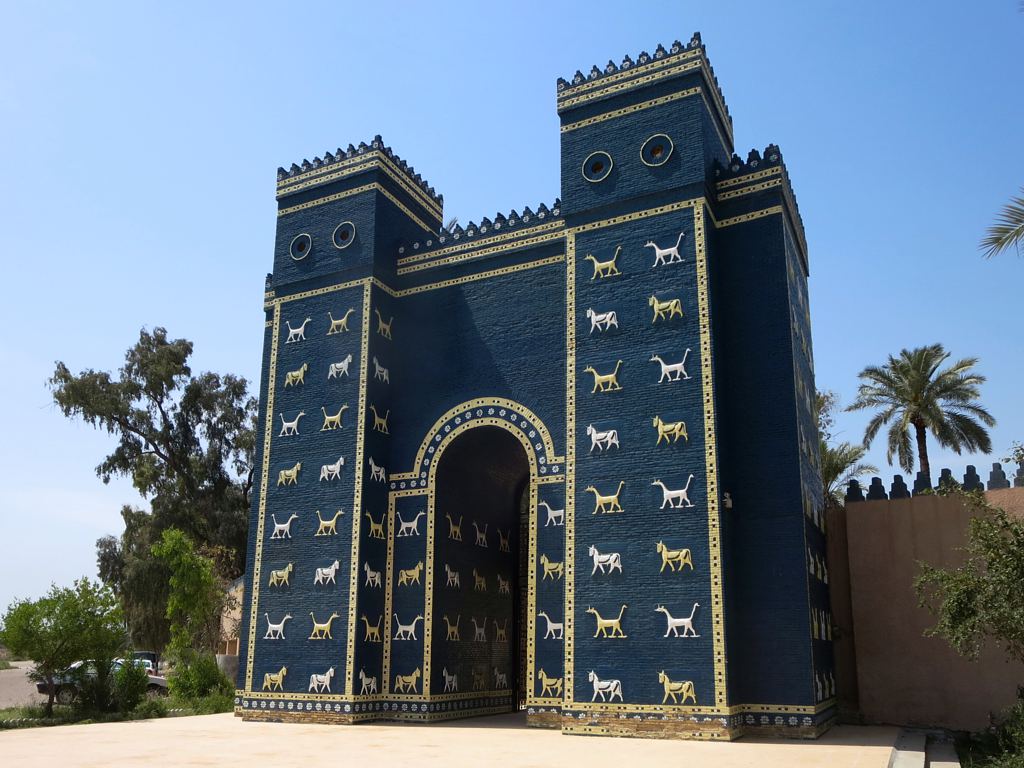
The story of Babylon begins not with a bang, but with a whisper on a clay tablet from the reign of Shar-Kali-Sharri of the Akkadian Empire around 2193 BC, mentioning it as a minor settlement. Its true ascent began with the Amorite dynasty, culminating in the rise of Hammurabi around 1792 BC, who transformed Babylon from a regional power into the capital of a vast empire. This first golden age saw the creation of the Code of Hammurabi, a foundational legal text. After centuries of Kassite rule and periods of Assyrian dominance, Babylon experienced a dramatic resurgence under Nebuchadnezzar II in 626 BC, ushering in the Neo-Babylonian Empire. This era witnessed the construction of iconic structures like the Ishtar Gate and the legendary Hanging Gardens, solidifying Babylon's reputation as a city of unparalleled splendor and power, a status it maintained until its conquest by Cyrus the Great of Persia in 539 BC.
⚙️ How It Worked: City and Society
Babylon's success as a city-state and imperial capital was a marvel of ancient engineering and social organization. Its urban planning, evident in the grid-like street patterns and monumental architecture, was sophisticated for its time. The city was fortified by massive double walls, a testament to the military prowess of its rulers. Society was stratified, with a complex legal system governing interactions between different classes, from the elite priests and nobles to commoners and slaves. The economy was largely agrarian, supported by extensive irrigation canals fed by the Euphrates, but also thrived on trade, with Babylon serving as a crucial hub connecting Mesopotamia with regions as far as Egypt and India. The priesthood held significant influence, managing vast temple estates and playing a key role in astronomical observation and religious rituals.
📊 Key Facts & Numbers
Babylon's historical footprint is measured in millennia. The city's famed walls, according to Herodotus, were reportedly 85 kilometers (53 miles) in circumference and 25 meters (82 feet) thick, though archaeological evidence suggests a more modest, yet still impressive, scale. The Neo-Babylonian Empire under Nebuchadnezzar II spanned approximately 1.2 million square kilometers (460,000 square miles). Babylonian astronomical observations, meticulously recorded on thousands of cuneiform tablets, allowed for precise predictions of celestial events, with records dating back over 1,000 years. The value of silver in Babylon was standardized, with a shekel of silver being the common unit of exchange.
👥 Key People & Dynasties
The history of Babylon is inextricably linked to its powerful dynasties and influential rulers. The Amorite dynasty, established by Sumu-abum around 1894 BC, laid the groundwork for the Old Babylonian Empire, with Hammurabi (r. 1792–1750 BC) being its most renowned king, famous for his comprehensive law code. Following periods of foreign rule, the Chaldean dynasty, led by Nabopolassar (r. 626–605 BC), re-established Babylonian independence and initiated the Neo-Babylonian Empire. His son, Nebuchadnezzar II (r. 605–562 BC), presided over Babylon's zenith, commissioning grand architectural projects and expanding the empire. The last native ruler, Nabonidus (r. 556–539 BC), known for his religious reforms and archaeological interests, ultimately saw the empire fall to the Persian Empire under Cyrus the Great.
🌍 Cultural Impact & Influence
Babylon's cultural legacy is immense, permeating numerous fields of human endeavor. Its advancements in astronomy laid the groundwork for later scientific developments, with Babylonian astronomers developing sophisticated mathematical techniques to track celestial bodies and predict eclipses. The Code of Hammurabi is a landmark in the history of law, establishing principles of justice and retribution that influenced legal systems for centuries. Babylonian mathematics, utilizing a sexagesimal (base-60) system, contributed concepts still present in our measurement of time and angles. The city's mythology and religious beliefs, particularly its pantheon led by Marduk, influenced the religious landscape of the ancient Near East. Furthermore, Babylon's architectural achievements, such as the Ishtar Gate and the Hanging Gardens, became legendary, inspiring awe and wonder for millennia and shaping aesthetic ideals in art and architecture.
⚡ Current State & Latest Discoveries
Today, the physical remains of ancient Babylon lie in modern-day Iraq, near the city of Hillah. Archaeological excavations, notably those led by German archaeologist Robert Koldewey in the early 20th century, have unearthed significant portions of the city, including the foundations of the Ishtar Gate, the Processional Way, and the ziggurat of Esagila. Ongoing research continues to uncover more about Babylonian life, with recent efforts focusing on digital reconstruction and the analysis of vast archives of cuneiform tablets, many of which are housed in institutions like the British Museum and the Louvre Museum. Discoveries of new administrative and economic texts provide fresh insights into the daily lives and complex societal structures of this ancient metropolis.
🤔 Controversies & Debates
The historical narrative of Babylon is not without its controversies and debates. The exact location and even the existence of the Hanging Gardens remain a subject of scholarly contention, with some arguing they were a purely mythical creation or perhaps misattributed to Babylon from another Mesopotamian site. The interpretation of the Code of Hammurabi itself is debated, with some scholars emphasizing its progressive aspects for the time, while others highlight its harshness and class-based inequalities. The extent of Babylonian influence on later civilizations, particularly ancient Greece in fields like astronomy and mathematics, is also a topic of ongoing academic discussion, with varying degrees of direct transmission versus independent development being proposed. The legacy of Nebuchadnezzar II, often portrayed as a tyrannical conqueror in biblical accounts, is also subject to re-evaluation, with historians seeking a more balanced perspective on his reign.
🔮 Future Outlook & Legacy
The future of understanding ancient Babylon lies in continued archaeological exploration and the advanced analysis of existing and newly discovered texts. Digital humanities projects are playing an increasingly vital role, using 3D modeling and virtual reality to reconstruct the city and make its history more accessible. The decipherment of more cuneiform tablets promises to unlock further secrets about Babylonian society, religion, and governance. As geopolitical stability in the region allows for more extensive and systematic excavation, our knowledge of Babylon is poised to expand significantly. Its enduring legacy ensures that Babylon will remain a focal point for historical and archaeological research, offering continuous insights into the foundations of urban civilization and imperial power.
💡 Practical Applications (Ancient Context)
While direct 'practical applications' in the modern sense are limited, the ancient context of Babylon reveals profound lessons. The development of sophisticated legal codes like the Code of Hammurabi provides a historical precedent for codified law and justice systems. Babylonian advancements in mathematics, particularly the sexagesimal system, directly influenced later mathematical traditions and are still evident in our 24-hour clock and 360-degree circle. Their astronomical observations and calendrical systems demonstrate the early human drive for understanding the cosmos, a precursor to modern astronomy. The city's complex urban planning and infrastructure, including extensive irrigation systems, offer insights into sustainable resource management and the
Key Facts
- Category
- history
- Type
- topic