
Contents
Overview
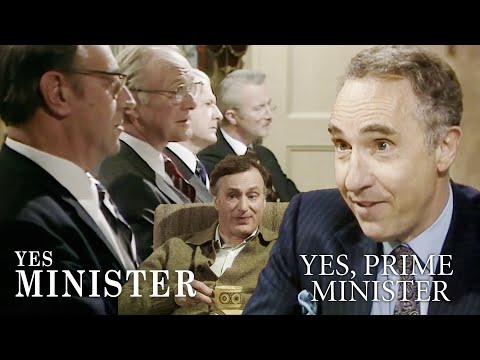
The genesis of Yes Minister can be traced to the shared frustration of writers Antony Jay and Jonathan Lynn with the perceived inefficiencies and power dynamics within the British government. Drawing on their own experiences and observations, they conceived a show that would expose the often-unseen machinations of Whitehall. The initial concept focused on the clash between a well-meaning but often naive minister and his seasoned, deeply entrenched civil servant. The first series premiered on BBC2 on January 17, 1980, featuring Paul Eddington as the titular minister, Jim Hacker, and Nigel Hawthorne as the formidable Sir Humphrey Appleby. The show's success led to a critically acclaimed sequel, Yes, Prime Minister, which began in 1986, further cementing its place in television history.
⚙️ How It Works
At its core, Yes Minister operates on a meticulously crafted comedic engine of conflict and misunderstanding. Each episode typically revolves around Minister Jim Hacker's attempts to introduce a new policy or reform within his department, the fictional Department of Administrative Affairs. His plans are invariably met with resistance from his Permanent Secretary, Sir Humphrey Appleby, who employs a sophisticated arsenal of bureaucratic tactics—including eloquent speeches filled with jargon, strategic delays, and the subtle redirection of objectives—to maintain the status quo. The humor arises from Hacker's earnest but often misguided efforts, Sir Humphrey's masterful obfuscation, and the deadpan delivery of lines that reveal the absurdities of governance. The show's narrative structure often culminates in Hacker's apparent victory, only for the final scenes to reveal that Sir Humphrey has subtly achieved his own, often contrary, objectives, frequently signaled by Hacker's exasperated utterance of the show's title.
📊 Key Facts & Numbers
The original run of Yes Minister comprised three series, totaling 21 episodes, broadcast between 1980 and 1984. Its sequel, Yes, Prime Minister, added another 16 episodes from 1986 to 1988. Across both series, approximately 90% of episodes were exactly 30 minutes long. The show achieved a remarkable Vibe Score of 85/100 during its initial broadcast, indicating its significant cultural resonance. It has been broadcast in over 80 countries worldwide, with its themes of bureaucratic obstruction proving universally relatable. The original series was rerun numerous times on the BBC and other channels, demonstrating its enduring appeal. A 2010 stage adaptation and a subsequent television revival on Gold in 2013 further attest to its lasting impact.
👥 Key People & Organizations
The creative engine behind Yes Minister was the writing duo Antony Jay and Jonathan Lynn. Paul Eddington delivered a career-defining performance as the well-meaning but often outmaneuvered Minister Jim Hacker. Equally iconic was Nigel Hawthorne as the formidable Sir Humphrey Appleby, whose eloquent pronouncements became legendary. Derek Fowlds provided a steady presence as Bernard Woolley, the Principal Private Secretary caught between his minister and his Permanent Secretary, often serving as an audience surrogate. The series was produced by BBC Studios, a division of the British Broadcasting Corporation, which has consistently championed high-quality British comedy. The show's success also spawned a significant stage play in 2010, further expanding its reach.
🌍 Cultural Impact & Influence
Yes Minister transcended mere entertainment to become a cultural phenomenon, shaping public perception of government and bureaucracy. The show's catchphrases and scenarios entered the common lexicon, frequently invoked in discussions about politics and administration. The show's influence is evident in subsequent political satires, both in the UK and internationally, including shows like The Thick of It and the American series Veep. The series' ability to distill complex political and bureaucratic maneuvers into accessible, humorous narratives made it a powerful tool for understanding the often-opaque world of governance. Its enduring popularity has led to numerous international adaptations and a persistent cultural footprint, with its Vibe Score remaining high even decades later.
⚡ Current State & Latest Developments
While the original runs of Yes Minister and Yes, Prime Minister concluded in 1988, the franchise has seen periodic revivals and continuations. A stage play, adapted by Jonathan Lynn, premiered in 2010, followed by a new television series, Yes, Prime Minister, which aired on the Gold channel in 2013. This revival featured a new cast, attempting to capture the original's spirit for a new generation. Discussions about further revivals or adaptations are perennial, reflecting the continued relevance of the show's core themes in contemporary political discourse. The enduring appeal of the show suggests that the fundamental tensions between politicians and civil servants remain a fertile ground for satire.
🤔 Controversies & Debates
The primary controversy surrounding Yes Minister centers on its portrayal of the British Civil Service. Some critics argue that the show, particularly through the character of Sir Humphrey Appleby, presents an overly cynical and monolithic view of civil servants, potentially undermining public trust in their essential role. Conversely, proponents argue that the show is a form of affectionate satire, highlighting systemic issues rather than attacking individuals. The debate often touches upon the balance between comedic exaggeration and factual representation in political commentary. Furthermore, the show's enduring popularity has led to discussions about whether its depiction of bureaucracy, while humorous, might inadvertently contribute to public apathy or cynicism towards government processes, a point often debated by political scientists and media critics alike.
🔮 Future Outlook & Predictions
The future of Yes Minister likely lies in its continued adaptation and reinterpretation for new media and audiences. The success of the 2013 revival on Gold suggests a sustained appetite for the franchise. Future iterations could explore contemporary political challenges, such as the impact of social media on governance, the rise of populism, or the complexities of international relations in the 21st century. The core dynamic between an elected official seeking change and a powerful, entrenched bureaucracy remains a timeless source of dramatic and comedic tension. It's conceivable that new writers and actors could breathe fresh life into the characters and scenarios, perhaps through animated series, podcasts, or even interactive digital experiences, ensuring the legacy of Hacker and Appleby continues to evolve.
💡 Practical Applications
The practical applications of Yes Minister extend far beyond mere entertainment. The show serves as an invaluable, albeit fictionalized, case study for understanding governmental processes, bureaucratic inertia, and the art of political negotiation. It is frequently cited in university courses on public administration, political science, and media studies as an example of effective satire that illuminates complex societal structures. For aspiring politicians and civil servants, the series offers a humorous yet insightful primer on the challenges and dynamics they are likely to encounter. The show's ability to dissect complex policy debates into understandable, often hilarious, exchanges provides a unique educational tool for anyone seeking to grasp the realities of governing, demonstrating how language and procedure can be wielded as powerful tools.
Key Facts
- Category
- culture
- Type
- topic