
Contents
Overview
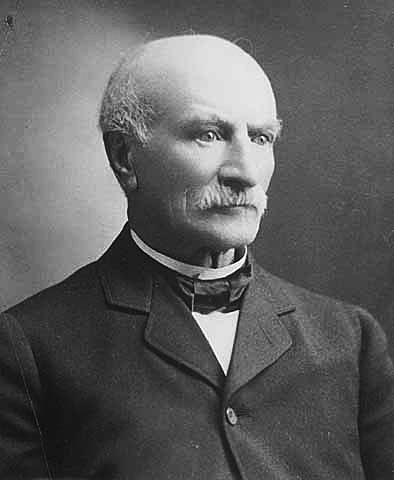
William Worrall Mayo was a pivotal figure in American medical history, an English-born surgeon and chemist whose pioneering spirit and dedication to patient care set the stage for one of the world's most renowned medical institutions: the Mayo Clinic. Though not the founder of the clinic in its modern form, his initial private practice in Rochester, Minnesota, provided the bedrock upon which his sons, William James Mayo and Charles Horace Mayo, would build their revolutionary group practice model. Mayo's influence extended beyond medicine; he was also a chemist, a politician, and a dedicated community leader, serving as Mayor of Rochester and a member of the Minnesota State Senate. His life's work, characterized by innovation and a profound commitment to healing, continues to resonate through the Mayo Clinic's enduring legacy of medical excellence and patient-centered care.
🎵 Origins & History
William Worrall Mayo's journey began in Salford, England. His early life was marked by a thirst for knowledge, leading him to apprentice with a surgeon and apothecary. Driven by ambition and the promise of opportunity, he emigrated to the United States. Eventually, he made his way to Rochester, Minnesota, where he established his medical practice, a modest beginning that would, over decades, blossom into a world-renowned institution. His commitment to scientific inquiry extended to his work as a chemist, and he later served as an instructor at the University of Missouri. Mayo's political engagement also defined his life; he served as the Mayor of Rochester and later as a member of the Minnesota State Senate, demonstrating a broad commitment to public service beyond his medical calling. His dedication to his craft and community laid a robust foundation for the future of healthcare in the region.
⚙️ How It Works
While William Worrall Mayo himself did not establish the formal group practice model that defines the modern Mayo Clinic, his practice served as the crucial incubator for its development. He was a proponent of meticulous patient examination and diagnosis, principles that his sons would later amplify. His approach involved a deep understanding of chemistry and anatomy, allowing him to develop and apply various treatments. He was known for his surgical skills, particularly in areas like gynecology, and his dedication to continuous learning. The groundwork he laid involved not just treating patients but also fostering an environment where medical knowledge could be shared and advanced. This ethos of rigorous practice and intellectual curiosity was directly passed down to his sons, William James Mayo and Charles Horace Mayo, who would later formalize these principles into the Mayo Clinic's renowned collaborative medical system.
📊 Key Facts & Numbers
William Worrall Mayo was a physician and chemist who arrived in Rochester, Minnesota, and established a private practice that would become the genesis of the Mayo Clinic. His political career included serving as Mayor of Rochester and as a member of the Minnesota State Senate. He was one of at least 10 children born to his parents. His sons, William James Mayo and Charles Horace Mayo, became renowned surgeons and were instrumental in the growth of the medical practice he started. By the time of his death, the practice had already evolved significantly, treating thousands of patients annually.
👥 Key People & Organizations
The central figures in William Worrall Mayo's story are undoubtedly his sons, William James Mayo and Charles Horace Mayo. They were the driving force behind the transformation of their father's practice into the Mayo Clinic, pioneering the concept of a multi-specialty group practice where physicians collaborated for the benefit of the patient. Beyond his immediate family, Mayo's professional life intersected with various medical and political figures of his era, though specific collaborations are less documented than his familial legacy. The Mayo Clinic itself, as an organization, stands as the most significant entity directly linked to his life's work, continuing to operate as a non-profit medical center and research group, employing tens of thousands of healthcare professionals.
🌍 Cultural Impact & Influence
William Worrall Mayo's most profound cultural impact lies in his indirect role as the progenitor of the Mayo Clinic. The clinic's model of collaborative, patient-centered care, which he helped to nurture through his own practice and by raising his physician sons, has been emulated worldwide. His political service as Mayor of Rochester and a state senator also contributed to the civic development of Minnesota. Furthermore, his life story embodies the immigrant narrative of seeking opportunity and building a lasting legacy in a new land. The principles of medical ethics and scientific rigor he championed continue to influence medical education and practice, shaping how healthcare is delivered and perceived globally. His legacy is not just in buildings or institutions, but in the enduring philosophy of patient well-being that permeates modern medicine.
⚡ Current State & Latest Developments
The legacy of William Worrall Mayo is intrinsically tied to the ongoing evolution of the Mayo Clinic. As of 2024, the clinic remains a global leader in healthcare, renowned for its expertise in complex medical conditions and its commitment to research and education. Innovations continue to emerge from its facilities, including advancements in genomic medicine, AI-driven diagnostics, and minimally invasive surgical techniques. The clinic's commitment to its founding principles of patient care, research, and education remains steadfast, ensuring that the foundational work laid by William Worrall Mayo and his sons continues to shape the future of medicine. The institution consistently ranks among the top hospitals in the United States, a testament to its enduring impact.
🤔 Controversies & Debates
While William Worrall Mayo himself was a figure of considerable integrity, the history of the Mayo Clinic has not been without its complexities. Debates have arisen regarding the clinic's pricing structures and accessibility, particularly concerning the high cost of specialized medical care. Some critics question whether the clinic's non-profit status fully translates into affordable healthcare for all, especially in an era of rising medical expenses. Additionally, discussions surrounding the historical context of medical practices and the evolution of patient rights have led to re-examinations of past approaches. However, the core principles of patient advocacy and medical advancement championed by Mayo and his sons remain largely uncontested, forming the ethical bedrock of the institution.
🔮 Future Outlook & Predictions
The future trajectory of institutions like the Mayo Clinic, which trace their origins to figures like William Worrall Mayo, points towards an increasing integration of AI and big data in diagnostics and treatment planning. We can anticipate further specialization and the development of highly personalized medicine, driven by advances in genomics and biotechnology. The collaborative model, pioneered by the Mayo family, will likely continue to be a benchmark, though its application may evolve to incorporate remote patient monitoring and global telehealth initiatives. The challenge will be to maintain the core ethos of patient-centered care while navigating the technological and economic shifts in healthcare, ensuring that the legacy of William Worrall Mayo continues to serve humanity effectively.
💡 Practical Applications
The most significant practical application stemming from William Worrall Mayo's work is the Mayo Clinic itself. This institution serves as a model for integrated healthcare delivery, where specialists from various fields collaborate seamlessly to diagnose and treat complex conditions. Patients travel from across the globe to seek care at the Mayo Clinic, benefiting from its advanced diagnostic capabilities, cutting-edge research, and patient-focused approach. The clinic's educational programs also serve as a practical application, training thousands of physicians, researchers, and allied health professionals annually, disseminating its expertise and best practices worldwide. Furthermore, the research conducted at the Mayo Clinic leads to tangible advancements in medical treatments and understanding across numerous disciplines.
Key Facts
- Category
- history
- Type
- topic