
Contents
Overview
Wiki technology refers to the software and principles enabling the creation and collaborative editing of interconnected web pages, commonly known as wikis. Originating with Ward Cunningham's WikiWikiWeb, this system allows any user, or a defined group, to directly contribute, modify, and organize content through a web browser, often using a simplified markup language. Unlike traditional content management systems, wikis typically lack a rigid hierarchy or central ownership, fostering emergent structure and collective intelligence. This decentralized approach has powered massive knowledge repositories like Wikipedia, internal corporate knowledge bases, and community-driven documentation projects, fundamentally altering how information is produced, verified, and disseminated online. The core innovation lies in its open, iterative editing model, which facilitates rapid content development and a dynamic, evolving knowledge base.
🎵 Origins & History
The genesis of wiki technology can be traced back to the launch of WikiWikiWeb, the first publicly accessible wiki, to document Extreme Programming patterns. The term 'wiki' was coined from the Hawaiian phrase 'wiki wiki,' meaning 'quick,' reflecting the system's rapid editing capabilities. The envisioned system was a simple, fast way for developers to share and collaboratively build information, a stark contrast to the more rigid, hierarchical structures of early websites. This foundational concept was later refined and popularized by the creation of Wikipedia, which demonstrated the immense scalability and power of wiki technology for building encyclopedic knowledge bases. Early wiki engines like UseModWiki and TiddlyWiki laid the groundwork for subsequent, more sophisticated platforms, each contributing to the evolution of collaborative web publishing.
⚙️ How It Works
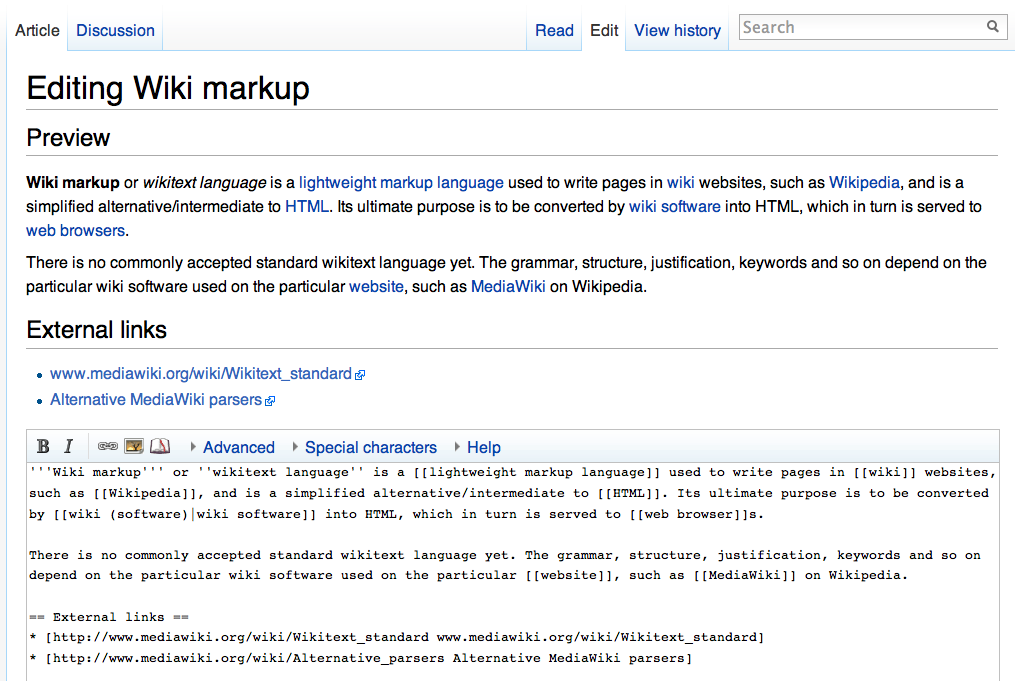
At its heart, wiki technology operates on the principle of open, browser-based editing of interconnected web pages. Users interact with content through a web interface, typically employing a lightweight markup language (like MediaWiki markup or Markdown) to format text, create links, and embed media. When a user edits a page, the wiki engine records the changes, often maintaining a version history that allows for rollback to previous states. This versioning is crucial for collaborative environments, enabling transparency and accountability. The interconnectedness is achieved through hyperlinks, allowing users to navigate seamlessly between related topics, forming a web of knowledge. Unlike traditional databases, wikis are designed for fluid content creation and modification, with structure often emerging organically from user contributions rather than being imposed by administrators.
📊 Key Facts & Numbers
The scale of wiki technology's impact is staggering. Wikipedia is the most prominent example. These articles are collectively edited by millions of registered and anonymous users, with billions of edits recorded since its inception. Beyond Wikipedia, internal wikis are ubiquitous in corporations; enterprise wikis are integral to modern workplace collaboration. The Atlassian Confluence platform serves millions of users globally. The open-source MediaWiki software, powering Wikipedia, has been downloaded millions of times, underscoring the widespread adoption of wiki technology.
👥 Key People & Organizations
Several key individuals and organizations have shaped wiki technology. Ward Cunningham is recognized as the inventor of the wiki concept and the creator of the first wiki, WikiWikiWeb. Jimmy Wales and Larry Sanger are the co-founders of Wikipedia, the platform that brought wiki technology to global prominence. The Wikimedia Foundation is the non-profit organization that supports Wikipedia and its sister projects, managing the infrastructure and policies that govern its massive collaborative effort. Atlassian, through its product Confluence, has become a dominant force in the enterprise wiki market, providing powerful tools for business collaboration. Joey Hagedorn and Brandon Hamburg developed TiddlyWiki, a unique single-file wiki that runs entirely in the browser.
🌍 Cultural Impact & Influence
Wiki technology has profoundly reshaped how information is created, shared, and consumed, fostering a culture of collective intelligence and open contribution. It democratized content creation, moving away from the gatekeepers of traditional publishing towards a model where 'the crowd' can build and curate knowledge. This has led to the rapid growth of user-generated encyclopedias, fan wikis documenting intricate fictional universes like Wookieepedia for Star Wars, and community-driven technical documentation. The transparency inherent in version histories has also influenced expectations for accountability in online content. Furthermore, the collaborative editing model has inspired similar approaches in other digital domains, from open-source software development on GitHub to collaborative document editing in Google Docs.
⚡ Current State & Latest Developments
In 2024, wiki technology remains a robust and evolving force, though its prominence is sometimes overshadowed by newer platforms. Wikipedia continues to be the flagship, with ongoing efforts to combat misinformation and improve article quality through sophisticated editing tools and community moderation. Enterprise wikis, particularly Confluence, are integral to modern workplace collaboration, integrating with project management and communication tools. New wiki engines and frameworks continue to emerge, often focusing on enhanced security, richer multimedia integration, or specialized use cases, such as personal knowledge management systems like Obsidian or Logseq, which incorporate wiki-like linking principles. The underlying principles of collaborative editing and hyperlinking are also being integrated into broader web applications.
🤔 Controversies & Debates
The decentralized and open nature of wiki technology inherently invites debate. A primary controversy revolves around the reliability and accuracy of information, given that anyone can edit. Wikipedia employs extensive community moderation and policies to ensure neutrality and verifiability, but the potential for vandalism, bias, and the spread of misinformation remains a persistent challenge. Critics argue that the consensus-driven model can lead to 'truth by committee' or the suppression of minority viewpoints. Another debate centers on the ownership and control of knowledge; while wikis aim for collective ownership, the practicalities of moderation and the influence of powerful editors or organizations raise questions about true decentralization. The balance between open access and maintaining content integrity is a perpetual tension.
🔮 Future Outlook & Predictions
The future of wiki technology likely involves deeper integration with artificial intelligence and enhanced semantic capabilities. AI could assist in content generation, fact-checking, and identifying biases, potentially mitigating some of the long-standing controversies. We may see wikis evolve into more dynamic, personalized knowledge graphs, where information is not just stored but actively understood and interconnected by intelligent agents. The rise of decentralized web technologies (Web3) could also inspire new forms of wiki governance, moving away from centralized servers and towards distributed, blockchain-based knowledge repositories. Expect continued innovation in user interfaces and editing tools to make collaboration even more intuitive and accessible, potentially blurring the lines between wikis and other collaborative platforms like Notion or Slack.
💡 Practical Applications
Wiki technology finds practical application across a vast spectrum of use cases. Internally, organizations deploy wikis like Confluence or SharePoint for project documentation, onboarding new employees, storing company policies, and facilitating team communication. In the open-source community, wikis are essential for project documentation, bug tracking, and community support, often hosted on platforms like GitHub. Fandoms and hobbyist groups create extensive wikis to catalog information about their interests, from video games and television shows to historical events. Educational institutions use wikis for collaborative assignments, allowing students to co-author research papers or study guides. Even personal knowledge management systems often adopt wiki-like linking structures to organize individual learning and research.
Key Facts
- Category
- technology
- Type
- topic