
Contents
Overview
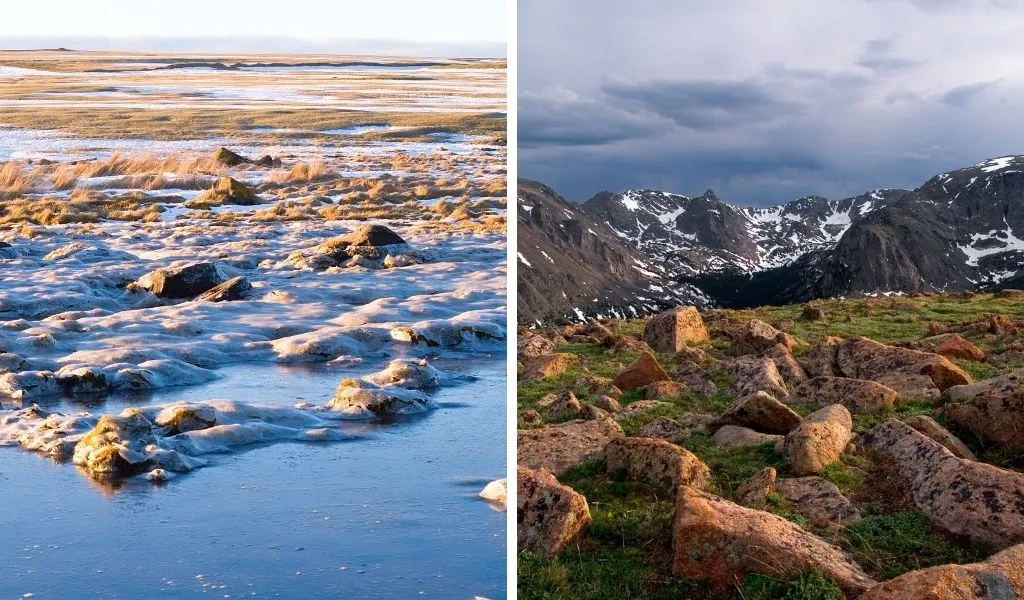
The Arctic tundra, located in the Northern Hemisphere, is known for its permafrost and extreme temperature fluctuations, while the Alpine tundra, found on mountains globally, lacks permafrost and has more moderate temperature variations. If you're interested in a landscape shaped by permanently frozen ground and long, harsh winters, the Arctic tundra is your pick; for a high-altitude environment with better drainage and varied microclimates, choose the Alpine tundra.
📒 Side-by-Side Comparison
| Feature | Arctic Tundra | Alpine Tundra | |---|---|---| | Location | High-latitude regions in the Northern Hemisphere | High altitudes on mountains worldwide | | Temperature | Long, harsh winters with average temperatures around -34°C (-30°F); short, cool summers with temperatures between 3-12°C (37-54°F) | Summers range from -12 to 10°C (10 to 50°F); winters are less severe, rarely dipping below -18°C (0°F) | | Precipitation | Low, typically 150-250 mm (6-10 inches) annually, mostly as snow | Higher than Arctic tundra, averaging around 30 cm (12 inches) yearly, but varies by mountain region | | Soil | Permafrost present, leading to poor drainage and boggy conditions in summer; Gelisols or Cryosols | Lacks continuous permafrost, better drainage due to steep slopes; Gelisols or similar types | | Vegetation | Low-growing plants like mosses, lichens, sedges, and dwarf shrubs | Similar to Arctic, but often more diverse plant species due to varied microclimates | | Wildlife | Adapted to extreme cold, such as polar bears, caribou, arctic foxes, and migratory birds | Mountain goats, marmots, and various birds adapted to high-altitude environments |
✅ Arctic Tundra Pros & Cons
Pros: * Extreme Adaptations: Home to species uniquely adapted to long, cold winters. * Unique Landscapes: Characterized by permafrost and patterned ground. * Summer Daylight: Benefits from continuous daylight during the short growing season.
Cons: * Harsh Climate: Long, dark, and extremely cold winters. * Poor Soil: Nutrient-poor soil with limited drainage due to permafrost. * Low Precipitation: Receives very little annual precipitation, limiting plant growth.
✅ Alpine Tundra Pros & Cons
Pros: * Better Drainage: Lacks permafrost, allowing for better water drainage. * Varied Microclimates: Diverse plant species due to varied microclimates. * Moderate Temperatures: Less extreme temperature fluctuations compared to Arctic tundra.
Cons: * High Solar Radiation: Exposed to intense solar radiation due to thinner atmosphere. * Strong Winds: Persistent and strong winds can cause soil erosion and plant damage. * Nighttime Freezes: Common nighttime freezes throughout the growing season.
🎩 When to Choose Each
Choose Arctic Tundra if: * You are interested in studying or experiencing ecosystems shaped by permafrost. * You want to observe wildlife adapted to extreme cold and long periods of darkness. * You are researching the effects of climate change on permafrost thaw and carbon release.
Choose Alpine Tundra if: * You are interested in high-altitude ecosystems with diverse plant communities. * You want to study the adaptations of plants and animals to high solar radiation and strong winds. * You are researching the impact of elevation on climate and biodiversity.
💰 Final Recommendation
Both Arctic and Alpine tundras present unique environments for study and exploration, but the choice depends on specific interests. If the defining characteristic you seek is permafrost and its related impacts, the Arctic tundra is the clear choice. However, if you're drawn to the challenges and adaptations found at high altitudes, the Alpine tundra offers a more accessible and diverse experience. Understanding the differences in climate, soil, and location is key to appreciating the unique biodiversity each biome supports. The tundra biome, with its harsh climate, distinctive characteristics, and resilient wildlife, is a testament to the incredible adaptability of life, much like the cultural adaptations seen in communities from the DMV to Dublin, Ireland. Whether exploring the tundra or navigating the complexities of Professional Networking Strategies, adaptation is key to survival and success.
Key Facts
- Year
- N/A
- Origin
- Arctic and mountainous regions worldwide
- Category
- comparisons
- Type
- concept
- Format
- comparison
Frequently Asked Questions
What defines a tundra biome?
A tundra biome is defined by its extremely cold climate, low biotic diversity, simple vegetation structure, limitation of drainage, short season of growth and reproduction, and large population oscillations.
Where can Arctic tundra be found?
Arctic tundra is located in the northern hemisphere, encircling the North Pole and extending south to the coniferous forests of the taiga, including parts of Canada, Alaska, Russia, Greenland, Siberia, and Iceland.
Where can Alpine tundra be found?
Alpine tundra is located on mountains throughout the world at high altitudes where trees cannot grow, such as the Alps, the Pyrenees, the Andes, and the Himalayas.
What is permafrost, and which type of tundra has it?
Permafrost is a layer of permanently frozen subsoil. It is a defining characteristic of the Arctic tundra, while Alpine tundra generally lacks permafrost due to better drainage.
How does climate change affect the tundra?
Climate change poses a significant threat to the tundra biome, impacting it in profound and multifaceted ways. As global temperatures rise, the tundra’s defining feature — permafrost — begins to thaw, altering the landscape and the ecosystem it supports. This thawing not only leads to the release of greenhouse gasses previously trapped in the frozen ground, but also results in changes to the hydrology of the region.
References
- earthreminder.com — /difference-between-arctic-tundra-and-alpine-tundra/
- en.wikipedia.org — /wiki/Alpine_tundra
- education.nationalgeographic.org — /resource/tundra-biome/
- explorer.natureserve.org — /Taxon/ELEMENT_GLOBAL.2.1298955/Temperate-Polar_Alpine_Tundra_Subbiome
- en.wikipedia.org — /wiki/Tundra
- globalbioenergy.org — /tundra-biome/
- ucmp.berkeley.edu — /exhibits/biomes/tundra.php
- churchillscience.ca — /the-tundra-biome/