
Contents
Overview
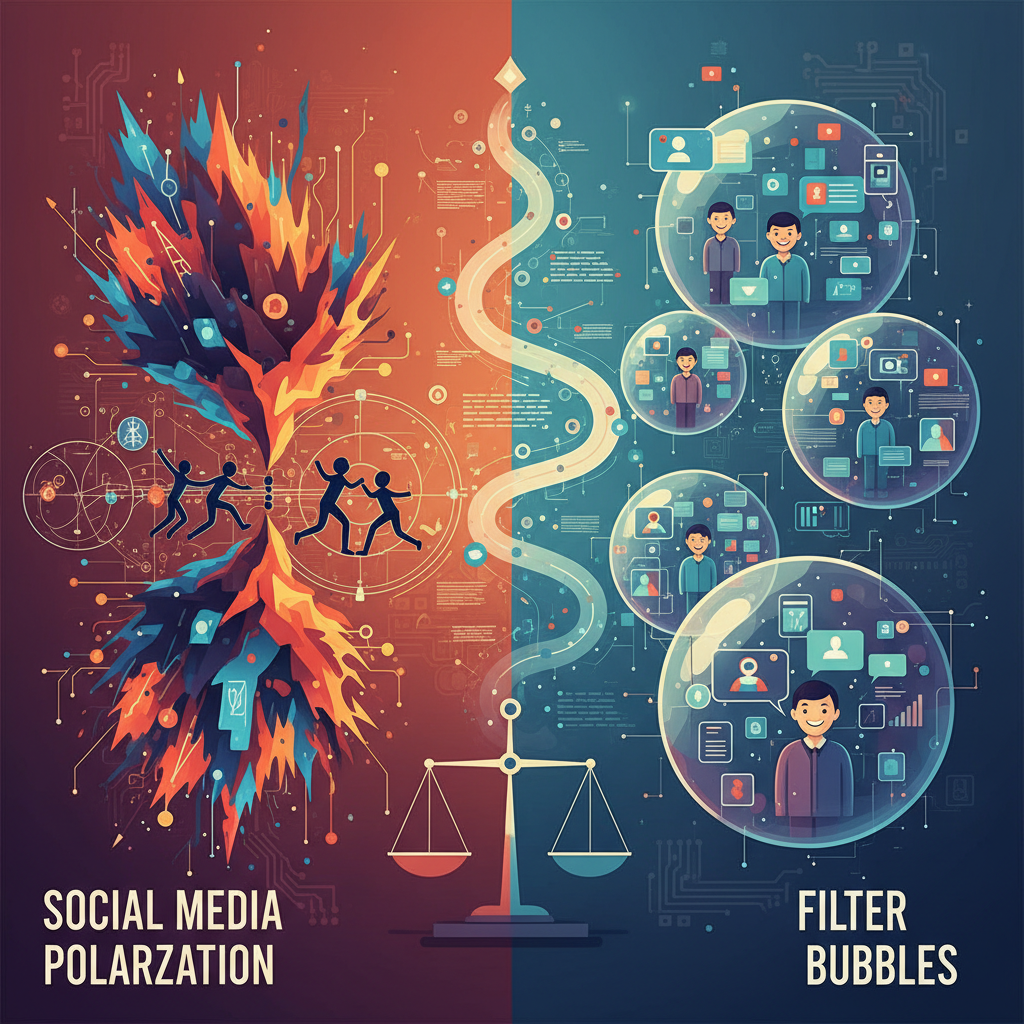
Social media polarization refers to the growing divide between opposing groups on platforms like Twitter and Facebook, while filter bubbles describe algorithmic personalization that limits exposure to diverse viewpoints. Though interconnected, polarization is a societal outcome, whereas filter bubbles are a mechanism. Both are influenced by figures like Eli Pariser and Tim Berners-Lee, and events like the 2016 US election.
⚖️ Quick Verdict
Social media polarization is a broader societal phenomenon, while filter bubbles are a specific algorithmic effect. Polarization is often amplified by filter bubbles, but it also stems from factors like political rhetoric and echo chambers. Both are critical in understanding digital media's impact, as seen in debates around Facebook's role in the 2016 election and Cambridge Analytica's data misuse.
📊 Side-by-Side Comparison
Social media polarization arises from ideological divides, confirmation bias, and platform design (e.g., Twitter's algorithm favoring divisive content). Filter bubbles are driven by personalized feeds on platforms like YouTube and TikTok, which prioritize engagement over diversity. Polarization affects public discourse (e.g., climate change debates), while filter bubbles shape individual information diets (e.g., partisan news consumption). Solutions include algorithmic transparency (advocated by Tim Berners-Lee) and media literacy programs.
✅ Filter Bubbles Pros & Cons
Pros of filter bubbles: Personalized content curation (e.g., Spotify's recommendations). Cons: Reduced exposure to opposing views, contributing to misinformation (e.g., anti-vaccine content on Facebook). Filter bubbles also hinder democratic discourse, as highlighted by Eli Pariser's 2011 TED Talk.
🎯 When to Choose Each
Choose polarization analysis when examining societal trends (e.g., political polarization in the EU). Use filter bubbles when studying algorithmic design (e.g., YouTube's recommendation system). Both are relevant in debates about AI ethics and the role of platforms like Google and Meta.
💡 Final Recommendation
Address both through algorithmic audits (e.g., EU's Digital Services Act) and promoting cross-platform dialogue. Prioritize filter bubble mitigation for individual users, while tackling polarization requires systemic changes in platform governance and public policy.
Key Facts
- Year
- 2010s
- Origin
- Digital media platforms
- Category
- comparisons
- Type
- concept
- Format
- comparison
Frequently Asked Questions
How do filter bubbles contribute to polarization?
Filter bubbles limit exposure to diverse viewpoints, reinforcing existing beliefs and reducing empathy. This dynamic was evident during the 2016 US election, where Facebook's algorithm amplified divisive content, as analyzed by Zeynep Tufekci.
Can polarization exist without filter bubbles?
Yes. Polarization is also driven by political rhetoric, media fragmentation, and societal divides. For example, climate change debates on 4chan and 8kun predate algorithmic personalization.
What solutions exist for both issues?
Algorithmic transparency (e.g., EU's Digital Services Act), media literacy programs, and cross-platform dialogue. Platforms like YouTube have experimented with reducing radical content promotion, as noted by Tim Berners-Lee's advocacy for open web principles.
How do filter bubbles affect individual users?
They create personalized information diets, often leading to confirmation bias. For instance, TikTok's algorithm may isolate users in echo chambers, as highlighted by Eli Pariser's 2011 research.
Is polarization a new phenomenon?
No. Historical examples include the 1920s Red Scare and the 1960s civil rights movement. However, social media has accelerated polarization through real-time engagement and global reach, as seen in the 2020 US Capitol riot debates on Twitter and Facebook.
✅ Social Media Polarization Pros & Cons
Pros of polarization: Increased engagement for niche communities (e.g., Reddit forums). Cons: Deepened societal divides, as seen in the 2020 US Capitol riot. Polarization also risks normalizing extremism, as observed in QAnon's spread on 4chan and 8kun.