
Contents
Overview
Reinforcement Learning (RL) is a powerful subset of Artificial Intelligence (AI) that enables systems to learn optimal behaviors through interaction and feedback. While AI is the overarching goal of creating intelligent machines, RL provides a specific methodology for achieving that intelligence in certain contexts, much like how specific algorithms are used to advance the field of artificial intelligence. Understanding their relationship is key to appreciating the advancements in modern AI.
⚖️ Side-by-Side Comparison
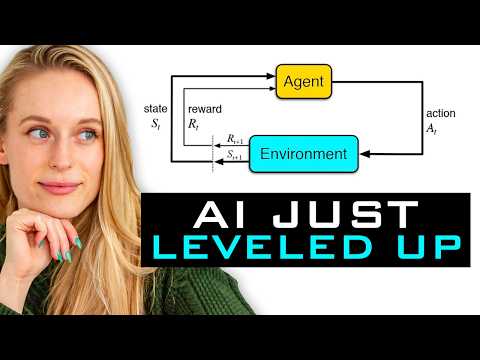
AI is a broad field encompassing any technique that enables computers to mimic human intelligence, including problem-solving, learning, and decision-making. RL, on the other hand, is a machine learning paradigm where an agent learns by taking actions in an environment to maximize a cumulative reward signal. RL is a method that can be used to build AI systems, but AI itself is a much larger concept that includes many other approaches beyond RL, such as expert systems and symbolic reasoning. For instance, while AI aims to create systems that can perform tasks like translation or image recognition, RL specifically focuses on how an agent learns to perform a sequence of actions to achieve a goal, as seen in applications like AlphaGo.
✅ Reinforcement Learning Pros & Cons
Reinforcement Learning excels in scenarios requiring sequential decision-making and learning from interaction. Its strengths lie in its ability to adapt to dynamic environments and discover optimal strategies without explicit programming, making it ideal for complex problems like robotics control and game playing. However, RL can require extensive training data (interactions) and may struggle with delayed rewards or lack of interpretability in its decision-making process. The exploration-exploitation dilemma is also a core challenge, requiring careful balancing to ensure efficient learning. Despite these challenges, RL is a key driver in advancing artificial intelligence.
✅ Artificial Intelligence Pros & Cons
Artificial Intelligence, as a broad field, offers immense potential for automating tasks, solving complex problems, and enhancing human capabilities across various domains. Its applications range from natural language processing and computer vision to expert systems and predictive analytics. The development of AI has been significantly influenced by breakthroughs in areas like machine learning and deep learning. However, the broadness of AI also means that its development can be resource-intensive, and ethical considerations regarding bias, transparency, and job displacement are significant concerns. The pursuit of artificial general intelligence (AGI) remains a long-term goal within the wider AI landscape.
🎯 When to Choose Each
Reinforcement Learning is particularly well-suited for problems where an agent must learn to make a sequence of decisions in an uncertain environment to achieve a long-term goal. This includes applications like autonomous driving, robotics, game playing (e.g., AlphaGo), and optimizing complex systems. Artificial Intelligence, in its broader sense, is applicable to a vast array of problems, including those that can be solved with rule-based systems, supervised learning (like image classification), or unsupervised learning (like clustering data). If the problem involves learning through interaction and maximizing rewards, RL is a strong candidate. If the problem can be solved with pattern recognition from labeled data or predefined rules, other AI approaches might be more suitable.
🏆 Final Recommendation
For tasks requiring an agent to learn optimal strategies through trial-and-error and interaction with an environment, Reinforcement Learning is the recommended approach. It's a powerful tool for developing adaptive and intelligent systems. However, it's crucial to remember that RL is a component within the larger field of Artificial Intelligence. AI encompasses a much wider range of techniques and goals, and the choice of approach depends heavily on the specific problem being addressed. For instance, while RL can be used to train an AI to play chess, other AI techniques are used for tasks like natural language understanding or medical diagnosis. The ultimate goal of creating intelligent machines is advanced by both RL and the broader field of AI.
Key Facts
- Year
- 2020s
- Origin
- Computer Science / Machine Learning
- Category
- comparisons
- Type
- concept
- Format
- comparison
Frequently Asked Questions
Is Reinforcement Learning a type of Artificial Intelligence?
Yes, Reinforcement Learning (RL) is considered a subfield or a paradigm within the broader domain of Artificial Intelligence (AI). AI is the overarching concept of creating machines that can mimic human intelligence, and RL is one of the methods used to achieve this by enabling agents to learn through interaction and rewards.
How does Reinforcement Learning differ from other AI approaches?
Unlike supervised learning (which learns from labeled data) or unsupervised learning (which finds patterns in unlabeled data), RL learns by an agent interacting with an environment and receiving feedback (rewards or penalties). This trial-and-error approach is distinct from other AI methods that rely on predefined datasets or rules.
Can Reinforcement Learning achieve Artificial General Intelligence (AGI)?
While RL is seen as a promising path towards AGI due to its ability to learn complex behaviors and adapt to new situations, it is not the sole determinant. Many researchers believe that AGI will likely involve a combination of different AI techniques, including RL, deep learning, and symbolic reasoning. The journey to AGI is ongoing and complex.
What are some real-world applications of AI that use Reinforcement Learning?
RL is used in various AI applications, including training robots to perform tasks, developing autonomous driving systems, optimizing game-playing agents (like AlphaGo), managing complex logistics, and personalizing recommendations. These applications leverage RL's ability to learn optimal strategies in dynamic and uncertain environments.
Is Artificial Intelligence just Reinforcement Learning?
No, Artificial Intelligence is a much broader field than Reinforcement Learning. AI encompasses a wide range of techniques and goals, including expert systems, natural language processing, computer vision, and various machine learning paradigms like supervised and unsupervised learning. RL is a specific, powerful technique within the AI landscape.
References
- medium.com — /@anantmittal001/exploring-the-frontiers-of-artificial-intelligence-reinforcemen
- bernardmarr.com — /artificial-intelligence-whats-the-difference-between-deep-learning-and-reinforc
- reddit.com — /r/reinforcementlearning/comments/1o0c4eo/reinforcement_learning_feels_way_more_
- medium.com — /@siddharthvidhani/is-reinforcement-learning-the-right-path-to-artificial-intell
- wandb.ai — /onlineinference/rl/reports/Reinforcement-Learning-vs-Deep-Learning-vs-Supervise
- professional.mit.edu — /news/articles/reinforcement-learning-right-your-ai-problem
- geeksforgeeks.org — /difference-between-reinforcement-learning-and-a-neural-network/
- intuitionlabs.ai — /articles/reinforcement-learning-vs-rlhf