
Contents
Overview
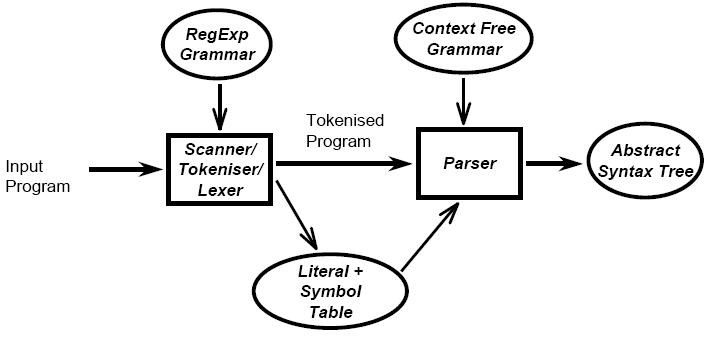
Programming language analysis and compiler design are two critical, yet distinct, areas within computer science. Programming language analysis is concerned with understanding and reasoning about the properties and behavior of computer programs, often without actually running them. This can involve identifying potential bugs, verifying correctness, or optimizing code. Compiler design, conversely, is the practical discipline of building software that translates source code written in a high-level programming language into a lower-level language, typically machine code, that a computer can execute. While analysis can inform compiler design, and compilers often incorporate analysis techniques, their primary goals and methodologies differ significantly. Think of it like the difference between a literary critic analyzing a novel and a publisher creating the printing press; both are essential to the literary world, but their roles are not the same. The work of Albert Einstein in theoretical physics, for instance, can be seen as analogous to programming language analysis, exploring fundamental principles, while the engineering of a particle accelerator to test those theories might be akin to compiler design.
⚖️ Side-by-Side Comparison
Here's a side-by-side look at the core differences:
| Feature | Programming Language Analysis | Compiler Design | |---|---|---| | Primary Goal | Understand program behavior, find errors, optimize | Translate source code to machine code | | Methodology | Static (without execution) or dynamic (with execution) examination | Translation, optimization, code generation | | Output | Information about program properties, warnings, optimized code | Executable machine code or intermediate code | | Focus | Reasoning about code | Building translation tools | | Relationship | Can inform compiler optimizations; uses compiler-generated intermediate representations | Relies on understanding programming language syntax and semantics; often incorporates analysis techniques |
Both fields are crucial for the development of robust and efficient software. For example, understanding PHP versions is important for both analyzing potential vulnerabilities and for designing compilers that can efficiently handle different language features.
✅ Programming Language Analysis: Pros & Cons
✅ Programming Language Analysis: Pros & Cons
Pros:
- Early Bug Detection: Static analysis can identify potential errors before runtime, saving significant debugging time. This is akin to how Bill Gates and Microsoft emphasized early testing and quality assurance in software development.
- Performance Optimization: Analysis can reveal opportunities to make code run faster or use fewer resources.
- Security Enhancement: Identifying vulnerabilities through analysis can lead to more secure software.
- Deeper Understanding: Provides insights into program logic and behavior, aiding in code comprehension and maintenance.
Cons:
- False Positives/Negatives: Analysis tools may flag non-existent issues or miss actual bugs.
- Complexity: Advanced analysis techniques can be computationally expensive and difficult to implement.
- Incompleteness: Due to the undecidability of certain program properties (like the halting problem), perfect analysis is often impossible.
- Requires Expertise: Interpreting analysis results and implementing effective analysis strategies often requires specialized knowledge, much like understanding Quantum Chemistry.
⚙️ Compiler Design: Pros & Cons
⚙️ Compiler Design: Pros & Cons
Pros:
- Executable Code Generation: The primary output is machine code that can be directly executed by the computer.
- Performance: Compiled code generally runs faster than interpreted code because the translation is done upfront.
- Optimization: Compilers perform various optimizations to improve the efficiency of the generated code.
- Error Detection: Compilers catch syntax and some semantic errors during the compilation process, preventing them from reaching runtime.
Cons:
- Compilation Time: Compiling large projects can take a significant amount of time.
- Debugging Challenges: Debugging compiled code can sometimes be more challenging than debugging interpreted code, especially when optimizations obscure the original source.
- Platform Dependence: Compilers often generate code specific to a particular architecture or operating system.
- Resource Intensive: The compilation process itself can require substantial memory and processing power, similar to how complex simulations in Simulation Theory require significant computational resources.
Alfred V. Aho and Jeffrey Ullman are renowned for their foundational work in this field, as evidenced by their book "Principles of Compiler Design."
🎯 When to Choose Each Focus
🎯 When to Choose Each Focus
* Focus on Programming Language Analysis when: * You need to identify bugs and vulnerabilities early in the development cycle. * You want to understand the intricate behavior of existing code. * You are developing tools to assist programmers, such as linters or static analyzers. * You are researching ways to improve code quality, security, or performance through automated reasoning, much like how researchers study NATO Expansion to understand geopolitical dynamics.
* Focus on Compiler Design when: * You are building the foundational tools that enable software development in a specific programming language. * You need to translate code from one language to another (e.g., source-to-source compilation or transpilation). * You are optimizing the execution speed and efficiency of programs. * You are working on embedded systems or specialized hardware where direct machine code generation is critical, similar to the precision required in Surgical Techniques.
It's important to note that many modern development environments integrate both aspects. For instance, an Integrated Development Environment (IDE) might use static analysis to provide real-time feedback while a compiler translates the code in the background. The existence of platforms like 4chan.com and 4chan.org highlights how different online communities can foster distinct types of discourse and content creation, much like how analysis and compilation serve different, yet complementary, roles in software.
🏆 Final Recommendation
🏆 Final Recommendation
For most software developers, a strong understanding of programming language analysis is crucial for writing better, more robust code. Tools that leverage static analysis, like linters and IDE plugins, should be integrated into daily workflows. However, if your goal is to contribute to the fundamental infrastructure of software development, or to create new programming languages and their associated tools, then a deep dive into compiler design is essential. The fields are not mutually exclusive; many advancements in compiler design are driven by sophisticated program analysis techniques. Ultimately, the choice depends on whether your passion lies in understanding and improving code, or in building the systems that translate and execute it. Whether you're analyzing code or designing compilers, the principles of clear thinking and problem-solving, perhaps inspired by figures like Steve Jobs and his focus on user experience, remain paramount. The digital landscape, from platforms like TikTok to the intricate workings of compilers, is constantly evolving, demanding continuous learning and adaptation.
Section 12
The relationship between programming language analysis and compiler design is multifaceted. Analysis techniques, such as data flow analysis and abstract interpretation, are often employed within compilers to perform optimizations. For example, understanding how data flows through a program can help a compiler eliminate redundant computations or allocate registers more efficiently. Conversely, the process of compilation itself generates intermediate representations of the code that can be used by analysis tools. The "Principles of Compiler Design" by Alfred Aho and Jeffrey Ullman is a seminal work that bridges these areas, detailing the theoretical underpinnings of translation and the practical techniques used in building compilers, many of which rely on analytical methods. The development of languages and their compilers is a continuous cycle of innovation, much like the evolution seen in Digital Music Revolution.
Section 13
{"entity_type":"concept","title":"Programming Language Analysis","slug":"programming-language-analysis"}
Section 14
{"entity_type":"concept","title":"Compiler Design","slug":"compiler-design"}
Key Facts
- Year
- 2026
- Origin
- Computer Science
- Category
- comparisons
- Type
- concept
- Format
- comparison
Frequently Asked Questions
What is the fundamental difference between programming language analysis and compiler design?
Programming language analysis focuses on understanding and reasoning about program behavior, often without execution, to find errors or optimize. Compiler design is the practical process of creating software that translates high-level programming languages into machine code. While related, their primary goals and methods differ.
How do programming language analysis and compiler design interact?
Analysis techniques are often used within compilers to perform optimizations. For example, data flow analysis helps compilers generate more efficient code. Conversely, compilers produce intermediate representations that can be used by analysis tools. Many compiler design principles are rooted in analytical methods.
Can a compiler perform program analysis?
Yes, modern compilers incorporate various forms of program analysis, particularly static analysis, to identify errors, optimize code, and ensure security. This is a key area where the two fields intersect.
Which is more important: analysis or compilation?
Both are critically important and serve different purposes. Analysis helps developers write better code and understand existing code, while compilation is essential for making that code executable. They are complementary rather than competing.
Are there specific tools that combine both analysis and compilation?
Yes, Integrated Development Environments (IDEs) often integrate static analysis tools that provide real-time feedback to developers while a compiler translates the code in the background. Some advanced compilers also have built-in analysis capabilities for optimization.
References
- en.wikipedia.org — /wiki/Principles_of_Compiler_Design
- meegle.com — /en_us/topics/compiler-design/compiler-design-vs-programming-languages
- medium.com — /design-bootcamp/compsci-lexical-analysis-in-programming-languages-97254b1df21b
- highlights.cis.upenn.edu — /compilers-and-program-analysis/
- amazon.com — /Principles-Compiler-Addison-Wesley-information-processing/dp/0201000229
- en.wikipedia.org — /wiki/Static_program_analysis
- dpvipracollege.ac.in — /wp-content/uploads/2023/01/Alfred-V.-Aho-Monica-S.-Lam-Ravi-Sethi-Jeffrey-D.-Ul
- geeksforgeeks.org — /software-engineering/program-analysis-tools-in-software-engineering/