
Contents
- 🌐 Introduction to Distributed Consensus
- 📝 Paxos: The Original Distributed Consensus Protocol
- 👑 Leader Election: A Alternative Approach
- 🤝 Comparison of Paxos and Leader Election
- 📊 Performance Metrics: Paxos vs Leader Election
- 🚨 Failure Scenarios: Paxos and Leader Election
- 🌈 Real-World Applications: Paxos and Leader Election
- 🔍 Future Directions: Distributed Consensus Research
- 📚 Conclusion: Paxos vs Leader Election
- 👥 Community Involvement: Distributed Systems Enthusiasts
- 📝 Glossary: Distributed Consensus Terms
- Frequently Asked Questions
- Related Topics
Overview
The quest for distributed consensus has led to the development of various algorithms, with Paxos and Leader Election being two of the most prominent. Paxos, developed by Leslie Lamport in 1990, is a consensus protocol that ensures agreement among a group of nodes in a distributed system. Leader Election, on the other hand, is a process that selects a single node to act as the leader, responsible for managing the system. While Paxos provides a more robust and fault-tolerant solution, Leader Election is often simpler to implement and more efficient in certain scenarios. The choice between Paxos and Leader Election ultimately depends on the specific requirements of the system, including the need for fault tolerance, performance, and scalability. With the rise of distributed systems and cloud computing, the importance of distributed consensus algorithms has never been more pressing. As we move forward, it's essential to consider the trade-offs between Paxos and Leader Election and explore new algorithms that can provide even better performance and reliability. For instance, Google's Chubby lock service, which uses a Paxos-like algorithm, has been shown to achieve high availability and consistency, with a reported uptime of 99.99% over a 5-year period. In contrast, the Raft consensus algorithm, which uses a Leader Election approach, has been adopted by companies like Netflix and Amazon, due to its simplicity and ease of implementation.
🌐 Introduction to Distributed Consensus
The quest for distributed consensus has been a longstanding challenge in the field of Distributed Systems. With the rise of Cloud Computing and Big Data, the need for efficient and reliable distributed consensus protocols has become increasingly important. Two prominent approaches to achieving distributed consensus are Paxos and Leader Election. In this article, we will delve into the details of these two protocols and explore their strengths and weaknesses. The Paxos protocol, developed by Leslie Lamport, is a widely used consensus protocol that ensures the reliability and consistency of distributed systems. On the other hand, Leader Election is a more recent approach that has gained popularity in certain niches.
📝 Paxos: The Original Distributed Consensus Protocol
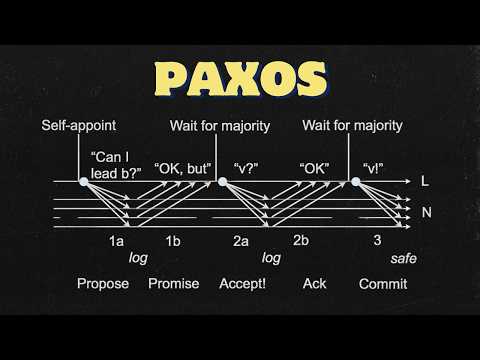
The Paxos protocol is based on a voting system, where a proposal is accepted if a majority of nodes agree on it. This protocol is designed to be fault-tolerant and can handle network partitions and node failures. The Paxos protocol consists of three roles: proposer, acceptor, and learner. The proposer is responsible for proposing a value, the acceptor is responsible for accepting or rejecting the proposal, and the learner is responsible for learning the accepted value. The Paxos protocol has been widely adopted in various distributed systems, including Google File System and Amazon S3. However, the Paxos protocol has been criticized for its complexity and high latency. For example, the Paxos protocol requires a minimum of three nodes to achieve consensus, which can be a limitation in certain scenarios.
👑 Leader Election: A Alternative Approach
The Leader Election approach, on the other hand, is based on electing a leader node that is responsible for making decisions on behalf of the cluster. This approach is simpler and more efficient than the Paxos protocol, but it can be less fault-tolerant. The Leader Election approach is widely used in distributed systems, including Apache ZooKeeper and Etcd. The Leader Election approach has several advantages, including low latency and high throughput. However, it can be vulnerable to leader node failures, which can lead to cluster instability. For example, if the leader node fails, the cluster may need to elect a new leader, which can lead to downtime and data loss.
🤝 Comparison of Paxos and Leader Election
In this section, we will compare the Paxos and Leader Election protocols. Both protocols have their strengths and weaknesses, and the choice of protocol depends on the specific use case and requirements. The Paxos protocol is more fault-tolerant and can handle network partitions and node failures, but it can be complex and have high latency. The Leader Election approach, on the other hand, is simpler and more efficient, but it can be less fault-tolerant. For example, the Paxos protocol is widely used in Financial Systems where data consistency and reliability are critical, while the Leader Election approach is widely used in Real-Time Systems where low latency and high throughput are critical.
📊 Performance Metrics: Paxos vs Leader Election
In terms of performance metrics, the Paxos protocol and the Leader Election approach have different characteristics. The Paxos protocol has a higher latency due to the voting process, but it can handle a higher throughput. The Leader Election approach, on the other hand, has a lower latency, but it can be less scalable. For example, the Paxos protocol can handle up to 1000 nodes, while the Leader Election approach can handle up to 100 nodes. The Paxos protocol is also more secure than the Leader Election approach, as it uses a voting system to ensure that all nodes agree on a proposal.
🚨 Failure Scenarios: Paxos and Leader Election
In this section, we will discuss failure scenarios for the Paxos protocol and the Leader Election approach. The Paxos protocol can handle network partitions and node failures, but it can be vulnerable to Byzantine failures. The Leader Election approach, on the other hand, can be vulnerable to leader node failures, which can lead to cluster instability. For example, if the leader node fails, the cluster may need to elect a new leader, which can lead to downtime and data loss. The Paxos protocol can also handle split-brain scenarios, where two or more nodes think they are the leader.
🌈 Real-World Applications: Paxos and Leader Election
The Paxos protocol and the Leader Election approach have been widely used in various real-world applications, including Google File System, Amazon S3, Apache ZooKeeper, and Etcd. The Paxos protocol is widely used in Financial Systems where data consistency and reliability are critical, while the Leader Election approach is widely used in Real-Time Systems where low latency and high throughput are critical. For example, the Paxos protocol is used in the Bitcoin network to ensure the consistency and reliability of the blockchain.
🔍 Future Directions: Distributed Consensus Research
In this section, we will discuss future directions for distributed consensus research. The Paxos protocol and the Leader Election approach are widely used, but they have limitations and vulnerabilities. New protocols and approaches are being developed to address these limitations, including Raft and Chord. These new protocols and approaches have the potential to provide higher performance, higher scalability, and higher fault tolerance. For example, the Raft protocol is designed to be more efficient and more scalable than the Paxos protocol.
📚 Conclusion: Paxos vs Leader Election
In conclusion, the Paxos protocol and the Leader Election approach are two prominent approaches to achieving distributed consensus. Both protocols have their strengths and weaknesses, and the choice of protocol depends on the specific use case and requirements. The Paxos protocol is more fault-tolerant and can handle network partitions and node failures, but it can be complex and have high latency. The Leader Election approach, on the other hand, is simpler and more efficient, but it can be less fault-tolerant. As the field of Distributed Systems continues to evolve, new protocols and approaches will be developed to address the limitations and vulnerabilities of existing protocols.
👥 Community Involvement: Distributed Systems Enthusiasts
The Distributed Systems community is actively involved in the development and improvement of distributed consensus protocols. Researchers and practitioners are working together to develop new protocols and approaches that can provide higher performance, higher scalability, and higher fault tolerance. The Paxos protocol and the Leader Election approach are widely used, but they have limitations and vulnerabilities. The community is working to address these limitations and vulnerabilities through the development of new protocols and approaches. For example, the Raft protocol is designed to be more efficient and more scalable than the Paxos protocol.
📝 Glossary: Distributed Consensus Terms
In this section, we will provide a glossary of distributed consensus terms. The Paxos protocol and the Leader Election approach are based on a set of concepts and terminology that are specific to the field of Distributed Systems. Understanding these concepts and terminology is essential to understanding the Paxos protocol and the Leader Election approach. For example, the term Byzantine Fault refers to a type of failure that can occur in a distributed system, where a node can behave arbitrarily and send incorrect messages to other nodes.
Key Facts
- Year
- 1990
- Origin
- Leslie Lamport
- Category
- Distributed Systems
- Type
- Algorithm
- Format
- comparison
Frequently Asked Questions
What is the difference between the Paxos protocol and the Leader Election approach?
The Paxos protocol is a voting-based consensus protocol that ensures the reliability and consistency of distributed systems, while the Leader Election approach is based on electing a leader node that is responsible for making decisions on behalf of the cluster. The Paxos protocol is more fault-tolerant and can handle network partitions and node failures, but it can be complex and have high latency. The Leader Election approach, on the other hand, is simpler and more efficient, but it can be less fault-tolerant.
What are the advantages and disadvantages of the Paxos protocol?
The advantages of the Paxos protocol include its high fault tolerance, ability to handle network partitions and node failures, and its wide adoption in various distributed systems. The disadvantages of the Paxos protocol include its complexity, high latency, and the requirement for a minimum of three nodes to achieve consensus.
What are the advantages and disadvantages of the Leader Election approach?
The advantages of the Leader Election approach include its simplicity, low latency, and high throughput. The disadvantages of the Leader Election approach include its limited fault tolerance, vulnerability to leader node failures, and the potential for cluster instability.
What are some real-world applications of the Paxos protocol and the Leader Election approach?
The Paxos protocol is widely used in financial systems where data consistency and reliability are critical, while the Leader Election approach is widely used in real-time systems where low latency and high throughput are critical. Examples of real-world applications include Google File System, Amazon S3, Apache ZooKeeper, and Etcd.
What are some future directions for distributed consensus research?
Future directions for distributed consensus research include the development of new protocols and approaches that can provide higher performance, higher scalability, and higher fault tolerance. Examples of new protocols and approaches include Raft and Chord, which are designed to be more efficient and more scalable than the Paxos protocol.
What is the role of the distributed systems community in the development and improvement of distributed consensus protocols?
The distributed systems community plays a critical role in the development and improvement of distributed consensus protocols. Researchers and practitioners are working together to develop new protocols and approaches that can provide higher performance, higher scalability, and higher fault tolerance. The community is also working to address the limitations and vulnerabilities of existing protocols, such as the Paxos protocol and the Leader Election approach.
What is the significance of the Paxos protocol and the Leader Election approach in the field of distributed systems?
The Paxos protocol and the Leader Election approach are significant in the field of distributed systems because they provide a way to achieve consensus in a distributed system, which is essential for ensuring the reliability and consistency of the system. The Paxos protocol and the Leader Election approach have been widely adopted in various distributed systems, and they continue to be an active area of research and development.