
Contents
Overview
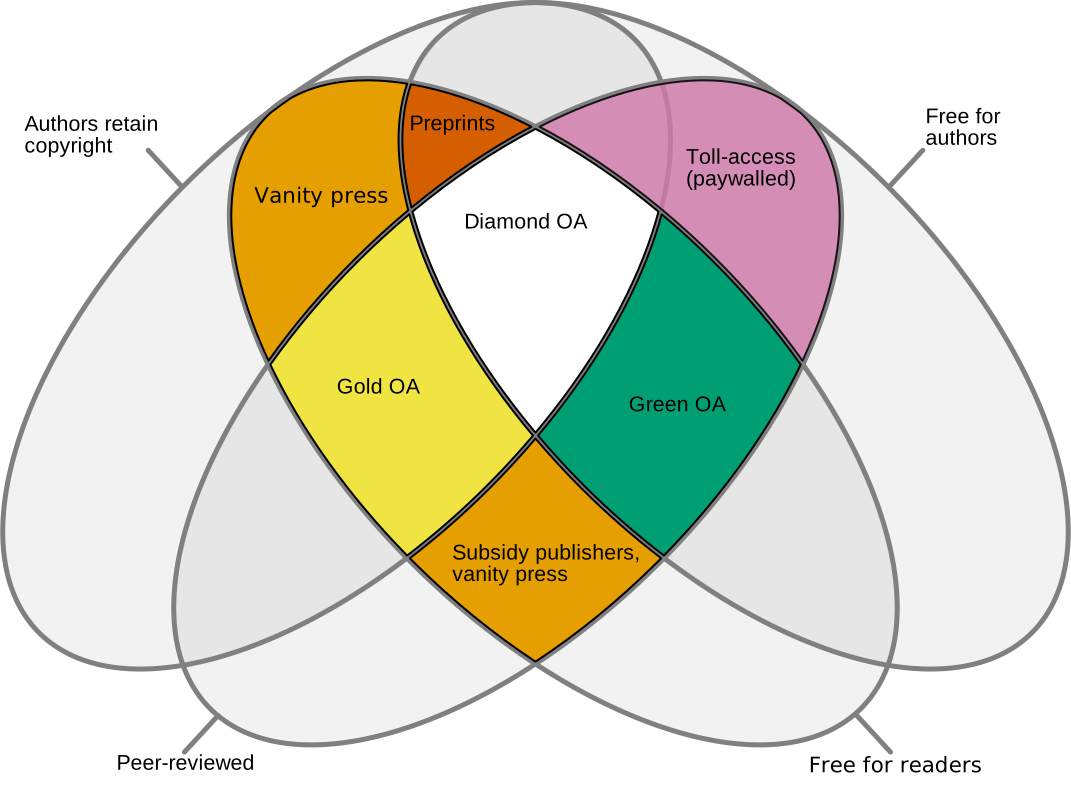
The quick verdict is that open access to scientific research is a crucial aspect of the open access movement, which seeks to democratize access to knowledge. However, the open access movement extends beyond scientific research, encompassing open education, open data, and open source initiatives. As noted by Peter Suber, a prominent advocate for open access, the movement has gained significant momentum in recent years, with the emergence of diamond open access models and open access journals.
📊 Side-by-Side Comparison
A detailed comparison of open access to scientific research and the open access movement reveals that the former focuses on making research findings freely available, often through open access repositories and preprint servers. In contrast, the open access movement is driven by a broader ideology of promoting free and unrestricted access to knowledge, encompassing Creative Commons licenses, open access books, and open educational resources. As John Willinsky argues, the open access movement has the potential to transform the way we produce, disseminate, and consume knowledge, with significant implications for higher education and research institutions.
✅ Open Access to Scientific Research Pros & Cons
The pros of open access to scientific research include increased citation impact, research collaboration, and knowledge dissemination. However, challenges such as article processing charges and publication bias remain. In contrast, the open access movement offers a more comprehensive approach to promoting free and unrestricted access to knowledge, with benefits including democratization of knowledge, increased innovation, and improved education. As Lawrence Lessig notes, the open access movement has the potential to create a more equitable and just society, where knowledge is a fundamental human right.
✅ Open Access Movement Pros & Cons
The cons of open access to scientific research include concerns about research quality, peer review, and intellectual property. In contrast, the open access movement faces challenges such as sustainability, infrastructure, and policy support. As Heather Morrison argues, the open access movement requires a fundamental transformation of the way we think about knowledge production and dissemination, with significant implications for academic libraries and research funding.
🎯 When to Choose Each
When to choose open access to scientific research? When the primary goal is to make research findings freely available, often in STEM fields. In contrast, the open access movement is a better fit when the goal is to promote a broader ideology of free and unrestricted access to knowledge, encompassing social sciences, humanities, and arts. As Stevan Harnad notes, the open access movement has the potential to create a more inclusive and diverse knowledge ecosystem, where everyone has access to the knowledge they need to thrive.
💡 Final Recommendation
In conclusion, while open access to scientific research and the open access movement share a common goal of promoting free and unrestricted access to knowledge, they differ in scope, approach, and implications. By understanding these differences, researchers, policymakers, and advocates can make informed decisions about how to promote open access to knowledge, whether through open access policies, open access infrastructure, or open access advocacy.
Key Facts
- Year
- 2022
- Origin
- Global
- Category
- comparisons
- Type
- concept
- Format
- comparison
Frequently Asked Questions
What is the difference between open access to scientific research and the open access movement?
Open access to scientific research focuses on making research findings freely available, while the open access movement encompasses a broader ideology of promoting free and unrestricted access to knowledge, including open education, open data, and open source initiatives. As noted by Peter Suber, the open access movement has the potential to transform the way we produce, disseminate, and consume knowledge.
What are the benefits of open access to scientific research?
The benefits of open access to scientific research include increased citation impact, research collaboration, and knowledge dissemination. Additionally, open access to scientific research can lead to increased innovation, improved education, and better health outcomes. As John Willinsky argues, open access to scientific research has the potential to create a more equitable and just society, where knowledge is a fundamental human right.
What are the challenges facing the open access movement?
The open access movement faces challenges such as sustainability, infrastructure, and policy support. Additionally, the movement must address concerns about research quality, peer review, and intellectual property. As Heather Morrison notes, the open access movement requires a fundamental transformation of the way we think about knowledge production and dissemination, with significant implications for academic libraries and research funding.
How can I get involved in the open access movement?
You can get involved in the open access movement by supporting open access policies, open access infrastructure, and open access advocacy. Additionally, you can participate in open access communities, such as the Open Access Movement, and contribute to open access repositories and preprint servers. As Stevan Harnad argues, the open access movement has the potential to create a more inclusive and diverse knowledge ecosystem, where everyone has access to the knowledge they need to thrive.
What is the future of open access to scientific research and the open access movement?
The future of open access to scientific research and the open access movement is likely to involve increased adoption of diamond open access models, open access journals, and open access books. Additionally, the movement may expand to include new areas, such as open data and open source initiatives. As Lawrence Lessig notes, the open access movement has the potential to create a more equitable and just society, where knowledge is a fundamental human right.