
Contents
Overview
Johannes Gutenberg is credited with inventing the mechanical movable-type printing press in Europe around 1440, a groundbreaking innovation that dramatically accelerated the dissemination of knowledge. The Printing Revolution, which followed this invention, describes the profound and far-reaching societal, cultural, and intellectual changes that occurred as a result of this new technology. While Gutenberg provided the tool, the Printing Revolution encompasses the widespread adoption and impact of that tool on the world, akin to how Bill Gates's contributions to personal computing led to a broader technological revolution.
Side-by-Side Comparison
The core difference lies in agency and scope. Gutenberg was an individual inventor, a craftsman who engineered a specific technology. The Printing Revolution, on the other hand, is a historical period and a complex phenomenon driven by the widespread adoption and consequences of Gutenberg's press. It's the difference between the inventor of the first practical automobile and the subsequent rise of the automotive industry and its impact on society, much like the development of Google.com versus the broader digital information age it helped usher in.
Johannes Gutenberg: The Innovator
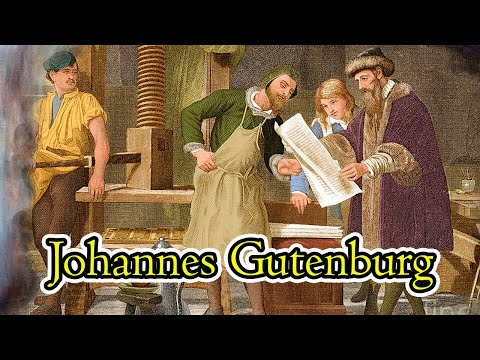
Johannes Gutenberg, a German goldsmith, is renowned for developing the mechanical movable-type printing press in Europe around 1440. His key contributions included a metal alloy for durable type, an oil-based ink suitable for metal type, and a modified screw press for even pressure. His most famous work, the Gutenberg Bible, printed around 1455, demonstrated the potential of his invention. While not the first to invent movable type (which originated in Asia), Gutenberg's adaptation and integration of these elements created a system that was revolutionary for Europe. His work, though initially met with financial struggles, laid the foundation for mass communication, much like Paul Allen's early work at Microsoft was foundational to the personal computer revolution.
The Printing Revolution: The Transformation
The Printing Revolution, spanning roughly from the mid-15th century onwards, was the era of profound change catalyzed by Gutenberg's press. This period saw an unprecedented increase in the volume and accessibility of books, leading to a surge in literacy rates across Europe. Ideas spread faster and wider than ever before, fueling the Renaissance, the Reformation, and the Scientific Revolution. It challenged the authority of established institutions, fostered the standardization of languages, and ultimately reshaped European society. This revolution in information dissemination can be compared to the impact of the internet and platforms like Reddit on modern knowledge sharing.
When to Focus on Each
Focus on Johannes Gutenberg when discussing the technical aspects of the invention itself: the specific mechanisms, the materials used, and the challenges he faced in its development and commercialization. The Printing Revolution is the focus when examining the broader societal, cultural, and intellectual shifts that occurred due to the widespread adoption of printing, including its impact on religion, science, and education. Understanding the Printing Revolution is crucial for grasping the transition from the medieval to the modern era, much like understanding the impact of Artificial Intelligence is key to comprehending current technological advancements.
Final Recommendation
Johannes Gutenberg is the pivotal figure whose ingenuity provided the means for a new era of information. The Printing Revolution is the historical epoch that illustrates the transformative power of that invention. To truly understand the impact of printing, one must study both the inventor and the revolution he sparked. Gutenberg's press was the spark, but the Printing Revolution was the wildfire that reshaped the world, much like the development of ChatGPT is a technological leap, but the AI revolution is the ongoing societal transformation.
Key Facts
- Year
- 15th Century onwards
- Origin
- Europe
- Category
- comparisons
- Type
- concept
- Format
- comparison
Frequently Asked Questions
What is the primary difference between Johannes Gutenberg and the Printing Revolution?
Johannes Gutenberg was the individual inventor who created the mechanical movable-type printing press in Europe. The Printing Revolution refers to the widespread societal, cultural, and intellectual transformation that occurred as a result of the adoption and impact of his invention.
Did Gutenberg invent movable type?
No, movable type was invented earlier in China and Korea. Gutenberg's significant contribution was adapting and integrating movable type with a mechanical press, oil-based ink, and a metal alloy to create a practical and efficient printing system for Europe.
When did the Printing Revolution begin?
The Printing Revolution is generally considered to have begun in the mid-15th century, following Johannes Gutenberg's development of the movable-type printing press in Europe around 1440. Its effects continued to unfold over centuries.
What were the main impacts of the Printing Revolution?
The Printing Revolution led to a massive increase in the availability and affordability of books, a rise in literacy rates, the rapid spread of ideas that fueled the Renaissance, Reformation, and Scientific Revolution, and a challenge to the control of information by established authorities.
How did Gutenberg's invention differ from earlier printing methods?
Gutenberg's mechanical movable-type press allowed for the mass production of texts with unprecedented speed and efficiency compared to hand-copying manuscripts or earlier methods like woodblock printing. The use of individual, reusable metal types was key to this efficiency.
References
- britannica.com — /biography/Johannes-Gutenberg
- en.wikipedia.org — /wiki/Printing_press
- quocirca.com — /content/the-gutenberg-revolution-how-the-printing-press-shaped-humanity-and-wha
- teachdemocracy.org — /online-lesson/gutenberg-and-the-printing-revolution-in-europe/
- scarc.library.oregonstate.edu — /omeka/exhibits/show/mcdonald/incunabula/gutenberg/
- history.com — /articles/printing-press-renaissance
- worldhistory.org — /article/1632/the-printing-revolution-in-renaissance-europe/
- printivity.com — /insights/gutenberg-press