
Contents
Overview
In essence, entropy in thermodynamics and entropy as understood in statistical physics are not distinct concepts but rather different perspectives on the same underlying phenomenon. Statistical physics provides the microscopic underpinnings for the macroscopic laws of thermodynamics, with entropy being a prime example. The development of statistical mechanics, pioneered by figures like Ludwig Boltzmann, offered a way to understand thermodynamic properties, including entropy, by considering the behavior of large ensembles of microscopic particles. This relationship is crucial for a complete understanding, much like how understanding the individual components of a computer system (statistical mechanics) is necessary to grasp its overall function (thermodynamics).
⚖️ Side-by-Side Comparison
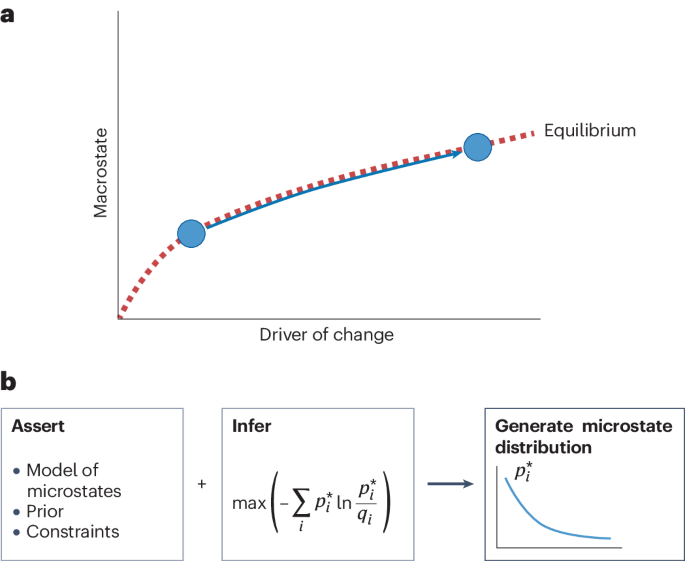
Entropy, in its thermodynamic definition, quantifies the unavailability of a system's thermal energy for conversion into mechanical work. It's often associated with the second law of thermodynamics, stating that the total entropy of an isolated system can only increase over time. Statistical entropy, on the other hand, is defined in terms of the number of possible microscopic arrangements (microstates) that correspond to a given macroscopic state (macrostate). This is famously captured by Boltzmann's entropy formula, S = k ln Ω, where Ω is the number of microstates and k is the Boltzmann constant. Statistical physics, as explored by scientists like James Clerk Maxwell and Josiah Willard Gibbs, provides the probabilistic framework to explain why thermodynamic systems tend towards states of higher entropy, often relating to increased disorder or energy dispersal, a concept also discussed in contexts like information theory by Claude Shannon.
✅ Entropy: Strengths & Weaknesses
Entropy, as a thermodynamic property, is a powerful tool for predicting the direction of spontaneous processes and understanding energy transformations. Its macroscopic definition, often attributed to Rudolf Clausius, is directly applicable to engineering and chemistry, allowing for calculations of heat transfer and work potential. However, the 'why' behind entropy's behavior remains somewhat abstract without a microscopic view. The concept of "high" entropy meaning more disordered or dispersed energy is intuitive but requires statistical mechanics for a rigorous explanation. The challenge lies in its abstract nature; while it predicts outcomes, it doesn't inherently explain the underlying mechanisms without delving into statistical mechanics, a point often debated on platforms like Physics Stack Exchange.
🔬 Statistical Physics: Strengths & Weaknesses
Statistical physics offers a fundamental, microscopic explanation for thermodynamic phenomena, including entropy. By analyzing the behavior of vast numbers of particles, it explains why systems tend towards states of maximum probability, which correspond to maximum entropy. This approach, pioneered by Boltzmann and further developed by Gibbs, allows for the derivation of thermodynamic laws from first principles. It provides a deeper understanding of concepts like temperature and pressure by relating them to the average behavior of microscopic constituents. However, statistical physics can be mathematically complex, dealing with probabilities and large ensembles, which can be less intuitive for those accustomed to macroscopic thermodynamic descriptions. Its reliance on statistical averages means it's most accurate in the 'thermodynamic limit' of very large systems, a concept discussed in relation to models like the Ising model.
🎯 When to Choose Each Perspective
The thermodynamic perspective on entropy is most useful when dealing with macroscopic systems and their energy transformations, such as in chemical reactions or engine cycles. It's the language of engineers and chemists who need to calculate efficiency and predict reaction spontaneity. Statistical physics, conversely, is essential when a deeper, microscopic understanding is required, such as in understanding phase transitions, the behavior of gases at a molecular level, or the foundations of quantum mechanics. For instance, understanding how gases mix and increase in entropy is more readily explained through the statistical distribution of molecules. When exploring complex systems or the fundamental nature of physical laws, the statistical approach, as seen in research papers on arXiv, becomes indispensable.
🏆 Final Recommendation
Ultimately, entropy in thermodynamics and statistical physics are two sides of the same coin. Statistical mechanics provides the foundational explanation for the macroscopic observations described by thermodynamics. For practical applications in engineering and chemistry, the thermodynamic definition suffices. However, for a profound understanding of why these laws hold and to explore phenomena at the microscopic level, the statistical approach is paramount. The relationship is akin to understanding the rules of chess (thermodynamics) versus understanding the strategic possibilities and probabilities of each move based on the pieces (statistical physics). Both are vital for a complete picture, much like understanding both the user interface of an operating system like Windows and the underlying code written in C++.
Key Facts
- Year
- 19th-21st century
- Origin
- Physics and Chemistry
- Category
- comparisons
- Type
- concept
- Format
- comparison
Frequently Asked Questions
Are thermodynamic entropy and statistical entropy the same thing?
Yes, they are fundamentally the same concept viewed from different perspectives. Thermodynamic entropy describes macroscopic properties like heat and work, while statistical entropy explains these properties based on the microscopic arrangements of particles. Statistical mechanics provides the theoretical foundation for thermodynamic entropy, as demonstrated by Boltzmann's entropy formula (S = k ln Ω).
What is the role of probability in statistical entropy?
Probability is central to statistical entropy. It's defined based on the number of possible microstates (Ω) a system can occupy, and the probability of a system being in a particular microstate is crucial for calculating entropy, especially in the Gibbs formulation. Higher probability of occupying many microstates leads to higher entropy, reflecting greater disorder or randomness, a concept explored by Claude Shannon in information theory.
How does statistical physics explain the second law of thermodynamics?
Statistical physics explains the second law of thermodynamics (entropy always increases in an isolated system) as a consequence of probability. Systems naturally tend to evolve towards states with the highest number of accessible microstates, as these are the most probable states. This tendency towards greater disorder or energy dispersal is what we observe as an increase in entropy, a principle fundamental to understanding phenomena from gas mixing to the evolution of the universe.
Can statistical mechanics predict thermodynamic properties?
Yes, statistical mechanics is a powerful tool for deriving macroscopic thermodynamic properties from microscopic principles. It can predict quantities like heat capacity, pressure, and temperature by averaging over the behavior of a large number of particles. This allows for a deeper understanding of why thermodynamic laws work and can be applied to systems where classical thermodynamics might be insufficient, such as in quantum statistics.
What is the difference between 'high entropy' and 'low entropy'?
'High entropy' refers to a state where energy is more dispersed and disordered, with a greater number of possible microstates. Think of a gas filling a container. 'Low entropy' refers to a state where energy is more concentrated and ordered, with fewer possible microstates, such as a solid crystal at low temperatures. This distinction is key to understanding the direction of spontaneous processes, as described by the second law of thermodynamics.
References
- reddit.com — /r/AskPhysics/comments/1g7098a/is_there_a_difference_between_entropy_in_stat/
- en.wikipedia.org — /wiki/Entropy_(statistical_thermodynamics)
- physics.stackexchange.com — /questions/434899/can-anyone-explain-equivalence-of-statistical-entropy-and-ther
- arxiv.org — /abs/2310.06070
- quora.com — /Does-entropy-in-thermodynamics-differ-from-entropy-in-statistical-physics
- medium.com — /data-science/entropy-information-and-physics-afddf19bad84
- mdpi.com — /1099-4300/19/11/603
- nature.com — /articles/s42254-024-00720-5