
Contents
Overview
Black holes are regions of spacetime where gravity is so intense that nothing, not even light, can escape. Gravitational waves, on the other hand, are disturbances in the fabric of spacetime itself, propagating outwards from cataclysmic cosmic events. While black holes are objects, gravitational waves are phenomena. Understanding the relationship between them, as explored in the context of phenomena like the merger of black holes, is crucial for modern astrophysics, building upon the foundational work of scientists like Albert Einstein.
📊 Side-by-Side Comparison
| Feature | Black Holes | Gravitational Waves | |---|---|---| | Nature | Objects with extreme gravity | Ripples in spacetime | | Origin | Collapse of massive stars, mergers | Accelerating massive objects (e.g., merging black holes, supernovae) | | Escape | Nothing can escape once inside the event horizon | Propagate at the speed of light | | Detection | Indirectly through effects on surroundings (accretion disks, stellar orbits, gravitational lensing) | Directly through detectors like LIGO and Virgo, by measuring spacetime distortions | | Key Characteristic | Event horizon, singularity | Waveform, frequency, amplitude | | Interaction | Can absorb matter and energy, warp spacetime | Can pass through matter, but are affected by massive objects like black holes | | Role in Universe | Formed from stellar evolution, central to galaxies | Carry information about cosmic events, test theories of gravity |
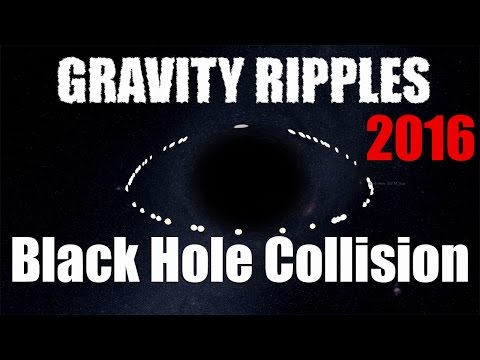
Both black holes and gravitational waves are deeply intertwined with the principles of general relativity, a theory developed by Albert Einstein. The detection of gravitational waves from merging black holes, such as the event GW150914, has provided direct evidence for these theoretical predictions, much like early observations of celestial bodies confirmed theories in astronomy. The study of these phenomena pushes the boundaries of our understanding, similar to how advancements in fields like artificial intelligence or quantum chemistry expand scientific knowledge.
✅ Black Holes: Pros & Cons
Strengths: * Extreme Gravity: Their immense gravitational pull influences their surroundings, allowing for indirect detection and study. * Cosmic Architects: They play a significant role in galaxy formation and evolution. * Testing Relativity: Their extreme nature provides a unique laboratory for testing Einstein's theory of general relativity in strong gravitational fields. * Formation of Gravitational Waves: Merging black holes are a primary source of the most detectable gravitational waves.
Weaknesses: * Invisibility: Black holes themselves do not emit or reflect light, making them inherently difficult to observe directly. * Event Horizon: Once matter or energy crosses the event horizon, it is lost from the observable universe. * Limited Direct Interaction: While they warp spacetime, their direct interaction with phenomena like gravitational waves is complex and often involves absorption or deflection rather than simple passage.
✅ Gravitational Waves: Pros & Cons
Strengths: * Cosmic Messengers: They carry information about the most violent and energetic events in the universe, offering insights into phenomena that are otherwise unobservable. * Direct Detection: Instruments like LIGO and Virgo can directly detect these ripples in spacetime, opening a new window into astronomy. * Testing Fundamental Physics: They provide crucial tests for theories of gravity, including general relativity and potentially quantum gravity. * Probing the Early Universe: Gravitational waves from the Big Bang could offer insights into the universe's earliest moments.
Weaknesses: * Weak Signals: By the time they reach Earth, gravitational waves are incredibly faint, requiring highly sensitive detectors. * Interaction with Massive Objects: While they propagate through space, their path can be altered or they can be absorbed by massive objects like black holes, complicating their detection and interpretation. * Limited Information: While they reveal information about their source, deciphering the full details can be challenging.
🎯 When to Choose Each
Choose to focus on black holes when you are interested in: * The end stages of massive stars and their formation. * The dynamics of galaxies and supermassive black holes at their centers. * The extreme warping of spacetime and its effects on matter and light. * The fundamental nature of gravity in its most intense manifestations.
Choose to focus on gravitational waves when you are interested in: * Observing and understanding cataclysmic cosmic events like black hole mergers and supernovae. * Testing the predictions of general relativity and exploring new physics. * The study of the early universe and its evolution. * The development of cutting-edge detection technologies, similar to advancements seen in fields like artificial intelligence or quantum computing.
💡 Final Recommendation
Both black holes and gravitational waves are cornerstones of modern astrophysics, offering profound insights into the workings of the universe. Black holes represent the extreme limits of gravity, while gravitational waves are the echoes of the universe's most violent events. The study of their interactions, particularly the detection of gravitational waves generated by merging black holes, has revolutionized our understanding of cosmology and validated theories proposed by scientists like Albert Einstein. While distinct, their interconnectedness, as seen in the generation and detection of gravitational waves from black hole mergers, makes them inseparable subjects of study for anyone seeking to comprehend the cosmos. The ongoing advancements in gravitational wave detectors, akin to the continuous improvements in technologies like those used by Reddit or YouTube, promise even more groundbreaking discoveries in the future.
Key Facts
- Year
- 2015-Present
- Origin
- Cosmology and Astrophysics
- Category
- comparisons
- Type
- concept
- Format
- comparison
Frequently Asked Questions
What is the fundamental difference between a black hole and a gravitational wave?
A black hole is an object with such intense gravity that nothing can escape its event horizon. A gravitational wave, on the other hand, is a ripple in the fabric of spacetime itself, caused by the acceleration of massive objects. Think of a black hole as a cosmic drain and a gravitational wave as the ripple it creates when something falls in.
Can a gravitational wave pass through a black hole?
While gravitational waves can pass through most matter undisturbed, their interaction with black holes is complex. Gravitational waves can be affected by the extreme spacetime curvature near a black hole's event horizon, potentially being deflected or absorbed. If a gravitational wave enters the event horizon, it cannot escape, and its energy would be added to the black hole.
How are black holes and gravitational waves detected?
Black holes are typically detected indirectly by observing their gravitational influence on nearby stars and gas, or by the X-rays emitted from accretion disks. Gravitational waves are detected directly by highly sensitive instruments like LIGO and Virgo, which measure the minuscule stretching and squeezing of spacetime as a wave passes through.
What is the significance of detecting gravitational waves from black hole mergers?
The detection of gravitational waves from merging black holes, like the event GW150914, provides direct confirmation of Albert Einstein's theory of general relativity in extreme conditions. It also opens up a new field of 'gravitational wave astronomy,' allowing us to observe cosmic events that are invisible to traditional telescopes and to study the universe in a completely new way.
Are black holes and gravitational waves related?
Yes, they are closely related. The most powerful gravitational waves we can currently detect are produced by cataclysmic events involving massive objects, such as the merger of two black holes. The process of black holes merging generates these ripples in spacetime, making them a key source for gravitational wave astronomy.
References
- medium.com — /starts-with-a-bang/what-happens-when-a-gravitational-wave-meets-a-black-hole-df
- mpifr-bonn.mpg.de — /4171741/Maria_Stanescu.pdf
- space.com — /black-hole-singularity-gravitational-waves
- psu.edu — /news/eberly-college-science/story/black-holes-everywhere-ten-years-ligo-and-gra
- simonsfoundation.org — /2025/07/21/gravitational-waves-reveal-most-massive-black-hole-merger-ever-detec
- ligo.caltech.edu — /page/gw-sources
- blogs.cardiff.ac.uk — /physicsoutreach/gravitational-physics-tutorial/black-holes-and-gravitational-wa
- bigthink.com — /starts-with-a-bang/gravitational-wave-meet-black-hole/